Abstract
Two photomorphogenic mutants of rice, coleoptile photomorphogenesis 2 (cpm2) and hebiba, were found to be defective in the gene encoding allene oxide cyclase (OsAOC) by map-based cloning and complementation assays. Examination of the enzymatic activity of recombinant GST-OsAOC indicated that OsAOC is a functional enzyme that is involved in the biosynthesis of jasmonic acid and related compounds. The level of jasmonate was extremely low in both mutants, in agreement with the fact that rice has only one gene encoding allene oxide cyclase. Several flower-related mutant phenotypes were observed, including morphological abnormalities of the flower and early flowering. We used these mutants to investigate the function of jasmonate in the defence response to the blast fungus Magnaporthe oryzae. Inoculation assays with fungal spores revealed that both mutants are more susceptible than wild-type to an incompatible strain of M. oryzae, in such a way that hyphal growth was enhanced in mutant tissues. The level of jasmonate isoleucine, a bioactive form of jasmonate, increased in response to blast infection. Furthermore, blast-induced accumulation of phytoalexins, especially that of the flavonoid sakuranetin, was found to be severely impaired in cpm2 and hebiba. Together, the present study demonstrates that, in rice, jasmonate mediates the defence response against blast fungus.
Abstract from the paper’s OpenAlex record, shown for indexing and research. Copyright remains with the authors or the publisher. Read at the source ↗
The text the model read, with the source record’s inline markup (italics, sub- and superscripts) rendered and its character entities decoded; quote offsets refer to the raw text.
Claims 16
Claim · model-written summary
The cpm2 mutant was defective in the gene encoding OsAOC.
- Taxon
- rice
 Oryza sativae0
- Material
- cpm2e0
- Gene
- OsAOCe0
- Outcome
- defective in the gene encoding allene oxide cyclase (OsAOC)e0
Organisms pictured · Representative pictures of the matched species, not figures from the paper.

Verbatim
e0“Two photomorphogenic mutants of rice, coleoptile photomorphogenesis 2 (cpm2) and hebiba, were found to be defective in the gene encoding allene oxide cyclase (OsAOC)”
Claim · model-written summary
The hebiba mutant was defective in the gene encoding OsAOC.
- Taxon
- riceOryza sativae0
- Material
- hebibae0
- Gene
- OsAOCe0
- Outcome
- defective in the gene encoding allene oxide cyclase (OsAOC)e0
Organisms pictured · Representative pictures of the matched species, not figures from the paper.
Verbatim
e0“Two photomorphogenic mutants of rice, coleoptile photomorphogenesis 2 (cpm2) and hebiba, were found to be defective in the gene encoding allene oxide cyclase (OsAOC)”
Claim · model-written summary
Recombinant OsAOC was a functional enzyme involved in biosynthesis of jasmonic acid and related compounds.
- Taxon
- riceOryza sativat0
- Gene
- OsAOCe0
- Outcome
- functional enzyme that is involved in the biosynthesis of jasmonic acid and related compoundse0
Organisms pictured · Representative pictures of the matched species, not figures from the paper.
Verbatim
e0“recombinant GST-OsAOC indicated that OsAOC is a functional enzyme that is involved in the biosynthesis of jasmonic acid and related compounds”
t0“rice”
Claim · model-written summary
Jasmonate level was extremely low in cpm2.
- Taxon
- riceOryza sativat0
- Material
- cpm2e1
- Outcome
- level of jasmonatee0
- Direction
- extremely lowe0
Organisms pictured · Representative pictures of the matched species, not figures from the paper.
Verbatim
e0“The level of jasmonate was extremely low in both mutants”
e1“coleoptile photomorphogenesis 2 (cpm2) and hebiba”
t0“rice”
Claim · model-written summary
Jasmonate level was extremely low in hebiba.
- Taxon
- riceOryza sativat0
- Material
- hebibae1
- Outcome
- level of jasmonatee0
- Direction
- extremely lowe0
Organisms pictured · Representative pictures of the matched species, not figures from the paper.
Verbatim
e0“The level of jasmonate was extremely low in both mutants”
e1“coleoptile photomorphogenesis 2 (cpm2) and hebiba”
t0“rice”
Claim · model-written summary
Rice has only one gene encoding allene oxide cyclase.
- Taxon
- riceOryza sativae0
- Gene
- allene oxide cyclasee0
- Outcome
- only one gene encoding allene oxide cyclasee0
Organisms pictured · Representative pictures of the matched species, not figures from the paper.
Verbatim
e0“rice has only one gene encoding allene oxide cyclase”
Claim · model-written summary
The mutants showed flower morphological abnormalities and early flowering.
- Taxon
- riceOryza sativat0
- Material
- hebibae1
- Organ / stage
- flowere0
- Outcome
- morphological abnormalities of the flower and early floweringe0
Organisms pictured · Representative pictures of the matched species, not figures from the paper.
Verbatim
e0“Several flower-related mutant phenotypes were observed, including morphological abnormalities of the flower and early flowering.”
e1“coleoptile photomorphogenesis 2 (cpm2) and hebiba”
t0“rice”
Claim · model-written summary
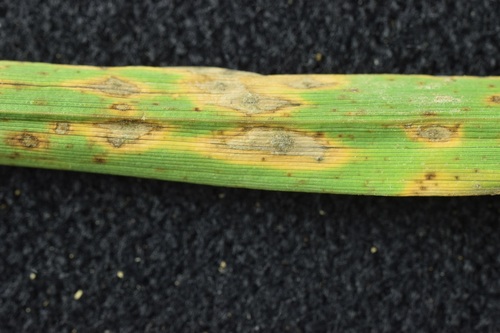
The cpm2 mutant was more susceptible than wild-type to an incompatible M. oryzae strain.
- Taxon
- riceOryza sativat0
- Material
- cpm2e2
- Treatment
- Inoculation assays with fungal sporese1
- Interactor
- M. oryzae
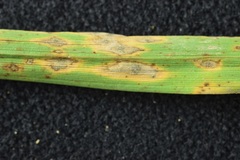 Pyricularia oryzaee0pathogen
- Outcome
- susceptiblee0
- Direction
- more susceptiblee0
- Comparator
- wild-typee0
Organisms pictured · Representative pictures of the matched species, not figures from the paper.
Verbatim
e0“both mutants are more susceptible than wild-type to an incompatible strain of M. oryzae”
e1“Inoculation assays with fungal spores”
e2“coleoptile photomorphogenesis 2 (cpm2) and hebiba”
t0“rice”
Claim · model-written summary
The hebiba mutant was more susceptible than wild-type to an incompatible M. oryzae strain.
- Taxon
- riceOryza sativat0
- Material
- hebibae2
- Treatment
- Inoculation assays with fungal sporese1
- Interactor
- M. oryzaePyricularia oryzaee0pathogen
- Outcome
- susceptiblee0
- Direction
- more susceptiblee0
- Comparator
- wild-typee0
Organisms pictured · Representative pictures of the matched species, not figures from the paper.
Verbatim
e0“both mutants are more susceptible than wild-type to an incompatible strain of M. oryzae”
e1“Inoculation assays with fungal spores”
e2“coleoptile photomorphogenesis 2 (cpm2) and hebiba”
t0“rice”
Claim · model-written summary
Hyphal growth was enhanced in mutant tissues after inoculation.
- Taxon
- riceOryza sativat0
- Material
- both mutantse1
- Interactor
- M. oryzaePyricularia oryzaee1pathogen
- Outcome
- hyphal growthe0
- Direction
- enhancede0
Organisms pictured · Representative pictures of the matched species, not figures from the paper.
Verbatim
e0“hyphal growth was enhanced in mutant tissues”
e1“Inoculation assays with fungal spores revealed that both mutants are more susceptible than wild-type to an incompatible strain of M. oryzae”
t0“rice”
Claim · model-written summary
Jasmonate isoleucine increased in response to blast infection.
- Taxon
- riceOryza sativat0
- Treatment
- blast infectione0
- Outcome
- level of jasmonate isoleucinee0
- Direction
- increasede0
Not reportedComparator
Organisms pictured · Representative pictures of the matched species, not figures from the paper.
Verbatim
e0“The level of jasmonate isoleucine, a bioactive form of jasmonate, increased in response to blast infection.”
t0“rice”
Claim · model-written summary
Blast-induced phytoalexin accumulation was severely impaired in cpm2.
- Taxon
- riceOryza sativat0
- Material
- cpm2e0
- Outcome
- blast-induced accumulation of phytoalexinse0
- Direction
- severely impairede0
Organisms pictured · Representative pictures of the matched species, not figures from the paper.
Verbatim
e0“blast-induced accumulation of phytoalexins, especially that of the flavonoid sakuranetin, was found to be severely impaired in cpm2 and hebiba”
t0“rice”
Claim · model-written summary
Blast-induced phytoalexin accumulation was severely impaired in hebiba.
- Taxon
- riceOryza sativat0
- Material
- hebibae0
- Outcome
- blast-induced accumulation of phytoalexinse0
- Direction
- severely impairede0
Organisms pictured · Representative pictures of the matched species, not figures from the paper.
Verbatim
e0“blast-induced accumulation of phytoalexins, especially that of the flavonoid sakuranetin, was found to be severely impaired in cpm2 and hebiba”
t0“rice”
Claim · model-written summary
Blast-induced sakuranetin accumulation was severely impaired in cpm2.
- Taxon
- riceOryza sativat0
- Material
- cpm2e0
- Outcome
- accumulation of phytoalexins, especially that of the flavonoid sakuranetine0
- Direction
- severely impairede0
Organisms pictured · Representative pictures of the matched species, not figures from the paper.
Verbatim
e0“blast-induced accumulation of phytoalexins, especially that of the flavonoid sakuranetin, was found to be severely impaired in cpm2 and hebiba”
t0“rice”
Claim · model-written summary
Blast-induced sakuranetin accumulation was severely impaired in hebiba.
- Taxon
- riceOryza sativat0
- Material
- hebibae0
- Outcome
- accumulation of phytoalexins, especially that of the flavonoid sakuranetine0
- Direction
- severely impairede0
Organisms pictured · Representative pictures of the matched species, not figures from the paper.
Verbatim
e0“blast-induced accumulation of phytoalexins, especially that of the flavonoid sakuranetin, was found to be severely impaired in cpm2 and hebiba”
t0“rice”
Claim · model-written summary
Jasmonate mediates rice defense against blast fungus.
- Taxon
- riceOryza sativae0
- Interactor
- Magnaporthe oryzaePyricularia oryzaet0pathogen
- Compound
- jasmonatee0
- Outcome
- defence response against blast funguse0
Organisms pictured · Representative pictures of the matched species, not figures from the paper.
Verbatim
e0“in rice, jasmonate mediates the defence response against blast fungus.”
t0“Magnaporthe oryzae”
The same questions in other papers
infection · molecular: metabolites · Oryza sativa (rice)Positive and negative results
23 papers in the same direction as this paper · 16 in the opposite direction
- negative
- positive
- positive
36 papers more in this group
See all 40 papers →Claims are grouped by organism, treatment and what was measured or targeted. A paper counts as positive when any of its claims in the group is positive.