Abstract
The effect of NaCl stress (50 m M ) and validamycin A treatment (30 μ M ) on growth and nitrogen fixation of Lotus japonicus was investigated in plants cultured under symbiotic and hydroponics conditions for teen weeks (flowering stage). Validamycin A was used as a potent trehalase inhibitor, and was able to produce a five‐fold increase in the level of trehalose during salt treatment, concomitant with an enhance in biomass (20%) in salinized plants. Alterations of nodule metabolism related to some carbohydrates and some enzyme activities were also examined. The shoot and total plant dry weight were severely affected by saline conditions decreasing by 40% and only 15–20% in plant treated without or with validamycin A, respectively. Nitrogenase activity (E.C. 1.7.9.92) was inhibited almost 40% by salt stress and no effect of validamycin was observed. Based on these results, L. japonicus might be considered as a salt‐sensitive legume. In addition, the saline conditions also inhibited the enzyme activities of sucrose synthase (E.C. 2.4.1.13), alkaline invertase (E.C. 3.2.1.26) and trehalose‐phosphate synthetase (E.C. 2.4.1.15). The validamycin A treatment mainly decreased enzyme activities: sucrose synthase, trehalose‐phosphate phosphatase (E.C. 3.1.3.12) and trehalase (E.C. 3.2.1.28). On the other hand, a high concentration of the carbohydrates, starch, sucrose and glucose, seems not to be the mechanism induced in L. japonicus to protect nodules exposed to NaCl because all these sugars decreased in such conditions. Results of the present study support the possible role of trehalose as an osmoprotectant under salt stress.
Abstract from the paper’s OpenAlex record, shown for indexing and research. Copyright remains with the authors or the publisher. Read at the source ↗
The text the model read, with the source record’s inline markup (italics, sub- and superscripts) rendered and its character entities decoded; quote offsets refer to the raw text.
Claims 15
Claim · model-written summary
Validamycin A produced a five-fold increase in trehalose level in Lotus japonicus during salt treatment.
- Taxon
- Lotus japonicus
 Lotus japonicust0
- Treatment
- Validamycin Ae1
- Compound
- trehalosee1
- Outcome
- level of trehalosee1
- Direction
- increasee1
- Value
- five‐folde1
Not reportedComparator
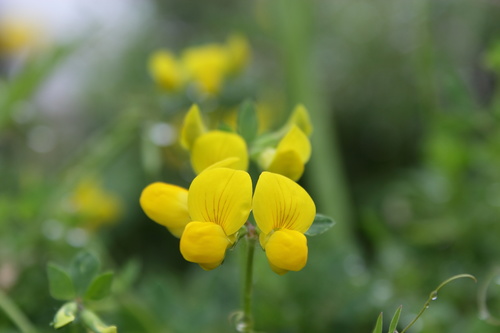
Organisms pictured · Representative pictures of the matched species, not figures from the paper.
Verbatim
t0“model legume Lotus japonicus”
e1“Validamycin A was used as a potent trehalase inhibitor, and was able to produce a five‐fold increase in the level of trehalose during salt treatment”
Claim · model-written summary
Validamycin A treatment enhanced biomass by 20% in salinized Lotus japonicus plants.
- Taxon
- Lotus japonicusLotus japonicust0
- Treatment
- Validamycin Ae1
- Outcome
- biomasse2
- Direction
- enhancee2
- Value
- 20%e2
- Qualifier
- in salinized plantse2
Not reportedComparator
Organisms pictured · Representative pictures of the matched species, not figures from the paper.
Verbatim
t0“model legume Lotus japonicus”
e1“Validamycin A was used as a potent trehalase inhibitor, and was able to produce a five‐fold increase in the level of trehalose during salt treatment”
e2“concomitant with an enhance in biomass (20%) in salinized plants”
Claim · model-written summary
Saline conditions decreased shoot and total plant dry weight of Lotus japonicus by 40%.
- Taxon
- Lotus japonicusLotus japonicust0
- Treatment
- saline conditionse3
- Outcome
- shoot and total plant dry weighte3
- Direction
- decreasinge3
- Value
- 40%e3
Not reportedComparator
Organisms pictured · Representative pictures of the matched species, not figures from the paper.
Verbatim
t0“model legume Lotus japonicus”
e3“The shoot and total plant dry weight were severely affected by saline conditions decreasing by 40%”
Claim · model-written summary
Under saline conditions, the decrease in shoot and total plant dry weight of Lotus japonicus was only 15–20% in plants treated without or with validamycin A.
- Taxon
- Lotus japonicusLotus japonicust0
- Treatment
- validamycin Ae4
- Outcome
- shoot and total plant dry weighte3
- Direction
- decreasinge3
- Value
- 15–20%e4
Not reportedComparator
Organisms pictured · Representative pictures of the matched species, not figures from the paper.
Verbatim
t0“model legume Lotus japonicus”
e3“The shoot and total plant dry weight were severely affected by saline conditions decreasing by 40%”
e4“only 15–20% in plant treated without or with validamycin A, respectively”
Claim · model-written summary
Lotus japonicus might be considered a salt-sensitive legume.
- Taxon
- L. japonicusLotus japonicuse5
- Outcome
- salt‐sensitive legumee5
Organisms pictured · Representative pictures of the matched species, not figures from the paper.
Verbatim
t0“model legume Lotus japonicus”
e5“Based on these results, L. japonicus might be considered as a salt‐sensitive legume”
Claim · model-written summary
Salt stress inhibited nitrogenase activity of Lotus japonicus by almost 40%.
- Taxon
- Lotus japonicusLotus japonicust0
- Treatment
- salt stresse6
- Outcome
- Nitrogenase activitye6
- Direction
- inhibitede6
- Value
- almost 40%e6
Not reportedComparator
Organisms pictured · Representative pictures of the matched species, not figures from the paper.
Verbatim
t0“model legume Lotus japonicus”
e6“Nitrogenase activity (E.C. 1.7.9.92) was inhibited almost 40% by salt stress and no effect of validamycin was observed”
Claim · model-written summary
Validamycin A had no effect on nitrogenase activity of Lotus japonicus.
- Taxon
- Lotus japonicusLotus japonicust0
- Treatment
- validamycine6
- Outcome
- Nitrogenase activitye6
- Direction
- no effecte6
Not reportedComparator
Organisms pictured · Representative pictures of the matched species, not figures from the paper.
Verbatim
t0“model legume Lotus japonicus”
e6“Nitrogenase activity (E.C. 1.7.9.92) was inhibited almost 40% by salt stress and no effect of validamycin was observed”
Claim · model-written summary
Saline conditions inhibited the activity of sucrose synthase in Lotus japonicus nodules.
- Taxon
- Lotus japonicusLotus japonicust0
- Treatment
- saline conditionse7
- Gene
- sucrose synthasee7
- Outcome
- enzyme activitiese7
- Direction
- inhibitede7
Not reportedComparator
Organisms pictured · Representative pictures of the matched species, not figures from the paper.
Verbatim
t0“model legume Lotus japonicus”
e7“the saline conditions also inhibited the enzyme activities of sucrose synthase (E.C. 2.4.1.13), alkaline invertase (E.C. 3.2.1.26) and trehalose‐phosphate synthetase (E.C. 2.4.1.15)”
Claim · model-written summary
Saline conditions inhibited the activity of alkaline invertase in Lotus japonicus nodules.
- Taxon
- Lotus japonicusLotus japonicust0
- Treatment
- saline conditionse7
- Gene
- alkaline invertasee7
- Outcome
- enzyme activitiese7
- Direction
- inhibitede7
Not reportedComparator
Organisms pictured · Representative pictures of the matched species, not figures from the paper.
Verbatim
t0“model legume Lotus japonicus”
e7“the saline conditions also inhibited the enzyme activities of sucrose synthase (E.C. 2.4.1.13), alkaline invertase (E.C. 3.2.1.26) and trehalose‐phosphate synthetase (E.C. 2.4.1.15)”
Claim · model-written summary
Saline conditions inhibited the activity of trehalose-phosphate synthetase in Lotus japonicus nodules.
- Taxon
- Lotus japonicusLotus japonicust0
- Treatment
- saline conditionse7
- Gene
- trehalose‐phosphate synthetasee7
- Outcome
- enzyme activitiese7
- Direction
- inhibitede7
Not reportedComparator
Organisms pictured · Representative pictures of the matched species, not figures from the paper.
Verbatim
t0“model legume Lotus japonicus”
e7“the saline conditions also inhibited the enzyme activities of sucrose synthase (E.C. 2.4.1.13), alkaline invertase (E.C. 3.2.1.26) and trehalose‐phosphate synthetase (E.C. 2.4.1.15)”
Claim · model-written summary
Validamycin A treatment decreased the activity of sucrose synthase in Lotus japonicus nodules.
- Taxon
- Lotus japonicusLotus japonicust0
- Treatment
- validamycin A treatmente1
- Gene
- sucrose synthasee1
- Outcome
- enzyme activitiese1
- Direction
- decreasede1
Not reportedComparator
Organisms pictured · Representative pictures of the matched species, not figures from the paper.
Verbatim
t0“model legume Lotus japonicus”
e1“The validamycin A treatment mainly decreased enzyme activities: sucrose synthase, trehalose‐phosphate phosphatase (E.C. 3.1.3.12) and trehalase (E.C. 3.2.1.28)”
Claim · model-written summary
Validamycin A treatment decreased the activity of trehalose-phosphate phosphatase in Lotus japonicus nodules.
- Taxon
- Lotus japonicusLotus japonicust0
- Treatment
- validamycin A treatmente1
- Gene
- trehalose‐phosphate phosphatasee1
- Outcome
- enzyme activitiese1
- Direction
- decreasede1
Not reportedComparator
Organisms pictured · Representative pictures of the matched species, not figures from the paper.
Verbatim
t0“model legume Lotus japonicus”
e1“The validamycin A treatment mainly decreased enzyme activities: sucrose synthase, trehalose‐phosphate phosphatase (E.C. 3.1.3.12) and trehalase (E.C. 3.2.1.28)”
Claim · model-written summary
Validamycin A treatment decreased the activity of trehalase in Lotus japonicus nodules.
- Taxon
- Lotus japonicusLotus japonicust0
- Treatment
- validamycin A treatmente1
- Gene
- trehalasee1
- Outcome
- enzyme activitiese1
- Direction
- decreasede1
Not reportedComparator
Organisms pictured · Representative pictures of the matched species, not figures from the paper.
Verbatim
t0“model legume Lotus japonicus”
e1“The validamycin A treatment mainly decreased enzyme activities: sucrose synthase, trehalose‐phosphate phosphatase (E.C. 3.1.3.12) and trehalase (E.C. 3.2.1.28)”
Claim · model-written summary
Starch, sucrose and glucose decreased in Lotus japonicus nodules exposed to NaCl.
- Taxon
- L. japonicusLotus japonicuse1
- Organ / stage
- nodulese1
- Treatment
- NaCle1
- Outcome
- starch, sucrose and glucosee1
- Direction
- decreasede1
Organisms pictured · Representative pictures of the matched species, not figures from the paper.
Verbatim
t0“model legume Lotus japonicus”
e1“a high concentration of the carbohydrates, starch, sucrose and glucose, seems not to be the mechanism induced in L. japonicus to protect nodules exposed to NaCl because all these sugars decreased in such conditions”
Claim · model-written summary
The results support a possible role of trehalose as an osmoprotectant under salt stress in Lotus japonicus.
- Taxon
- Lotus japonicusLotus japonicust0
- Treatment
- salt stresse1
- Compound
- trehalosee1
- Outcome
- role of trehalose as an osmoprotectante1
Organisms pictured · Representative pictures of the matched species, not figures from the paper.
Verbatim
t0“model legume Lotus japonicus”
e1“Results of the present study support the possible role of trehalose as an osmoprotectant under salt stress”
The same questions in other papers
salinity · growth · Lotus japonicusResults agree
1 paper in the same direction as this paper
- negative
Claims are grouped by organism, treatment and what was measured or targeted. A paper counts as positive when any of its claims in the group is positive.