Abstract
The potentiality of bio-agents viz. Trichoderma harzianum (Delhi), T. hazianum (Kanpur), T. viride (Delhi), T. viride (Kanpur). G. virens (K), T. hamatium (K) against Drechslera oryzae inhibited the growth of Drechslera oryzae. Maximum reduction (98.8%) was recorded in T. harzianum (Delhi) isolate followed by T. harzianum (Kanpur) (94.6%). Treatment of rice seeds with spore suspension of T. harzianum (Delhi) proved significantly superior in enhancing the maximum shoot length and root length at 30 days of seedlings. The foliar spray with crude extract of bio-agents were competence enough to reduce the number of lesion from 13.49 to 3.15. Disease severity was varied significantly from 14.1 – 58.1% in different treatments.
Abstract from the paper’s OpenAlex record, shown for indexing and research. Copyright remains with the authors or the publisher. Read at the source ↗
The text the model read, with the source record’s inline markup (italics, sub- and superscripts) rendered and its character entities decoded; quote offsets refer to the raw text.
Claims 6
Claim · model-written summary
Bio-agent isolates inhibited the growth of Drechslera oryzae causing brown leaf spot of paddy.
- Taxon
- Paddyt0
- Treatment
- bio-agentse1
- Interactor
- Drechslera oryzae
 Bipolaris oryzaet0pathogen
- Second interactor
- Trichoderma harzianum (Delhi)
 Trichoderma harzianume1biocontrol_agent
- Outcome
- growth of Drechslera oryzaee1
- Direction
- inhibitede1
Not reportedComparator
Organisms pictured · Representative pictures of the matched species, not figures from the paper.
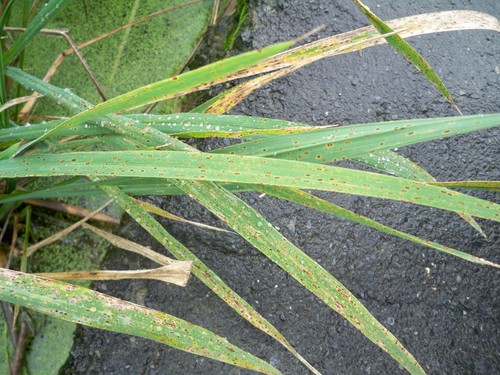

Verbatim
t0“Drechslera oryzae causing brown leaf spot of Paddy”
e1“bio-agents viz. Trichoderma harzianum (Delhi), T. hazianum (Kanpur), T. viride (Delhi), T. viride (Kanpur). G. virens (K), T. hamatium (K) against Drechslera oryzae inhibited the growth of Drechslera oryzae”
Claim · model-written summary
The T. harzianum (Delhi) isolate gave the maximum reduction (98.8%) of Drechslera oryzae growth.
- Taxon
- Paddyt0
- Treatment
- T. harzianum (Delhi) isolatee2
- Interactor
- Drechslera oryzaeBipolaris oryzaet0pathogen
- Second interactor
- T. harzianum (Delhi)Trichoderma harzianume2biocontrol_agent
- Outcome
- growth of Drechslera oryzaee1
- Direction
- Maximum reductione2
- Value
- 98.8%e2
Not reportedComparator
Organisms pictured · Representative pictures of the matched species, not figures from the paper.
Verbatim
t0“Drechslera oryzae causing brown leaf spot of Paddy”
e1“bio-agents viz. Trichoderma harzianum (Delhi), T. hazianum (Kanpur), T. viride (Delhi), T. viride (Kanpur). G. virens (K), T. hamatium (K) against Drechslera oryzae inhibited the growth of Drechslera oryzae”
e2“Maximum reduction (98.8%) was recorded in T. harzianum (Delhi) isolate followed by T. harzianum (Kanpur) (94.6%)”
Claim · model-written summary
The T. harzianum (Kanpur) isolate reduced Drechslera oryzae growth by 94.6%, less than the Delhi isolate.
- Taxon
- Paddyt0
- Treatment
- T. harzianum (Kanpur)e2
- Interactor
- Drechslera oryzaeBipolaris oryzaet0pathogen
- Second interactor
- T. harzianum (Kanpur)Trichoderma harzianume2biocontrol_agent
- Outcome
- growth of Drechslera oryzaee1
- Direction
- reductione2
- Value
- 94.6%e2
- Comparator
- T. harzianum (Delhi) isolatee2
Organisms pictured · Representative pictures of the matched species, not figures from the paper.
Verbatim
t0“Drechslera oryzae causing brown leaf spot of Paddy”
e1“bio-agents viz. Trichoderma harzianum (Delhi), T. hazianum (Kanpur), T. viride (Delhi), T. viride (Kanpur). G. virens (K), T. hamatium (K) against Drechslera oryzae inhibited the growth of Drechslera oryzae”
e2“Maximum reduction (98.8%) was recorded in T. harzianum (Delhi) isolate followed by T. harzianum (Kanpur) (94.6%)”
Claim · model-written summary
Seed treatment with a T. harzianum (Delhi) spore suspension significantly enhanced maximum shoot and root length of rice seedlings at 30 days.
- Taxon
- rice
 Oryza sativae3
- Organ / stage
- seedlingse3
- Treatment
- rice seeds with spore suspension of T. harzianum (Delhi)e3
- Interactor
- T. harzianum (Delhi)Trichoderma harzianume3biocontrol_agent
- Outcome
- shoot length and root lengthe3
- Direction
- enhancinge3
Not reportedComparator
Organisms pictured · Representative pictures of the matched species, not figures from the paper.

Verbatim
e3“Treatment of rice seeds with spore suspension of T. harzianum (Delhi) proved significantly superior in enhancing the maximum shoot length and root length at 30 days of seedlings”
Claim · model-written summary
Foliar spray with crude bio-agent extract reduced lesion number on paddy from 13.49 to 3.15.
- Taxon
- Paddyt0
- Treatment
- foliar spray with crude extract of bio-agentse4
- Interactor
- Drechslera oryzaeBipolaris oryzaet0pathogen
- Outcome
- number of lesione4
- Direction
- reducee4
- Value
- from 13.49 to 3.15e4
Not reportedComparator
Organisms pictured · Representative pictures of the matched species, not figures from the paper.
Verbatim
t0“Drechslera oryzae causing brown leaf spot of Paddy”
e4“The foliar spray with crude extract of bio-agents were competence enough to reduce the number of lesion from 13.49 to 3.15”
Claim · model-written summary
Paddy disease severity varied significantly from 14.1 to 58.1% across the bio-agent treatments.
- Taxon
- Paddyt0
- Interactor
- Drechslera oryzaeBipolaris oryzaet0pathogen
- Outcome
- Disease severitye5
- Value
- 14.1 – 58.1%e5
- Qualifier
- in different treatmentse5
Organisms pictured · Representative pictures of the matched species, not figures from the paper.
Verbatim
t0“Drechslera oryzae causing brown leaf spot of Paddy”
e5“Disease severity was varied significantly from 14.1 – 58.1% in different treatments”
The same questions in other papers
Trichoderma harzianum · growth · Oryza sativa (rice)Positive and negative results
12 papers in the same direction as this paper · 2 in the opposite direction
- negative
- negative
- positive
11 papers more in this group
See all 15 papers →Trichoderma harzianum · Bipolaris oryzae · Oryza sativa (rice)Results agree
6 papers in the same direction as this paper
- positive
- positive
- positive
3 papers more in this group
See all 7 papers →biocontrol · Bipolaris oryzae · Oryza sativa (rice)Positive and negative results
2 papers in the same direction as this paper · 1 in the opposite direction
- no effect
- positive
- positive
application · Bipolaris oryzae · Oryza sativa (rice)Results agree
9 papers in the same direction as this paper
- positive
- positive
- positive
6 papers more in this group
See all 10 papers →botanical · Bipolaris oryzae · Oryza sativa (rice)Results agree
14 papers in the same direction as this paper
- positive
- positive
- positive
11 papers more in this group
See all 15 papers →Claims are grouped by organism, treatment and what was measured or targeted. A paper counts as positive when any of its claims in the group is positive.