Abstract
Meristem tip culture followed by in vitro micropropagation of cultured plants is a valuable technique for producing and mass propagating disease-free select germplasm. This investigation was initiated to determine the nutritional and environmental requirements for the culture of red raspberry (Rubus idaeus L.). A procedure was first developed using black raspberry (R. occidentalis L.), loganberry (R. loganobaccus Bailey), and tayberry, a loganberry-like hybrid. Satisfactory levels of major and minor elements, vitamins, inositol, hormones, carbohydrates, and pH were then established for red raspberry incubation temperature and photoperiod were determined. Some red raspberry plants were given etiolation pre-treatment prior to culture. Some black raspberry, loganberry, and red raspberry plants were given heat-treatment prior to culture. Explant size affected survival, but not rooting in vitro. Apical meristem tips were superior to lateral meristem tips only in some media. Season of excision did not influence survival in culture. Spring-time did appear to increase vigour in cultured plants. Etiolating source plants was not advantageous. The effects of heat-treatment of source plants prior to meristem tip culture varied with the Rubus species. With black raspberry, survival and growth rate were increased, and rooting hastened. Heat-treatment of loganberry source plants had no effect on meristem tips. With red raspberry, survival was only slightly increased; growth rate was not affected. Three media used in succession induced meristem tip development, shoot proliferation, and rooting, respectively. The basal medium used was that of Murashige and Skoog (1962). Effect of diluting macroelements, even by a 1:4 dilution was not dramatic. Inositol at 150 mg/L stimulated axillary bud proliferation. Inositol in the medium inhibited rooting. Effects of the hormones indole butyric acid (IBA) and 6-benzylaminopurine (BAP) were consistent with other reports. Naphthalene acetic acid (NAA) caused callus proliferation and induced adventitious root formation from leaf petioles, leaf lamina, and callused shoot bases. Rooting was normal with IBA. Levels of pH and carbohydrates were critical, and effects were related to concentration of the cytokinin BAP in the medium. Incubation temperature used was 27°C. This temperature may not have been optimum for red raspberry micropropagation, although it was adequate for meristem tip culture. Moderate light intensity, and the use of cool white fluorescent lights were satisfactory. A photoperiod of 16 hours was adequate. All four Rubus species tested had similar culture requirements, and micropropagation potential. Their nutritional requirements are well within the range reported in the literature for Rosaceous plants.
Abstract from the paper’s OpenAlex record, shown for indexing and research. Copyright remains with the authors or the publisher. Read at the source ↗
The text the model read, with the source record’s inline markup (italics, sub- and superscripts) rendered and its character entities decoded; quote offsets refer to the raw text.
Claims 20
Claim · model-written summary
Explant size affected survival in vitro but not rooting.
 Rubus
Not reportedDirection
Organisms pictured · Representative pictures of the matched species, not figures from the paper.

Verbatim
e0“Explant size affected survival, but not rooting in vitro”
t0“Rubus”
Claim · model-written summary
Explant size did not affect rooting in vitro.
Organisms pictured · Representative pictures of the matched species, not figures from the paper.
Verbatim
e0“Explant size affected survival, but not rooting in vitro”
t0“Rubus”
Claim · model-written summary
Apical meristem tips surpassed lateral tips only in some media.
- Treatment
- Apical meristem tipse0
- Outcome
- superiore0
- Direction
- superiore0
- Qualifier
- only in some mediae0
- Comparator
- lateral meristem tipse0
Organisms pictured · Representative pictures of the matched species, not figures from the paper.
Verbatim
e0“Apical meristem tips were superior to lateral meristem tips only in some media”
t0“Rubus”
Claim · model-written summary
Season of excision did not influence survival in culture.
Organisms pictured · Representative pictures of the matched species, not figures from the paper.
Verbatim
e0“Season of excision did not influence survival in culture”
t0“Rubus”
Claim · model-written summary
Spring excision appeared to increase vigor of cultured plants.
Organisms pictured · Representative pictures of the matched species, not figures from the paper.
Verbatim
e0“Spring-time did appear to increase vigour in cultured plants”
t0“Rubus”
Claim · model-written summary
Etiolating source plants was not advantageous.
Not reportedComparator
Organisms pictured · Representative pictures of the matched species, not figures from the paper.
Verbatim
e0“Etiolating source plants was not advantageous”
t0“Rubus”
Claim · model-written summary
Heat treatment increased black raspberry meristem survival and growth rate.
- Taxon
- black raspberry
 Rubus occidentalise0
- Treatment
- heat-treatmente1
- Outcome
- survival and growth ratee0
- Direction
- increasede0
Not reportedComparator
Organisms pictured · Representative pictures of the matched species, not figures from the paper.

Verbatim
e0“With black raspberry, survival and growth rate were increased”
e1“heat-treatment prior to culture”
Claim · model-written summary
Heat treatment hastened black raspberry rooting.
- Taxon
- black raspberryRubus occidentalise0
- Treatment
- heat-treatmente1
- Outcome
- rootinge0
- Direction
- hastenede0
Not reportedComparator
Organisms pictured · Representative pictures of the matched species, not figures from the paper.
Verbatim
e0“With black raspberry, survival and growth rate were increased, and rooting hastened”
e1“heat-treatment prior to culture”
Claim · model-written summary
Heat treatment had no effect on loganberry meristem tips.
- Taxon
- loganberry
 Rubus ×loganobaccuse0
- Treatment
- Heat-treatmente0
- Outcome
- meristem tipse0
- Direction
- no effecte0
Not reportedComparator
Organisms pictured · Representative pictures of the matched species, not figures from the paper.
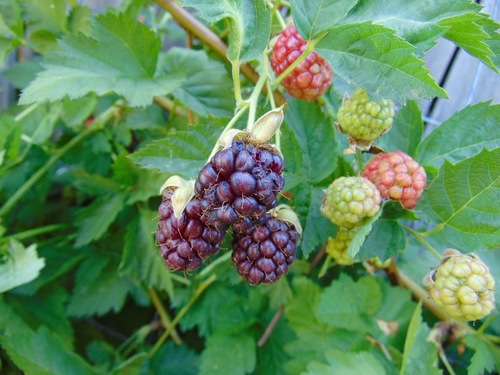
Verbatim
e0“Heat-treatment of loganberry source plants had no effect on meristem tips”
Claim · model-written summary
Heat treatment slightly increased red raspberry survival.
- Taxon
- red raspberry
 Rubus idaeuse0
- Treatment
- heat-treatmente1
- Outcome
- survivale0
- Direction
- increasede0
- Qualifier
- only slightlye0
Not reportedComparator
Organisms pictured · Representative pictures of the matched species, not figures from the paper.

Verbatim
e0“With red raspberry, survival was only slightly increased”
e1“heat-treatment prior to culture”
Claim · model-written summary
Heat treatment did not affect red raspberry growth rate.
- Taxon
- red raspberryRubus idaeuse0
- Treatment
- heat-treatmente1
- Outcome
- growth ratee0
- Direction
- not affectede0
Not reportedComparator
Organisms pictured · Representative pictures of the matched species, not figures from the paper.
Verbatim
e0“With red raspberry, survival was only slightly increased; growth rate was not affected”
e1“heat-treatment prior to culture”
Claim · model-written summary
Three sequential media induced meristem development, shoot proliferation and rooting.
Organisms pictured · Representative pictures of the matched species, not figures from the paper.
Verbatim
e0“Three media used in succession induced meristem tip development, shoot proliferation, and rooting, respectively”
t0“Rubus”
Claim · model-written summary
Diluting macroelements by as much as one to four had little effect.
Not reportedComparator
Organisms pictured · Representative pictures of the matched species, not figures from the paper.
Verbatim
e0“Effect of diluting macroelements, even by a 1:4 dilution was not dramatic”
t0“Rubus”
Claim · model-written summary
Inositol at 150 mg/L stimulated axillary bud proliferation.
Not reportedComparator
Organisms pictured · Representative pictures of the matched species, not figures from the paper.
Verbatim
e0“Inositol at 150 mg/L stimulated axillary bud proliferation”
t0“Rubus”
Claim · model-written summary
Inositol in the medium inhibited rooting.
Not reportedComparator
Organisms pictured · Representative pictures of the matched species, not figures from the paper.
Verbatim
e0“Inositol in the medium inhibited rooting”
t0“Rubus”
Claim · model-written summary
Naphthalene acetic acid caused callus proliferation.
Not reportedComparator
Organisms pictured · Representative pictures of the matched species, not figures from the paper.
Verbatim
e0“Naphthalene acetic acid (NAA) caused callus proliferation”
t0“Rubus”
Claim · model-written summary
Naphthalene acetic acid induced adventitious roots from leaf and shoot tissues.
- Organ / stage
- leaf petioles, leaf lamina, and callused shoot basese0
- Treatment
- Naphthalene acetic acid (NAA)e0
- Outcome
- adventitious root formatione0
- Direction
- inducede0
Not reportedComparator
Organisms pictured · Representative pictures of the matched species, not figures from the paper.
Verbatim
e0“Naphthalene acetic acid (NAA) caused callus proliferation and induced adventitious root formation from leaf petioles, leaf lamina, and callused shoot bases”
t0“Rubus”
Claim · model-written summary
Rooting was normal with IBA.
Organisms pictured · Representative pictures of the matched species, not figures from the paper.
Verbatim
e0“Rooting was normal with IBA”
t0“Rubus”
Claim · model-written summary
Medium pH and carbohydrate levels were critical and related to BAP concentration.
Not reportedDirection
Organisms pictured · Representative pictures of the matched species, not figures from the paper.
Verbatim
e0“Levels of pH and carbohydrates were critical, and effects were related to concentration of the cytokinin BAP in the medium”
t0“Rubus”
Claim · model-written summary
All four Rubus species had similar culture requirements and propagation potential.
- Outcome
- similar culture requirements, and micropropagation potentiale0
Organisms pictured · Representative pictures of the matched species, not figures from the paper.
Verbatim
e0“All four Rubus species tested had similar culture requirements, and micropropagation potential”
The same questions in other papers
1-naphthaleneacetic acid · growth · Rubus (bramble)Positive and negative results
3 papers in the same direction as this paper · 1 in the opposite direction
- no effect
- positive
- positive
1 paper more in this group
See all 5 papers →heat · growth · Rubus idaeus (red raspberry)Positive and negative results
2 papers in the same direction as this paper · 2 in the opposite direction
- positive
- positive
- negative
1 paper more in this group
See all 5 papers →in vitro · growth · Rubus (bramble)Positive and negative results
3 papers in the same direction as this paper · 13 in the opposite direction
- positive
- positive
- positive
13 papers more in this group
See all 17 papers →Claims are grouped by organism, treatment and what was measured or targeted. A paper counts as positive when any of its claims in the group is positive.