Abstract
Understanding why nitrogen fertilization increase the impact of many plant diseases is of major importance. The interaction between Magnaporthe oryzae and rice was used as a model for analyzing the molecular mechanisms underlying Nitrogen-Induced Susceptibility (NIS). We show that our experimental system in which nitrogen supply strongly affects rice blast susceptibility only slightly affects plant growth. In order to get insights into the mechanisms of NIS, we conducted a dual RNA-seq experiment on rice infected tissues under two nitrogen fertilization regimes. On the one hand, we show that enhanced susceptibility was visible despite an over-induction of defense gene expression by infection under high nitrogen regime. On the other hand, the fungus expressed to high levels effectors and pathogenicity-related genes in plants under high nitrogen regime. We propose that in plants supplied with elevated nitrogen fertilization, the observed enhanced induction of plant defense is over-passed by an increase in the expression of the fungal pathogenicity program, thus leading to enhanced susceptibility. Moreover, some rice genes implicated in nitrogen recycling were highly induced during NIS. We further demonstrate that the OsGS1-2 glutamine synthetase gene enhances plant resistance to M. oryzae and abolishes NIS and pinpoint glutamine as a potential key nutrient during NIS.
Abstract from the paper’s OpenAlex record; open copy licensed cc-by. Read at the source ↗
The text the model read, with the source record’s inline markup (italics, sub- and superscripts) rendered and its character entities decoded; quote offsets refer to the raw text.
Claims 7
Claim · model-written summary
High nitrogen regime enhanced rice susceptibility to Magnaporthe oryzae.
- Taxon
- rice
 Oryza sativae1
- Treatment
- high nitrogen regimee2
- Interactor
- Magnaporthe oryzae
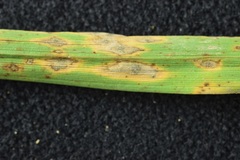 Pyricularia oryzaee1pathogen
- Outcome
- susceptibilitye2
- Direction
- enhancede2
Not reportedComparator
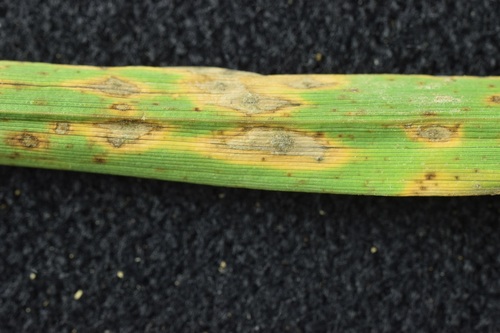
Organisms pictured · Representative pictures of the matched species, not figures from the paper.

Verbatim
e1“The interaction between Magnaporthe oryzae and rice was used as a model”
e2“enhanced susceptibility was visible despite an over-induction of defense gene expression by infection under high nitrogen regime”
Claim · model-written summary
Under high nitrogen regime, infected rice showed over-induction of defense gene expression.
- Taxon
- riceOryza sativae1
- Treatment
- high nitrogen regimee2
- Interactor
- Magnaporthe oryzaePyricularia oryzaee1pathogen
- Outcome
- defense gene expressione2
- Direction
- over-inductione2
Not reportedComparator
Organisms pictured · Representative pictures of the matched species, not figures from the paper.
Verbatim
e1“The interaction between Magnaporthe oryzae and rice was used as a model”
e2“enhanced susceptibility was visible despite an over-induction of defense gene expression by infection under high nitrogen regime”
Claim · model-written summary
The fungus expressed effectors and pathogenicity-related genes at higher levels in plants under high nitrogen regime.
- Taxon
- riceOryza sativae1
- Treatment
- high nitrogen regimee3
- Interactor
- Magnaporthe oryzaePyricularia oryzaee1pathogen
- Outcome
- effectors and pathogenicity-related genese3
- Direction
- increaseinferrede3
Not reportedComparator
Organisms pictured · Representative pictures of the matched species, not figures from the paper.
Verbatim
e1“The interaction between Magnaporthe oryzae and rice was used as a model”
e3“the fungus expressed to high levels effectors and pathogenicity-related genes in plants under high nitrogen regime”
Claim · model-written summary
Rice genes implicated in nitrogen recycling were highly induced during NIS.
- Taxon
- riceOryza sativae1
- Outcome
- rice genes implicated in nitrogen recyclinge4
- Direction
- highly inducede4
- Qualifier
- during NISe4
Organisms pictured · Representative pictures of the matched species, not figures from the paper.
Verbatim
e1“The interaction between Magnaporthe oryzae and rice was used as a model”
e4“some rice genes implicated in nitrogen recycling were highly induced during NIS”
Claim · model-written summary
The OsGS1-2 glutamine synthetase gene enhances rice resistance to M. oryzae.
- Taxon
- riceOryza sativae1
- Treatment
- the OsGS1-2 glutamine synthetase genee5
- Interactor
- M. oryzaePyricularia oryzaee5pathogen
- Gene
- OsGS1-2e5
- Outcome
- plant resistance to M. oryzaee5
- Direction
- enhancese5
Not reportedComparator
Organisms pictured · Representative pictures of the matched species, not figures from the paper.
Verbatim
e1“The interaction between Magnaporthe oryzae and rice was used as a model”
e5“the OsGS1-2 glutamine synthetase gene enhances plant resistance to M. oryzae and abolishes NIS”
Claim · model-written summary
The OsGS1-2 glutamine synthetase gene abolishes nitrogen-induced susceptibility (NIS).
- Taxon
- riceOryza sativae1
- Treatment
- the OsGS1-2 glutamine synthetase genee5
- Gene
- OsGS1-2e5
- Outcome
- NISe5
- Direction
- abolishese5
Not reportedComparator
Organisms pictured · Representative pictures of the matched species, not figures from the paper.
Verbatim
e1“The interaction between Magnaporthe oryzae and rice was used as a model”
e5“the OsGS1-2 glutamine synthetase gene enhances plant resistance to M. oryzae and abolishes NIS”
Claim · model-written summary
Glutamine is a potential key nutrient during NIS.
- Taxon
- riceOryza sativae1
- Compound
- glutaminee6
- Outcome
- NISe6
- Qualifier
- potential key nutriente6
Organisms pictured · Representative pictures of the matched species, not figures from the paper.
Verbatim
e1“The interaction between Magnaporthe oryzae and rice was used as a model”
e6“pinpoint glutamine as a potential key nutrient during NIS”
The same questions in other papers
glutamine · disease · Oryza sativa (rice)Results agree
1 paper in the same direction as this paper
- positive
nitrogen · Pyricularia oryzae · Oryza sativa (rice)Positive and negative results
2 in the opposite direction
- negative
- negative
Claims are grouped by organism, treatment and what was measured or targeted. A paper counts as positive when any of its claims in the group is positive.