Abstract
Fourteen isolates of Trichoderma spp were tested for their efficacy in controlling Bipolaris oryzae pathogen of rice brown spot disease in vitro and in vivo. Isolates of T. hamatum 4, T. viride 1, T. harzianum 1, 2 and 3 and T. virens were the best, recording 100% inhibition of the pathogen radial growth. Treatments of soil, and foliar spray with culture filterates of these antagonistic isolates were undertaken in the greenhouse and field during 2015 and 2016 seasons. A reduction in disease severity as well as an increment in chlorophyll content, POX, PPO and PAL enzymes activity and total phenol content were observed. T. viride1 and T. koningii were able to produce Indole Acetic Acid (IAA) with concentrations of 8.281, 1.359 ppm, gibberellic acid (GA3) 70.176, 41.052 ppm and abscisic acid (ABA) 1.649, 0.45 ppm, respectively. Foliar application of the cultural filtrates of T. harzianum 1 and T. viride 1 gave the highest concentration of IAA (20.697 and 11.916 ppm, respectively) in rice seedlings. Under field conditions, soil treatments with T. viride1 were more effective in reducing both brown spot percentage and disease severity similar to the effect of Del cup (Copper Sulfate Pentahydrate) fungicide in the two seasons.
Abstract from the paper’s OpenAlex record; open copy licensed cc-by. Read at the source ↗
The text the model read, with the source record’s inline markup (italics, sub- and superscripts) rendered and its character entities decoded; quote offsets refer to the raw text.
Claims 12
Claim · model-written summary
Several Trichoderma isolates inhibited Bipolaris oryzae radial growth by 100%.
- Taxon
- Rice
 Oryza sativat0
- Interactor
- Bipolaris oryzae
 Bipolaris oryzaet1pathogen
- Second interactor
- Trichoderma spp
 Trichodermat0biocontrol_agent
- Outcome
- pathogen radial growthe0
- Value
- 100%e0
Organisms pictured · Representative pictures of the matched species, not figures from the paper.

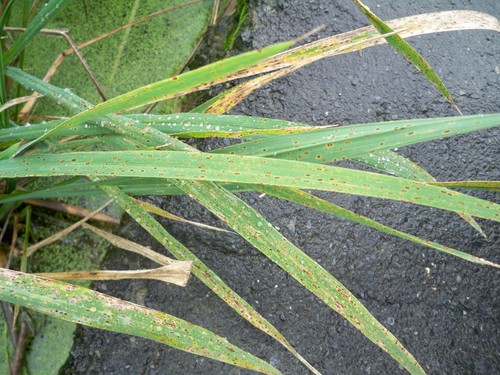

Verbatim
e0“Isolates of T. hamatum 4, T. viride 1, T. harzianum 1, 2 and 3 and T. virens were the best, recording 100% inhibition of the pathogen radial growth.”
t0“Trichoderma spp as Biocontrol Agents against Rice Brown Spot Disease”
t1“Bipolaris oryzae pathogen of rice brown spot disease”
Claim · model-written summary
Soil and foliar culture filtrate treatments reduced rice brown spot severity.
- Taxon
- RiceOryza sativat0
- Treatment
- Treatments of soil, and foliar spray with culture filteratese0
- Interactor
- Bipolaris oryzaeBipolaris oryzaet1pathogen
- Second interactor
- Trichoderma sppTrichodermat0biocontrol_agent
- Outcome
- disease severitye0
- Direction
- reductione0
- Setting
- greenhouse and fielde0
Not reportedComparator
Organisms pictured · Representative pictures of the matched species, not figures from the paper.
Verbatim
e0“Treatments of soil, and foliar spray with culture filterates of these antagonistic isolates were undertaken in the greenhouse and field during 2015 and 2016 seasons. A reduction in disease severity as well as an increment in chlorophyll content, POX, PPO and PAL enzymes activity and total phenol content were observed.”
t0“Trichoderma spp as Biocontrol Agents against Rice Brown Spot Disease”
t1“Bipolaris oryzae pathogen of rice brown spot disease”
Claim · model-written summary
Culture filtrate treatments increased rice chlorophyll content.
- Taxon
- RiceOryza sativat0
- Treatment
- culture filteratest1
- Outcome
- chlorophyll contente0
- Direction
- incremente0
Not reportedComparator
Organisms pictured · Representative pictures of the matched species, not figures from the paper.
Verbatim
e0“A reduction in disease severity as well as an increment in chlorophyll content, POX, PPO and PAL enzymes activity and total phenol content were observed.”
t0“Rice Brown Spot Disease”
t1“culture filterates of these antagonistic isolates”
Claim · model-written summary
Culture filtrate treatments increased rice POX, PPO and PAL enzyme activity.
- Taxon
- RiceOryza sativat0
- Treatment
- culture filteratest1
- Outcome
- POX, PPO and PAL enzymes activitye0
- Direction
- incremente0
Not reportedComparator
Organisms pictured · Representative pictures of the matched species, not figures from the paper.
Verbatim
e0“A reduction in disease severity as well as an increment in chlorophyll content, POX, PPO and PAL enzymes activity and total phenol content were observed.”
t0“Rice Brown Spot Disease”
t1“culture filterates of these antagonistic isolates”
Claim · model-written summary
Culture filtrate treatments increased rice total phenol content.
- Taxon
- RiceOryza sativat0
- Treatment
- culture filteratest1
- Outcome
- total phenol contente0
- Direction
- incremente0
Not reportedComparator
Organisms pictured · Representative pictures of the matched species, not figures from the paper.
Verbatim
e0“A reduction in disease severity as well as an increment in chlorophyll content, POX, PPO and PAL enzymes activity and total phenol content were observed.”
t0“Rice Brown Spot Disease”
t1“culture filterates of these antagonistic isolates”
Claim · model-written summary
T. viride1 and T. koningii produced IAA at 8.281 and 1.359 ppm, respectively.
- Taxon
- RiceOryza sativat0
- Interactor
- T. viride1 and T. koningii
 Trichoderma virideTrichoderma koningiie0biocontrol_agent
- Outcome
- Indole Acetic Acid (IAA)e0
- Value
- 8.281, 1.359 ppme0
Organisms pictured · Representative pictures of the matched species, not figures from the paper.

Verbatim
e0“T. viride1 and T. koningii were able to produce Indole Acetic Acid (IAA) with concentrations of 8.281, 1.359 ppm”
t0“Rice Brown Spot Disease”
Claim · model-written summary
T. viride1 and T. koningii produced gibberellic acid at 70.176 and 41.052 ppm, respectively.
- Taxon
- RiceOryza sativat0
- Interactor
- T. viride1 and T. koningiiTrichoderma virideTrichoderma koningiit1biocontrol_agent
- Outcome
- gibberellic acid (GA3)e0
- Value
- 70.176, 41.052 ppme0
Organisms pictured · Representative pictures of the matched species, not figures from the paper.
Verbatim
e0“gibberellic acid (GA3) 70.176, 41.052 ppm”
t0“Rice Brown Spot Disease”
t1“T. viride1 and T. koningii were able to produce Indole Acetic Acid (IAA)”
Claim · model-written summary
T. viride1 and T. koningii produced ABA at 1.649 and 0.45 ppm, respectively.
- Taxon
- RiceOryza sativat0
- Interactor
- T. viride1 and T. koningiiTrichoderma virideTrichoderma koningiit1biocontrol_agent
- Outcome
- abscisic acid (ABA)e0
- Value
- 1.649, 0.45 ppme0
Organisms pictured · Representative pictures of the matched species, not figures from the paper.
Verbatim
e0“abscisic acid (ABA) 1.649, 0.45 ppm”
t0“Rice Brown Spot Disease”
t1“T. viride1 and T. koningii were able to produce Indole Acetic Acid (IAA)”
Claim · model-written summary
Foliar T. harzianum 1 filtrate gave the highest rice seedling IAA concentration, 20.697 ppm.
- Taxon
- riceOryza sativae0
- Organ / stage
- seedlingse0
- Treatment
- Foliar application of the cultural filtrates of T. harzianum 1e0
- Interactor
- T. harzianum 1Trichoderma harzianume0biocontrol_agent
- Outcome
- concentration of IAAe0
- Direction
- higheste0
- Value
- 20.697e0
Not reportedComparator
Organisms pictured · Representative pictures of the matched species, not figures from the paper.
Verbatim
e0“Foliar application of the cultural filtrates of T. harzianum 1 and T. viride 1 gave the highest concentration of IAA (20.697 and 11.916 ppm, respectively) in rice seedlings.”
Claim · model-written summary
Foliar T. viride 1 filtrate gave the highest rice seedling IAA concentration, 11.916 ppm.
- Taxon
- riceOryza sativae0
- Organ / stage
- seedlingse0
- Treatment
- T. viride 1e0
- Interactor
- T. viride 1Trichoderma viridee0biocontrol_agent
- Outcome
- concentration of IAAe0
- Direction
- higheste0
- Value
- 11.916 ppme0
Not reportedComparator
Organisms pictured · Representative pictures of the matched species, not figures from the paper.
Verbatim
e0“Foliar application of the cultural filtrates of T. harzianum 1 and T. viride 1 gave the highest concentration of IAA (20.697 and 11.916 ppm, respectively) in rice seedlings.”
Claim · model-written summary
Field soil treatment with T. viride1 reduced rice brown spot percentage more effectively, similarly to Del cup.
- Taxon
- RiceOryza sativat0
- Treatment
- soil treatments with T. viride1e0
- Interactor
- Bipolaris oryzaeBipolaris oryzaet1pathogen
- Second interactor
- T. viride1Trichoderma viridee0biocontrol_agent
- Outcome
- brown spot percentagee0
- Direction
- reducinge0
- Comparator
- Del cupe0
- Setting
- field conditionse0
Organisms pictured · Representative pictures of the matched species, not figures from the paper.
Verbatim
e0“Under field conditions, soil treatments with T. viride1 were more effective in reducing both brown spot percentage and disease severity similar to the effect of Del cup (Copper Sulfate Pentahydrate) fungicide in the two seasons.”
t0“Rice Brown Spot Disease”
t1“Bipolaris oryzae pathogen of rice brown spot disease”
Claim · model-written summary
Field soil treatment with T. viride1 reduced rice brown spot severity more effectively, similarly to Del cup.
- Taxon
- RiceOryza sativat0
- Treatment
- soil treatments with T. viride1e0
- Interactor
- Bipolaris oryzaeBipolaris oryzaet1pathogen
- Second interactor
- T. viride1Trichoderma viridee0biocontrol_agent
- Outcome
- disease severitye0
- Direction
- reducinge0
- Comparator
- Del cupe0
- Setting
- field conditionse0
Organisms pictured · Representative pictures of the matched species, not figures from the paper.
Verbatim
e0“Under field conditions, soil treatments with T. viride1 were more effective in reducing both brown spot percentage and disease severity similar to the effect of Del cup (Copper Sulfate Pentahydrate) fungicide in the two seasons.”
t0“Rice Brown Spot Disease”
t1“Bipolaris oryzae pathogen of rice brown spot disease”
The same questions in other papers
Trichoderma viride · Bipolaris oryzae · Oryza sativa (rice)Results agree
5 papers in the same direction as this paper
- positive
- positive
- positive
2 papers more in this group
See all 6 papers →application · molecular: metabolites · Oryza sativa (rice)Positive and negative results
71 papers in the same direction as this paper · 3 in the opposite direction
- no effect
- no effect
- no effect
71 papers more in this group
See all 75 papers →application · Bipolaris oryzae · Oryza sativa (rice)Results agree
9 papers in the same direction as this paper
- positive
- positive
- positive
6 papers more in this group
See all 10 papers →Claims are grouped by organism, treatment and what was measured or targeted. A paper counts as positive when any of its claims in the group is positive.