Abstract
Rice is a crop that is consumed as a staple food by the majority of the people in the world and therefore failure in rice crops, due to any reason, poses a severe threat of starvation. Rice blast, caused by a fungus Pyricularia oryzae, has been ranked among the most threatening plant diseases of rice and it is found wherever rice is grown. All of the rice blast disease management strategies employed so far have had limited success and rice blast has never been eliminated from rice fields. Hence, there is a need to look for the best remedy in terms of effectiveness, sustainability, and organic nature of the method. This study was aimed at determining the plant growth-promoting and fungicidal effects of a mixture of Piper caninum and Piper betle var. Nigra leaves extracts and rhizobacteria. Gas chromatography–mass spectrophotometry (GC-MS) analysis of a mixture of leaves extracts of these plants revealed the presence of new bioactive compounds such as alpha.-gurjunene, gamma.-terpinene, and ethyl 5-formyl 3-(2-ethoxycarbonyl) in a mixture of leaves extracts of P. caninum and P. betle var. Nigra. The mixture of these extracts reduced the intensity of blast disease, inhibited P. oryzae, and improved the growth, yield, and quality of Bali rice. All treatments comprising of different concentrations of a mixture of leaves extracts of P. caninum and P. betle var. Nigra plus rhizobacteria exhibited biocontrol and bioefficacy. However, a 2% concentration of a mixture of these leaves extracts with plant growth-promoting rhizobacteria (PGPR) exhibited potent inhibition of growth of P. oryzae, a significant reduction in the intensity of blast disease, and a maximum increase in growth, yield, and quality of Bali rice. In the 15th week, the intensity of blast disease decreased from 80.18% to 7.90%. The mixture of leaves extract + PGPR also improved the height of the plant, the number of tillers, number of leaves, number of grains per panicle, number of heads per panicle, and the full-grain weight per clump. Applications of various concentrations of a mixture of leaves extracts + PGPR resulted in improvement in the potential yield of rice, however, the application of 2% extracts + PGPR gave the highest potential yield of 5.61 tha−1 compared to the low yields in the control and other treatments. The high grain yield observed with the treatment was caused by the low intensity of blast disease. This treatment also strengthened the stem and prevented the drooping of the plant and improved the quality of rice grain.
Abstract from the paper’s OpenAlex record; open copy licensed cc-by. Read at the source ↗
The text the model read, with the source record’s inline markup (italics, sub- and superscripts) rendered and its character entities decoded; quote offsets refer to the raw text.
Claims 16
Claim · model-written summary
GC-MS identified three new bioactive compounds in mixed Piper leaf extracts.
- Taxon
- P. caninum
 Piper caninume0
- Outcome
- alpha.-gurjunene, gamma.-terpinene, and ethyl 5-formyl 3-(2-ethoxycarbonyl)e0
Organisms pictured · Representative pictures of the matched species, not figures from the paper.

Verbatim
e0“revealed the presence of new bioactive compounds such as alpha.-gurjunene, gamma.-terpinene, and ethyl 5-formyl 3-(2-ethoxycarbonyl) in a mixture of leaves extracts of P. caninum and P. betle var. Nigra”
Claim · model-written summary
Mixed extracts reduced rice blast intensity.
- Taxon
- Bali ricee0
- Treatment
- mixture of these extractse0
- Interactor
- P. oryzae
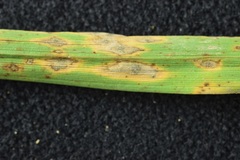 Pyricularia oryzaee0pathogen
- Outcome
- intensity of blast diseasee0
- Direction
- reducede0
Not reportedComparator
Organisms pictured · Representative pictures of the matched species, not figures from the paper.
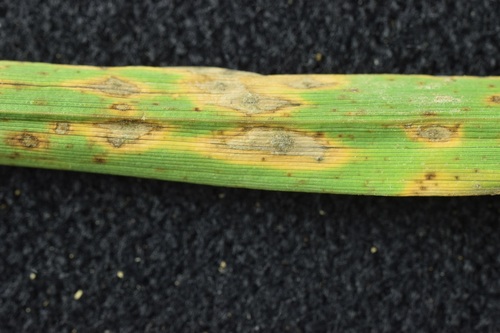
Verbatim
e0“The mixture of these extracts reduced the intensity of blast disease, inhibited P. oryzae, and improved the growth, yield, and quality of Bali rice.”
Claim · model-written summary
Mixed extracts inhibited P. oryzae.
- Taxon
- Bali ricee0
- Treatment
- mixture of these extractse0
- Interactor
- P. oryzaePyricularia oryzaee0pathogen
- Outcome
- P. oryzaee0
- Direction
- inhibitede0
Not reportedComparator
Organisms pictured · Representative pictures of the matched species, not figures from the paper.
Verbatim
e0“The mixture of these extracts reduced the intensity of blast disease, inhibited P. oryzae, and improved the growth, yield, and quality of Bali rice.”
Claim · model-written summary
Mixed extracts improved growth, yield, and quality of Bali rice.
- Taxon
- Bali ricee0
- Treatment
- mixture of these extractse0
- Outcome
- growth, yield, and qualitye0
- Direction
- improvede0
Not reportedComparator
Verbatim
e0“The mixture of these extracts reduced the intensity of blast disease, inhibited P. oryzae, and improved the growth, yield, and quality of Bali rice.”
Claim · model-written summary
All tested extract concentrations plus rhizobacteria exhibited biocontrol and bioefficacy.
- Taxon
- Bali Ricet0
- Treatment
- mixture of leaves extracts of P. caninum and P. betle var. Nigra plus rhizobacteriae0
- Interactor
- rhizobacteriaHyphomicrobialese0biocontrol_agent
- Outcome
- biocontrol and bioefficacye0
Verbatim
e0“All treatments comprising of different concentrations of a mixture of leaves extracts of P. caninum and P. betle var. Nigra plus rhizobacteria exhibited biocontrol and bioefficacy.”
t0“Bali Rice”
Claim · model-written summary
The 2% extract plus PGPR treatment strongly inhibited P. oryzae growth.
- Taxon
- Bali Ricet0
- Treatment
- 2% concentration of a mixture of these leaves extracts with plant growth-promoting rhizobacteria (PGPR)e0
- Interactor
- P. oryzaePyricularia oryzaee0pathogen
- Second interactor
- plant growth-promoting rhizobacteria (PGPR)e0biocontrol_agent
- Outcome
- growth of P. oryzaee0
- Direction
- inhibitione0
Not reportedComparator
Organisms pictured · Representative pictures of the matched species, not figures from the paper.
Verbatim
e0“a 2% concentration of a mixture of these leaves extracts with plant growth-promoting rhizobacteria (PGPR) exhibited potent inhibition of growth of P. oryzae”
t0“Bali Rice”
Claim · model-written summary
The 2% extract plus PGPR treatment significantly reduced blast intensity.
Not reportedComparator
Verbatim
e0“a significant reduction in the intensity of blast disease”
t0“Blast Pathogen of Organic Bali Rice”
e1“a 2% concentration of a mixture of these leaves extracts with plant growth-promoting rhizobacteria (PGPR) exhibited potent inhibition of growth of P. oryzae”
Claim · model-written summary
The 2% treatment maximized rice growth, yield, and quality.
Not reportedComparator
Verbatim
e0“a maximum increase in growth, yield, and quality of Bali rice”
t0“A Mixture of Piper Leaves Extracts and Rhizobacteria for Sustainable Plant Growth Promotion and Bio-Control of Blast Pathogen of Organic Bali Rice”
e1“a 2% concentration of a mixture of these leaves extracts with plant growth-promoting rhizobacteria (PGPR) exhibited potent inhibition of growth of P. oryzae”
Claim · model-written summary
At week 15, blast intensity fell from 80.18% to 7.90%.
Verbatim
e0“In the 15th week, the intensity of blast disease decreased from 80.18% to 7.90%.”
t0“Blast Pathogen of Organic Bali Rice”
e1“a 2% concentration of a mixture of these leaves extracts with plant growth-promoting rhizobacteria (PGPR) exhibited potent inhibition of growth of P. oryzae”
Claim · model-written summary
The extract plus PGPR mixture improved plant height, tiller number, and leaf number.
- Taxon
- Bali Ricet0
- Treatment
- mixture of leaves extract + PGPRe0
- Interactor
- PGPRe0symbiont
- Outcome
- height of the plant, the number of tillers, number of leavese0
- Direction
- improvede0
Not reportedComparator
Verbatim
e0“The mixture of leaves extract + PGPR also improved the height of the plant, the number of tillers, number of leaves”
t0“Bali Rice”
Claim · model-written summary
The extract plus PGPR mixture improved grains and heads per panicle and full-grain weight per clump.
- Taxon
- Bali Ricet0
- Treatment
- PGPRe1
- Interactor
- rhizobacteriaHyphomicrobialese2symbionte0
- Outcome
- number of grains per panicle, number of heads per panicle, and the full-grain weight per clumpe0
- Direction
- improvede1
Not reportedComparator
Verbatim
e0“number of grains per panicle, number of heads per panicle, and the full-grain weight per clump”
t0“Plant Growth Promotion and Bio-Control of Blast Pathogen of Organic Bali Rice”
e1“The mixture of leaves extract + PGPR also improved the height of the plant, the number of tillers, number of leaves”
e2“All treatments comprising of different concentrations of a mixture of leaves extracts of P. caninum and P. betle var. Nigra plus rhizobacteria exhibited biocontrol and bioefficacy.”
Claim · model-written summary
All tested extract plus PGPR concentrations improved potential rice yield.
- Taxon
- rice
 Oryza sativae0
- Treatment
- various concentrations of a mixture of leaves extracts + PGPRe0
- Interactor
- PGPRe0symbiont
- Outcome
- potential yield of ricee0
- Direction
- improvemente0
Not reportedComparator
Organisms pictured · Representative pictures of the matched species, not figures from the paper.

Verbatim
e0“Applications of various concentrations of a mixture of leaves extracts + PGPR resulted in improvement in the potential yield of rice”
Claim · model-written summary
The 2% extract plus PGPR treatment gave the highest potential rice yield, 5.61 tha−1.
- Taxon
- riceOryza sativat0
- Treatment
- 2% extracts + PGPRe0
- Interactor
- PGPRe0symbiont
- Outcome
- potential yielde0
- Direction
- higheste0
- Value
- 5.61 tha−1e0
- Comparator
- control and other treatmentse0
Organisms pictured · Representative pictures of the matched species, not figures from the paper.
Verbatim
e0“the application of 2% extracts + PGPR gave the highest potential yield of 5.61 tha−1 compared to the low yields in the control and other treatments”
t0“Organic Bali Rice”
Claim · model-written summary
The authors attribute high grain yield to low blast intensity.
Verbatim
e0“The high grain yield observed with the treatment was caused by the low intensity of blast disease.”
t0“Bali Rice”
Claim · model-written summary
The treatment strengthened stems and prevented drooping.
- Taxon
- Bali Ricet0
- Treatment
- This treatmente0
- Outcome
- stem and prevented the drooping of the plante0
- Direction
- strengthenede0
Not reportedComparator
Verbatim
e0“This treatment also strengthened the stem and prevented the drooping of the plant”
t0“Bali Rice”
Claim · model-written summary
The treatment improved rice-grain quality.
- Taxon
- riceOryza sativae0
- Treatment
- concentratione1
- Outcome
- quality of rice graine0
- Direction
- improvede0
Not reportedComparator
Organisms pictured · Representative pictures of the matched species, not figures from the paper.
Verbatim
e0“improved the quality of rice grain”
t0“A Mixture of Piper Leaves Extracts and Rhizobacteria for Sustainable Plant Growth Promotion and Bio-Control of Blast Pathogen of Organic Bali Rice”
e1“a 2% concentration of a mixture of these leaves extracts with plant growth-promoting rhizobacteria (PGPR) exhibited potent inhibition of growth of P. oryzae”
The same questions in other papers
botanical · yield · Oryza sativa (rice)Results differ
192 papers in the same direction as this paper · 11 in the opposite direction · 4 reporting no difference from an alternative
- positive
- negative
- no effect
204 papers more in this group
See all 208 papers →inoculation · yield · Oryza sativa (rice)Positive and negative results
381 papers in the same direction as this paper · 31 in the opposite direction · 5 reporting no difference from an alternative
- positive
- negative
- negative
414 papers more in this group
See all 418 papers →Claims are grouped by organism, treatment and what was measured or targeted. A paper counts as positive when any of its claims in the group is positive.