Abstract
Drought and salinity are amongst the most damaging environmental stressors that can affect a plant's life cycle, from germination to senescence. In the present study were analysed the responses to salinity and drought in greenhouse-controlled conditions of two varieties of Lavandula angustifolia. Three-month-old lavender seedlings were subjected to water deficit and salt stress (100, 200 and 300 mM NaCl) during a 30-day period. Complementing a previous analysis focused on stress tolerance mechanisms based on the regulation of ion transport and the synthesis of osmolytes, we have now evaluated the effects of the water deficit and salt treatments on the generation of secondary oxidative stress, by measuring malondialdehyde levels, and the activation of antioxidant systems, both non-enzymatic and enzymatic, determining total phenolic compounds and flavonoids contents and calculating superoxide dismutase, catalase, ascorbate peroxidase and glutathione reductase specific activities, respectively, in extracts of control and stressed plants. The results obtained confirm that both lavender varieties react in the same way to the applied stress treatments, activating the same antioxidant responses. However, some differences were observed when comparing the specific mechanisms triggered by each type of stress. Thus, the oxidative stress induced under drought conditions was counteracted by accumulation of phenolic compounds and flavonoids, without apparent involvement of antioxidant enzymes. Salt stress, on the other hand, in addition to an increase in flavonoid levels also induced superoxide dismutase and catalase activities. These antioxidant responses are likely to contribute to the relatively high tolerance (as compared to most crops) of lavender to drought and salinity.
Abstract from the paper’s OpenAlex record; open copy licensed cc-by. Read at the source ↗
The text the model read, with the source record’s inline markup (italics, sub- and superscripts) rendered and its character entities decoded; quote offsets refer to the raw text.
Claims 6
Claim · model-written summary
Both lavender varieties activated the same antioxidant responses to the applied stress treatments.
- Taxon
- Lavandula angustifolia
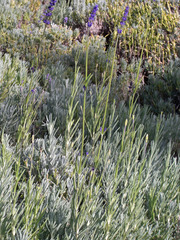 Lavandula angustifoliat0
- Treatment
- applied stress treatmentse0
- Outcome
- same antioxidant responsese0
Organisms pictured · Representative pictures of the matched species, not figures from the paper.
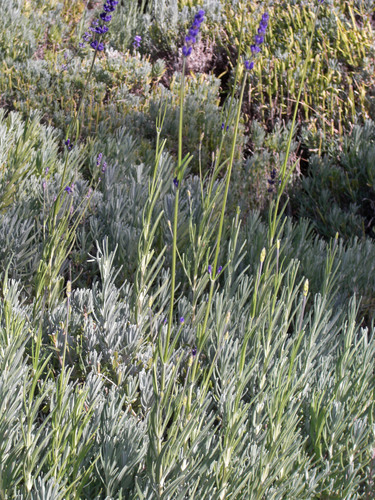
Verbatim
e0“both lavender varieties react in the same way to the applied stress treatments, activating the same antioxidant responses”
t0“Lavandula angustifolia”
Claim · model-written summary
Drought-induced oxidative stress was counteracted by phenolic compound and flavonoid accumulation.
- Taxon
- Lavandula angustifoliaLavandula angustifoliat0
- Treatment
- drought conditionse0
- Outcome
- oxidative stresse0
- Qualifier
- accumulation of phenolic compounds and flavonoidse0
Organisms pictured · Representative pictures of the matched species, not figures from the paper.
Verbatim
e0“oxidative stress induced under drought conditions was counteracted by accumulation of phenolic compounds and flavonoids”
t0“Lavandula angustifolia”
Claim · model-written summary
Antioxidant enzymes showed no apparent involvement in counteracting drought-induced oxidative stress.
- Taxon
- Lavandula angustifoliaLavandula angustifoliat0
- Outcome
- involvement of antioxidant enzymese0
- Qualifier
- without apparent involvemente0
Not reportedDirection
Organisms pictured · Representative pictures of the matched species, not figures from the paper.
Verbatim
e0“without apparent involvement of antioxidant enzymes”
t0“Lavandula angustifolia”
Claim · model-written summary
Salt stress increased flavonoid levels.
- Taxon
- Lavandula angustifoliaLavandula angustifoliat0
- Treatment
- Salt stresse0
- Outcome
- flavonoid levelse0
- Direction
- increasee0
Not reportedComparator
Organisms pictured · Representative pictures of the matched species, not figures from the paper.
Verbatim
e0“Salt stress, on the other hand, in addition to an increase in flavonoid levels also induced superoxide dismutase and catalase activities”
t0“Lavandula angustifolia”
Claim · model-written summary
Salt stress induced superoxide dismutase and catalase activities.
- Taxon
- Lavandula angustifoliaLavandula angustifoliat0
- Treatment
- Salt stresse0
- Outcome
- superoxide dismutase and catalase activitiese0
- Direction
- inducede0
Not reportedComparator
Organisms pictured · Representative pictures of the matched species, not figures from the paper.
Verbatim
e0“Salt stress, on the other hand, in addition to an increase in flavonoid levels also induced superoxide dismutase and catalase activities”
t0“Lavandula angustifolia”
Claim · model-written summary
The authors suggest these antioxidant responses contribute to lavender tolerance of drought and salinity.
- Taxon
- lavenderLavandula angustifoliae0
- Outcome
- relatively high tolerancee0
- Qualifier
- These antioxidant responsese0
- Comparator
- most cropse0
Organisms pictured · Representative pictures of the matched species, not figures from the paper.
Verbatim
e0“These antioxidant responses are likely to contribute to the relatively high tolerance (as compared to most crops) of lavender to drought and salinity”
The same questions in other papers
salinity · quality: phytochemicals · Lavandula angustifolia (lavender)Positive and negative results
1 in the opposite direction
- negative
Claims are grouped by organism, treatment and what was measured or targeted. A paper counts as positive when any of its claims in the group is positive.