Abstract
Phytotoxicity of the essential oil (EO) of Piper nigrum L. against Solanum lycopersicum L., Zea mays L. and Vigna unguiculata L. was studied. The GC-MS analysis of the essential oil of P. nigrum shows that linalool (21.73 %) was the major component of the essential oil. The EO retarded the growth of the root and the shoot of S. lycopersicum, Z. mays and V. unguiculata. The inhibition of the root ranged from 64.8-82.8% after 120 hours with a concentration of 4 mL/L, while for the shoot, 100% inhibition was observed with 4 mL/L of the EO formulation after just 96 hours. The phytotoxic effect on the leaves was highest in V. unguiculata and least in S. lycopersicum. Phototoxicity was also observed when the EO formulations were applied to the root of the seedlings of Z. mays and V. unguiculata recorded 100% distress of the seedlings when 3 mL/L of the graded concentration was used after 24 hours. EO from P. nigrum is a potential bio-herbicide with a wide spectrum of use on plants.
Abstract from the paper’s OpenAlex record; open copy licensed cc-by-nc. Read at the source ↗
The text the model read, with the source record’s inline markup (italics, sub- and superscripts) rendered and its character entities decoded; quote offsets refer to the raw text.
Claims 11
Claim · model-written summary
Linalool constituted 21.73% of Piper nigrum essential oil.
- Taxon
- P. nigrum
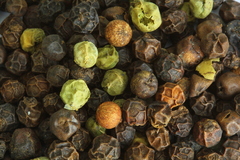 Piper nigrume0
- Outcome
- linaloole0
- Value
- 21.73 %e0
Organisms pictured · Representative pictures of the matched species, not figures from the paper.

Verbatim
e0“The GC-MS analysis of the essential oil of P. nigrum shows that linalool (21.73 %) was the major component of the essential oil.”
Claim · model-written summary
The oil retarded root and shoot growth in Solanum lycopersicum.
- Taxon
- S. lycopersicum
 Solanum lycopersicume0
- Treatment
- EOe0
- Outcome
- growth of the root and the shoote0
- Direction
- retardede0
Not reportedComparator
Organisms pictured · Representative pictures of the matched species, not figures from the paper.

Verbatim
e0“The EO retarded the growth of the root and the shoot of S. lycopersicum, Z. mays and V. unguiculata.”
Claim · model-written summary
The oil retarded root and shoot growth in Zea mays.
 Zea mays
Not reportedComparator
Organisms pictured · Representative pictures of the matched species, not figures from the paper.

Verbatim
e0“The EO retarded the growth of the root and the shoot of S. lycopersicum, Z. mays and V. unguiculata.”
Claim · model-written summary
The oil retarded root and shoot growth in Vigna unguiculata.
- Taxon
- V. unguiculata
 Vigna unguiculatae0
- Treatment
- EOe0
- Outcome
- growth of the root and the shoote0
- Direction
- retardede0
Not reportedComparator
Organisms pictured · Representative pictures of the matched species, not figures from the paper.

Verbatim
e0“The EO retarded the growth of the root and the shoot of S. lycopersicum, Z. mays and V. unguiculata.”
Claim · model-written summary
Root inhibition ranged from 64.8 to 82.8% after 120 hours at 4 mL/L oil.
- Taxon
- Solanum lycopersicum L.Solanum lycopersicumt0
- Treatment
- 4 mL/Le0
- Outcome
- inhibition of the roote0
- Direction
- inhibitione0
- Value
- 64.8-82.8%e0
- Qualifier
- after 120 hourse0
Not reportedComparator
Organisms pictured · Representative pictures of the matched species, not figures from the paper.
Verbatim
e0“The inhibition of the root ranged from 64.8-82.8% after 120 hours with a concentration of 4 mL/L”
t0“Phytotoxicity of the essential oil (EO) of Piper nigrum L. against Solanum lycopersicum L., Zea mays L. and Vigna unguiculata L. was studied.”
Claim · model-written summary
Shoot inhibition reached 100% after 96 hours at 4 mL/L oil.
- Taxon
- Solanum lycopersicum L.Solanum lycopersicumt0
- Treatment
- 4 mL/L of the EO formulatione0
- Outcome
- shoote0
- Direction
- inhibitione0
- Value
- 100%e0
- Qualifier
- after just 96 hourse0
Not reportedComparator
Organisms pictured · Representative pictures of the matched species, not figures from the paper.
Verbatim
e0“for the shoot, 100% inhibition was observed with 4 mL/L of the EO formulation after just 96 hours.”
t0“Phytotoxicity of the essential oil (EO) of Piper nigrum L. against Solanum lycopersicum L., Zea mays L. and Vigna unguiculata L. was studied.”
Claim · model-written summary
Leaf phytotoxicity was highest in Vigna unguiculata.
- Taxon
- V. unguiculataVigna unguiculatae0
- Outcome
- phytotoxic effect on the leavese0
- Direction
- higheste0
Organisms pictured · Representative pictures of the matched species, not figures from the paper.
Verbatim
e0“The phytotoxic effect on the leaves was highest in V. unguiculata and least in S. lycopersicum.”
Claim · model-written summary
Leaf phytotoxicity was lowest in Solanum lycopersicum.
- Taxon
- S. lycopersicumSolanum lycopersicume0
- Outcome
- phytotoxic effect on the leavese0
- Direction
- leaste0
Organisms pictured · Representative pictures of the matched species, not figures from the paper.
Verbatim
e0“The phytotoxic effect on the leaves was highest in V. unguiculata and least in S. lycopersicum.”
Claim · model-written summary
Root application at 3 mL/L caused 100% seedling distress in maize after 24 hours.
- Treatment
- 3 mL/L of the graded concentratione0
- Outcome
- distress of the seedlingse0
- Direction
- distresse0
- Value
- 100%e0
- Qualifier
- after 24 hourse0
Not reportedComparator
Organisms pictured · Representative pictures of the matched species, not figures from the paper.
Verbatim
e0“the root of the seedlings of Z. mays and V. unguiculata recorded 100% distress of the seedlings when 3 mL/L of the graded concentration was used after 24 hours.”
Claim · model-written summary
Root application at 3 mL/L caused 100% seedling distress in cowpea after 24 hours.
- Taxon
- V. unguiculataVigna unguiculatae0
- Treatment
- 3 mL/L of the graded concentratione0
- Outcome
- distress of the seedlingse0
- Direction
- distresse0
- Value
- 100%e0
- Qualifier
- after 24 hourse0
Not reportedComparator
Organisms pictured · Representative pictures of the matched species, not figures from the paper.
Verbatim
e0“the root of the seedlings of Z. mays and V. unguiculata recorded 100% distress of the seedlings when 3 mL/L of the graded concentration was used after 24 hours.”
Claim · model-written summary
The authors consider Piper nigrum oil a potential broad-spectrum bio-herbicide.
- Taxon
- P. nigrumPiper nigrume0
- Outcome
- potential bio-herbicide with a wide spectrum of use on plantse0
Organisms pictured · Representative pictures of the matched species, not figures from the paper.
Verbatim
e0“EO from P. nigrum is a potential bio-herbicide with a wide spectrum of use on plants.”
The same questions in other papers
botanical · growth · Vigna unguiculata (cowpea)Positive and negative results
44 papers in the same direction as this paper · 60 in the opposite direction
- positive
- positive
- positive
101 papers more in this group
See all 105 papers →botanical · growth · Solanum lycopersicum (tomato)Positive and negative results
87 papers in the same direction as this paper · 203 in the opposite direction
- positive
- positive
- positive
287 papers more in this group
See all 291 papers →botanical · growth · Zea mays (maize)Positive and negative results
141 papers in the same direction as this paper · 198 in the opposite direction
- positive
- positive
- positive
336 papers more in this group
See all 340 papers →Claims are grouped by organism, treatment and what was measured or targeted. A paper counts as positive when any of its claims in the group is positive.