Abstract
Because pathogens use diverse infection strategies, plants cannot use one-size-fits-all defence and modulate defence responses based on the nature of pathogens and pathogenicity mechanism. Here, we report that a rice glycoside hydrolase (GH) plays contrasting roles in defence depending on whether a pathogen is hemibiotrophic or necrotrophic. The Arabidopsis thaliana MORE1 (Magnaporthe oryzae resistance 1) gene, encoding a member of the GH10 family, is needed for resistance against M. oryzae and Alternaria brassicicola, a fungal pathogen infecting A. thaliana as a necrotroph. Among 13 rice genes homologous to MORE1, 11 genes were induced during the biotrophic or necrotrophic stage of infection by M. oryzae. CRISPR/Cas9-assisted disruption of one of them (OsMORE1a) enhanced resistance against hemibiotrophic pathogens M. oryzae and Xanthomonas oryzae pv. oryzae but increased susceptibility to Cochliobolus miyabeanus, a necrotrophic fungus, suggesting that OsMORE1a acts as a double-edged sword depending on the mode of infection (hemibiotrophic vs. necrotrophic). We characterized molecular and cellular changes caused by the loss of MORE1 and OsMORE1a to understand how these genes participate in modulating defence responses. Although the underlying mechanism of action remains unknown, both genes appear to affect the expression of many defence-related genes. Expression patterns of the GH10 family genes in A. thaliana and rice suggest that other members also participate in pathogen defence.
Abstract from the paper’s OpenAlex record; open copy licensed cc-by. Read at the source ↗
The text the model read, with the source record’s inline markup (italics, sub- and superscripts) rendered and its character entities decoded; quote offsets refer to the raw text.
Claims 9
Claim · model-written summary
Arabidopsis MORE1 is required for resistance to M. oryzae.
- Taxon
- Arabidopsis thaliana
 Arabidopsis thalianae0
- Interactor
- M. oryzae
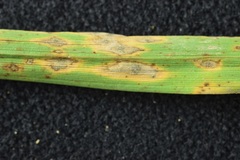 Pyricularia oryzaee0pathogen
- Gene
- MORE1e0
- Outcome
- resistance against M. oryzaee0
Organisms pictured · Representative pictures of the matched species, not figures from the paper.

Verbatim
e0“The Arabidopsis thaliana MORE1 (Magnaporthe oryzae resistance 1) gene, encoding a member of the GH10 family, is needed for resistance against M. oryzae and Alternaria brassicicola, a fungal pathogen infecting A. thaliana as a necrotroph.”
Claim · model-written summary
Arabidopsis MORE1 is required for resistance to Alternaria brassicicola.
- Taxon
- Arabidopsis thalianaArabidopsis thalianae0
- Interactor
- Alternaria brassicicola
 Alternaria brassicicolae0pathogen
- Gene
- MORE1e0
- Outcome
- resistance against M. oryzae and Alternaria brassicicolae0
Organisms pictured · Representative pictures of the matched species, not figures from the paper.

Verbatim
e0“The Arabidopsis thaliana MORE1 (Magnaporthe oryzae resistance 1) gene, encoding a member of the GH10 family, is needed for resistance against M. oryzae and Alternaria brassicicola, a fungal pathogen infecting A. thaliana as a necrotroph.”
Claim · model-written summary
Eleven of 13 rice MORE1 homologues were induced during M. oryzae infection stages.
- Taxon
- rice
 Oryza sativae0
- Interactor
- M. oryzaePyricularia oryzaee0pathogen
- Gene
- MORE1e0
- Outcome
- 11 genes were inducede0
- Value
- 11 genese0
Organisms pictured · Representative pictures of the matched species, not figures from the paper.

Verbatim
e0“Among 13 rice genes homologous to MORE1, 11 genes were induced during the biotrophic or necrotrophic stage of infection by M. oryzae.”
Claim · model-written summary
OsMORE1a disruption enhanced rice resistance to M. oryzae.
- Taxon
- riceOryza sativat0
- Treatment
- CRISPR/Cas9-assisted disruptione0
- Interactor
- M. oryzaePyricularia oryzaee0pathogen
- Gene
- OsMORE1ae0
- Outcome
- resistance against hemibiotrophic pathogens M. oryzaee0
- Direction
- enhancede0
Not reportedComparator
Organisms pictured · Representative pictures of the matched species, not figures from the paper.
Verbatim
e0“CRISPR/Cas9-assisted disruption of one of them (OsMORE1a) enhanced resistance against hemibiotrophic pathogens M. oryzae and Xanthomonas oryzae pv. oryzae but increased susceptibility to Cochliobolus miyabeanus, a necrotrophic fungus”
t0“rice”
Claim · model-written summary
OsMORE1a disruption enhanced rice resistance to Xanthomonas oryzae pv. oryzae.
- Taxon
- riceOryza sativat0
- Treatment
- CRISPR/Cas9-assisted disruptione0
- Interactor
- Xanthomonas oryzae pv. oryzae
 Xanthomonas oryzae pv. oryzaee0pathogen
- Gene
- OsMORE1ae0
- Outcome
- resistancee0
- Direction
- enhancede0
Not reportedComparator
Organisms pictured · Representative pictures of the matched species, not figures from the paper.

Verbatim
e0“CRISPR/Cas9-assisted disruption of one of them (OsMORE1a) enhanced resistance against hemibiotrophic pathogens M. oryzae and Xanthomonas oryzae pv. oryzae but increased susceptibility to Cochliobolus miyabeanus, a necrotrophic fungus”
t0“rice”
Claim · model-written summary
OsMORE1a disruption increased rice susceptibility to Cochliobolus miyabeanus.
- Taxon
- riceOryza sativat0
- Treatment
- CRISPR/Cas9-assisted disruptione0
- Interactor
- Cochliobolus miyabeanus
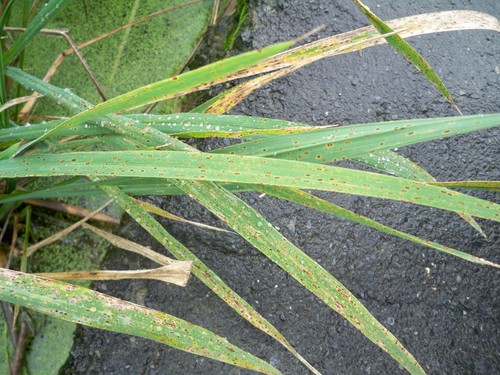
 Bipolaris oryzaee0pathogen
- Gene
- OsMORE1ae0
- Outcome
- susceptibility to Cochliobolus miyabeanuse0
- Direction
- increasede0
Not reportedComparator
Organisms pictured · Representative pictures of the matched species, not figures from the paper.
Verbatim
e0“CRISPR/Cas9-assisted disruption of one of them (OsMORE1a) enhanced resistance against hemibiotrophic pathogens M. oryzae and Xanthomonas oryzae pv. oryzae but increased susceptibility to Cochliobolus miyabeanus, a necrotrophic fungus”
t0“rice”
Claim · model-written summary
Loss of MORE1 altered expression of many defense-related genes.
- Taxon
- Arabidopsis thalianaArabidopsis thalianat0
- Gene
- MORE1t0
- Outcome
- expression of many defence-related genese0
Not reportedDirection
Organisms pictured · Representative pictures of the matched species, not figures from the paper.
Verbatim
e0“both genes appear to affect the expression of many defence-related genes.”
t0“Arabidopsis thaliana MORE1”
Claim · model-written summary
Loss of OsMORE1a altered expression of many defense-related genes.
- Taxon
- riceOryza sativat0
- Gene
- OsMORE1at1
- Outcome
- expression of many defence-related genese0
Not reportedDirection
Organisms pictured · Representative pictures of the matched species, not figures from the paper.
Verbatim
e0“both genes appear to affect the expression of many defence-related genes.”
t0“rice”
t1“loss of MORE1 and OsMORE1a”
Claim · model-written summary
Expression patterns suggest other GH10 members participate in pathogen defense.
- Taxon
- A. thaliana and riceArabidopsis thalianaOryza sativae0
- Gene
- GH10 family genese0
- Outcome
- participate in pathogen defencee0
Organisms pictured · Representative pictures of the matched species, not figures from the paper.
Verbatim
e0“Expression patterns of the GH10 family genes in A. thaliana and rice suggest that other members also participate in pathogen defence.”
The same questions in other papers
loss of function · Bipolaris oryzae · Oryza sativa (rice)Positive and negative results
1 paper in the same direction as this paper · 2 in the opposite direction
- positive
- positive
- negative
loss of function · Xanthomonas oryzae pv. oryzae · Oryza sativa (rice)Positive and negative results
10 papers in the same direction as this paper · 18 in the opposite direction
- negative
- no effect
- no effect
25 papers more in this group
See all 29 papers →loss of function · Pyricularia oryzae · Oryza sativa (rice)Positive and negative results
40 papers in the same direction as this paper · 26 in the opposite direction
- negative
- negative
- negative
63 papers more in this group
See all 67 papers →Claims are grouped by organism, treatment and what was measured or targeted. A paper counts as positive when any of its claims in the group is positive.