Abstract
Although the functions of a few effector proteins produced by bacterial and oomycete plant pathogens have been elucidated in recent years, information for the vast majority of pathogen effectors is still lacking, particularly for those of plant-pathogenic fungi. Here, we show that the avirulence effector AvrPiz-t from the rice blast fungus Magnaporthe oryzae preferentially accumulates in the specialized structure called the biotrophic interfacial complex and is then translocated into rice (Oryza sativa) cells. Ectopic expression of AvrPiz-t in transgenic rice suppresses the flg22- and chitin-induced generation of reactive oxygen species (ROS) and enhances susceptibility to M. oryzae, indicating that AvrPiz-t functions to suppress pathogen-associated molecular pattern (PAMP)-triggered immunity in rice. Interaction assays show that AvrPiz-t suppresses the ubiquitin ligase activity of the rice RING E3 ubiquitin ligase APIP6 and that, in return, APIP6 ubiquitinates AvrPiz-t in vitro. Interestingly, agroinfection assays reveal that AvrPiz-t and AvrPiz-t Interacting Protein 6 (APIP6) are both degraded when coexpressed in Nicotiana benthamiana. Silencing of APIP6 in transgenic rice leads to a significant reduction of flg22-induced ROS generation, suppression of defense-related gene expression, and enhanced susceptibility of rice plants to M. oryzae. Taken together, our results reveal a mechanism in which a fungal effector targets the host ubiquitin proteasome system for the suppression of PAMP-triggered immunity in plants.
Abstract from the paper’s OpenAlex record; open copy licensed cc-by. Read at the source ↗
The text the model read, with the source record’s inline markup (italics, sub- and superscripts) rendered and its character entities decoded; quote offsets refer to the raw text.
Claims 11
Claim · model-written summary
AvrPiz-t accumulated in the biotrophic interfacial complex.
- Taxon
- rice
 Oryza sativae0
- Interactor
- Magnaporthe oryzae
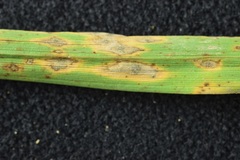 Pyricularia oryzaee0pathogen
- Gene
- AvrPiz-te0
- Outcome
- preferentially accumulates in the specialized structure called the biotrophic interfacial complexe0
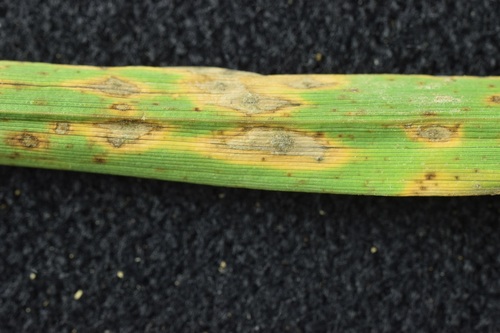
Organisms pictured · Representative pictures of the matched species, not figures from the paper.

Verbatim
e0“the avirulence effector AvrPiz-t from the rice blast fungus Magnaporthe oryzae preferentially accumulates in the specialized structure called the biotrophic interfacial complex”
Claim · model-written summary
AvrPiz-t was transferred into rice cells.
- Taxon
- riceOryza sativae0
- Interactor
- Magnaporthe oryzaePyricularia oryzaee1pathogen
- Gene
- AvrPiz-te1
- Outcome
- translocated into rice (Oryza sativa) cellse0
Organisms pictured · Representative pictures of the matched species, not figures from the paper.
Verbatim
e0“and is then translocated into rice (Oryza sativa) cells.”
e1“the avirulence effector AvrPiz-t from the rice blast fungus Magnaporthe oryzae”
Claim · model-written summary
Ectopic AvrPiz-t expression suppressed flg22 and chitin induced ROS in rice.
- Taxon
- riceOryza sativae0
- Treatment
- Ectopic expression of AvrPiz-te0
- Gene
- AvrPiz-te0
- Outcome
- flg22- and chitin-induced generation of reactive oxygen species (ROS)e0
- Direction
- suppressese0
Not reportedComparator
Organisms pictured · Representative pictures of the matched species, not figures from the paper.
Verbatim
e0“Ectopic expression of AvrPiz-t in transgenic rice suppresses the flg22- and chitin-induced generation of reactive oxygen species (ROS)”
Claim · model-written summary
Ectopic AvrPiz-t expression enhanced rice susceptibility to Magnaporthe oryzae.
- Taxon
- riceOryza sativae0
- Treatment
- Ectopic expression of AvrPiz-te0
- Interactor
- M. oryzaePyricularia oryzaee0pathogen
- Gene
- AvrPiz-te0
- Outcome
- susceptibility to M. oryzaee0
- Direction
- enhancese0
Not reportedComparator
Organisms pictured · Representative pictures of the matched species, not figures from the paper.
Verbatim
e0“Ectopic expression of AvrPiz-t in transgenic rice suppresses the flg22- and chitin-induced generation of reactive oxygen species (ROS) and enhances susceptibility to M. oryzae”
e1“Magnaporthe oryzae”
Claim · model-written summary
AvrPiz-t suppressed APIP6 ubiquitin ligase activity.
- Taxon
- riceOryza sativae0
- Gene
- APIP6e0
- Outcome
- ubiquitin ligase activitye0
- Qualifier
- AvrPiz-t suppressese0
Organisms pictured · Representative pictures of the matched species, not figures from the paper.
Verbatim
e0“AvrPiz-t suppresses the ubiquitin ligase activity of the rice RING E3 ubiquitin ligase APIP6”
Claim · model-written summary
APIP6 ubiquitinated AvrPiz-t in vitro.
- Taxon
- riceOryza sativae1
- Gene
- APIP6e0
- Outcome
- ubiquitinates AvrPiz-t in vitroe0
Organisms pictured · Representative pictures of the matched species, not figures from the paper.
Verbatim
e0“APIP6 ubiquitinates AvrPiz-t in vitro.”
e1“rice RING E3 ubiquitin ligase APIP6”
Claim · model-written summary
Coexpressed AvrPiz-t and APIP6 were both degraded in Nicotiana benthamiana.
- Taxon
- Nicotiana benthamiana
 Nicotiana benthamianae0
- Treatment
- coexpressede0
- Gene
- AvrPiz-t and AvrPiz-t Interacting Protein 6 (APIP6)e0
- Outcome
- both degradede0
- Direction
- degradede0
Not reportedComparator
Organisms pictured · Representative pictures of the matched species, not figures from the paper.

Verbatim
e0“AvrPiz-t and AvrPiz-t Interacting Protein 6 (APIP6) are both degraded when coexpressed in Nicotiana benthamiana.”
Claim · model-written summary
APIP6 silencing reduced flg22 induced ROS generation.
- Taxon
- riceOryza sativae0
- Treatment
- Silencing of APIP6e0
- Gene
- APIP6e0
- Outcome
- flg22-induced ROS generatione0
- Direction
- reductione0
Not reportedComparator
Organisms pictured · Representative pictures of the matched species, not figures from the paper.
Verbatim
e0“Silencing of APIP6 in transgenic rice leads to a significant reduction of flg22-induced ROS generation”
Claim · model-written summary
APIP6 silencing suppressed defence gene expression.
- Taxon
- riceOryza sativae0
- Treatment
- Silencing of APIP6e0
- Gene
- APIP6e0
- Outcome
- defense-related gene expressione0
- Direction
- suppressione0
Not reportedComparator
Organisms pictured · Representative pictures of the matched species, not figures from the paper.
Verbatim
e0“Silencing of APIP6 in transgenic rice leads to a significant reduction of flg22-induced ROS generation, suppression of defense-related gene expression”
Claim · model-written summary
APIP6 silencing enhanced rice susceptibility to Magnaporthe oryzae.
- Taxon
- riceOryza sativae0
- Treatment
- Silencing of APIP6e0
- Interactor
- M. oryzaePyricularia oryzaee0pathogen
- Gene
- APIP6e0
- Outcome
- susceptibility of rice plants to M. oryzaee0
- Direction
- enhancede0
Not reportedComparator
Organisms pictured · Representative pictures of the matched species, not figures from the paper.
Verbatim
e0“Silencing of APIP6 in transgenic rice leads to a significant reduction of flg22-induced ROS generation, suppression of defense-related gene expression, and enhanced susceptibility of rice plants to M. oryzae.”
Claim · model-written summary
Authors infer fungal effector targeting of host ubiquitin proteasome machinery suppresses PAMP immunity.
- Taxon
- RiceOryza sativat0
- Outcome
- suppression of PAMP-triggered immunitye0
- Qualifier
- host ubiquitin proteasome systeme0
Organisms pictured · Representative pictures of the matched species, not figures from the paper.
Verbatim
e0“a fungal effector targets the host ubiquitin proteasome system for the suppression of PAMP-triggered immunity in plants.”
t0“Rice”
The same questions in other papers
overexpression · physiology: oxidative · Oryza sativa (rice)Positive and negative results
2 papers in the same direction as this paper · 2 in the opposite direction
- negative
- positive
- positive
1 paper more in this group
See all 5 papers →overexpression · Pyricularia oryzae · Oryza sativa (rice)Positive and negative results
6 papers in the same direction as this paper · 4 in the opposite direction
- positive
- positive
- negative
7 papers more in this group
See all 11 papers →loss of function · physiology: oxidative · Oryza sativa (rice)Positive and negative results
5 papers in the same direction as this paper · 13 in the opposite direction
- positive
- positive
- positive
15 papers more in this group
See all 19 papers →loss of function · Pyricularia oryzae · Oryza sativa (rice)Positive and negative results
25 papers in the same direction as this paper · 41 in the opposite direction
- positive
- positive
- positive
63 papers more in this group
See all 67 papers →loss of function · molecular: expression · Oryza sativa (rice)Positive and negative results
66 papers in the same direction as this paper · 31 in the opposite direction
- negative
- positive
- positive
94 papers more in this group
See all 98 papers →Claims are grouped by organism, treatment and what was measured or targeted. A paper counts as positive when any of its claims in the group is positive.