Abstract
Two field experiments were carried out at EI-Serw region in Northern Faraskour district Damitla Governorate to investigate effect of planting dates, nitrogen levels and biofertilization treatments as well as their interactions on yield and quality of sugar beet (Beta vulgaris, L.) variety Top. The main results could LJe summarized as follows: Some yield components character i.e. root length, root diameter, root fresh weight, foliage fresh weight, and root /top ratio (in the second season) were exerted a significant effect as a results from planting dates treatments. The treatment from planting dates which gave the high values was planting on 15th of October of all yield components except root diameter (in the second season only) and rootltop ratio in both seasons. In the first season root quality characters (TSS, Sucrose and juice purity %) were insignificantly affected due to the planting dates treatments. The highest values of yield quality characters were planting beet on 15th of October over both seasons). Planting dates treatments had significant effect on root yield, top yield, sugar yield and harvest index. Planting dates on 15th of October gave the highest values of yield characters except harvest index. - Raising nitrogen fertilizer levels from 0 to 20, 40, 60 and 80 kg N/fad showed a significant increase on all yield components and yield in both seasons except root/top ratio resulted from fertilizing beet with 40 kg Nlfad. Vice versa the highest values of TSS, sucrose and purity % were obtained from control treatments (without N-fertilizing) in both seasons. - Biofertilization treatments had significant effect on all yield components and yield and the best treatment with biofertilizer was rhizobactein treatment except root /top ratio were obtained from uninoculation seeds. - TSS %, sucrose % and juice purity %, the highest values of these characters were obtained with uninoculation treatment (control). The interaction between planting dates and nitrogen levels had significant effect on all yield components and yield characters except root ftop ratio. - The interaction between planting dates and biofertilization treatments had significant effect on root diameter (in the first season), foliage fresh weight in the second season (at harvest), juice purity (in the first season only), root, top and sugar yields. - The interaction between nitrogen levels and biofertilization treatments had significant effect on all yield components, yield quality and yield except root /lop ratio, TSS <in the first season), purity 5 and sugar yield (in the first season. - The interaction among planting dates, nitrogen fertilizer levels and biofertilization treatments had Significant effect on root diameter, root and foliage fresh weights, root and top yields.
Abstract from the paper’s OpenAlex record; open copy licensed cc-by. Read at the source ↗
The text the model read, with the source record’s inline markup (italics, sub- and superscripts) rendered and its character entities decoded; quote offsets refer to the raw text.
Claims 15
Claim · model-written summary
Planting date significantly affected sugar beet yield components.
- Taxon
- sugar beet (Beta vulgaris, L.)
 Beta vulgaris subsp. vulgarist0
- Treatment
- planting dates treatmentse0
- Outcome
- root length, root diameter, root fresh weighte0
Not reportedComparatorDirection
Organisms pictured · Representative pictures of the matched species, not figures from the paper.

Verbatim
e0“Some yield components character i.e. root length, root diameter, root fresh weight, foliage fresh weight, and root /top ratio (in the second season) were exerted a significant effect as a results from planting dates treatments”
t0“sugar beet (Beta vulgaris, L.)”
Claim · model-written summary
October 15 planting gave the highest values for most yield components.
- Taxon
- sugar beet (Beta vulgaris, L.)Beta vulgaris subsp. vulgarist0
- Treatment
- planting on 15th of Octobere0
- Outcome
- yield componentse0
- Direction
- high valuese0
Not reportedComparator
Organisms pictured · Representative pictures of the matched species, not figures from the paper.
Verbatim
e0“The treatment from planting dates which gave the high values was planting on 15th of October of all yield components except root diameter (in the second season only) and rootltop ratio in both seasons”
t0“sugar beet (Beta vulgaris, L.)”
Claim · model-written summary
Planting date did not significantly affect first-season root quality.
- Taxon
- sugar beet (Beta vulgaris, L.)Beta vulgaris subsp. vulgarist0
- Treatment
- planting dates treatmentse0
- Outcome
- root quality characters (TSS, Sucrose and juice purity %)e0
- Direction
- insignificantly affectede0
Not reportedComparator
Organisms pictured · Representative pictures of the matched species, not figures from the paper.
Verbatim
e0“In the first season root quality characters (TSS, Sucrose and juice purity %) were insignificantly affected due to the planting dates treatments”
t0“sugar beet (Beta vulgaris, L.)”
Claim · model-written summary
October 15 planting gave the highest quality values across both seasons.
- Taxon
- beet
 Beta vulgarise0
- Treatment
- planting beet on 15th of Octobere0
- Outcome
- yield quality characterse0
- Direction
- higheste0
Not reportedComparator
Organisms pictured · Representative pictures of the matched species, not figures from the paper.
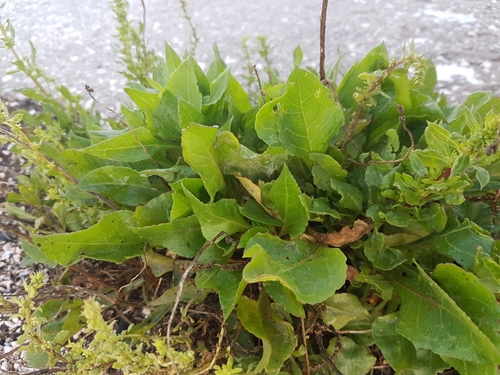
Verbatim
e0“The highest values of yield quality characters were planting beet on 15th of October over both seasons”
Claim · model-written summary
Planting dates significantly affected root, top and sugar yield and harvest index.
- Taxon
- sugar beet (Beta vulgaris, L.)Beta vulgaris subsp. vulgarist0
- Treatment
- Planting dates treatmentse0
- Outcome
- root yield, top yield, sugar yielde0
Not reportedComparatorDirection
Organisms pictured · Representative pictures of the matched species, not figures from the paper.
Verbatim
e0“Planting dates treatments had significant effect on root yield, top yield, sugar yield and harvest index”
t0“sugar beet (Beta vulgaris, L.)”
Claim · model-written summary
October 15 planting produced the highest yield except harvest index.
- Taxon
- sugar beet (Beta vulgaris, L.)Beta vulgaris subsp. vulgarist0
- Treatment
- Planting dates on 15th of Octobere0
- Outcome
- yield characterse0
- Direction
- higheste0
Not reportedComparator
Organisms pictured · Representative pictures of the matched species, not figures from the paper.
Verbatim
e0“Planting dates on 15th of October gave the highest values of yield characters except harvest index”
t0“sugar beet (Beta vulgaris, L.)”
Claim · model-written summary
Increasing nitrogen fertilizer significantly increased yield components and yield.
- Taxon
- beetBeta vulgarise0
- Treatment
- nitrogen fertilizer levels from 0 to 20, 40, 60 and 80 kg N/fade0
- Outcome
- yield components and yielde0
- Direction
- increasee0
Not reportedComparator
Organisms pictured · Representative pictures of the matched species, not figures from the paper.
Verbatim
e0“Raising nitrogen fertilizer levels from 0 to 20, 40, 60 and 80 kg N/fad showed a significant increase on all yield components and yield in both seasons except root/top ratio resulted from fertilizing beet with 40 kg Nlfad”
Claim · model-written summary
Unfertilized controls had the highest TSS, sucrose and purity values.
- Taxon
- sugar beet (Beta vulgaris, L.)Beta vulgaris subsp. vulgarist0
- Treatment
- control treatments (without N-fertilizing)e0
- Outcome
- TSS, sucrose and purity %e0
- Direction
- higheste0
Not reportedComparator
Organisms pictured · Representative pictures of the matched species, not figures from the paper.
Verbatim
e0“the highest values of TSS, sucrose and purity % were obtained from control treatments (without N-fertilizing) in both seasons”
t0“sugar beet (Beta vulgaris, L.)”
Claim · model-written summary
Biofertilization significantly affected yield components and yield, with rhizobactein best.
- Taxon
- sugar beet (Beta vulgaris, L.)Beta vulgaris subsp. vulgarist0
- Treatment
- rhizobactein treatmente0
- Outcome
- yield components and yielde0
- Direction
- beste0
Not reportedComparator
Organisms pictured · Representative pictures of the matched species, not figures from the paper.
Verbatim
e0“Biofertilization treatments had significant effect on all yield components and yield and the best treatment with biofertilizer was rhizobactein treatment except root /top ratio were obtained from uninoculation seeds”
t0“sugar beet (Beta vulgaris, L.)”
Claim · model-written summary
Uninoculated seeds gave the highest root/top ratio.
- Taxon
- sugar beet (Beta vulgaris, L.)Beta vulgaris subsp. vulgarist0
- Treatment
- uninoculation seedse0
- Outcome
- root /top ratioe0
Not reportedComparatorDirection
Organisms pictured · Representative pictures of the matched species, not figures from the paper.
Verbatim
e0“root /top ratio were obtained from uninoculation seeds”
t0“sugar beet (Beta vulgaris, L.)”
Claim · model-written summary
Uninoculated control had the highest TSS, sucrose and juice purity.
- Taxon
- sugar beet (Beta vulgaris, L.)Beta vulgaris subsp. vulgarist0
- Treatment
- uninoculation treatment (control)e0
- Outcome
- TSS %, sucrose % and juice purity %e0
- Direction
- higheste0
Not reportedComparator
Organisms pictured · Representative pictures of the matched species, not figures from the paper.
Verbatim
e0“TSS %, sucrose % and juice purity %, the highest values of these characters were obtained with uninoculation treatment (control)”
t0“sugar beet (Beta vulgaris, L.)”
Claim · model-written summary
Planting date by nitrogen interaction significantly affected yield components and yield except root/top ratio.
- Taxon
- sugar beet (Beta vulgaris, L.)Beta vulgaris subsp. vulgarist0
- Treatment
- interaction between planting dates and nitrogen levelse0
- Outcome
- yield components and yield characterse0
Not reportedComparatorDirection
Organisms pictured · Representative pictures of the matched species, not figures from the paper.
Verbatim
e0“The interaction between planting dates and nitrogen levels had significant effect on all yield components and yield characters except root ftop ratio”
t0“sugar beet (Beta vulgaris, L.)”
Claim · model-written summary
Planting date by biofertilizer interaction significantly affected several yield and quality traits.
- Taxon
- sugar beet (Beta vulgaris, L.)Beta vulgaris subsp. vulgarist0
- Treatment
- interaction between planting dates and biofertilization treatmentse0
- Outcome
- root, top and sugar yieldse0
Not reportedComparatorDirection
Organisms pictured · Representative pictures of the matched species, not figures from the paper.
Verbatim
e0“The interaction between planting dates and biofertilization treatments had significant effect on root diameter (in the first season), foliage fresh weight in the second season (at harvest), juice purity (in the first season only), root, top and sugar yields”
t0“sugar beet (Beta vulgaris, L.)”
Claim · model-written summary
Nitrogen by biofertilizer interaction significantly affected most yield and quality traits.
- Taxon
- sugar beet (Beta vulgaris, L.)Beta vulgaris subsp. vulgarist0
- Treatment
- interaction between nitrogen levels and biofertilization treatmentse0
- Outcome
- yield components, yield quality and yielde0
Not reportedComparatorDirection
Organisms pictured · Representative pictures of the matched species, not figures from the paper.
Verbatim
e0“The interaction between nitrogen levels and biofertilization treatments had significant effect on all yield components, yield quality and yield except root /lop ratio, TSS <in the first season), purity 5 and sugar yield (in the first season.”
t0“sugar beet (Beta vulgaris, L.)”
Claim · model-written summary
The three-way interaction significantly affected root diameter, fresh weights, and root and top yields.
- Taxon
- sugar beet (Beta vulgaris, L.)Beta vulgaris subsp. vulgarist0
- Treatment
- interaction among planting dates, nitrogen fertilizer levels and biofertilization treatmentse0
- Outcome
- root diameter, root and foliage fresh weights, root and top yieldse0
Not reportedComparatorDirection
Organisms pictured · Representative pictures of the matched species, not figures from the paper.
Verbatim
e0“The interaction among planting dates, nitrogen fertilizer levels and biofertilization treatments had Significant effect on root diameter, root and foliage fresh weights, root and top yields”
t0“sugar beet (Beta vulgaris, L.)”
The same questions in other papers
nitrogen · quality: sugar starch · Beta vulgaris (beet)Results differ
36 papers in the same direction as this paper · 66 in the opposite direction
This paper is about lacking the nutrient, so it counts the other way round here.
- positive
- positive
- positive
99 papers more in this group
See all 103 papers →sowing time · quality: sugar starch · Beta vulgaris (beet)Positive and negative results
5 papers in the same direction as this paper · 6 in the opposite direction
- positive
- positive
- positive
8 papers more in this group
See all 12 papers →sowing time · yield · Beta vulgaris (beet)Positive and negative results
19 papers in the same direction as this paper · 5 in the opposite direction · 1 reporting no difference from an alternative
- no effect
- negative
- negative
22 papers more in this group
See all 26 papers →nitrogen · yield · Beta vulgaris (beet)Positive and negative results
141 papers in the same direction as this paper · 16 in the opposite direction · 3 reporting no difference from an alternative
- positive
- positive
- negative
157 papers more in this group
See all 161 papers →fertilization · yield · Beta vulgaris (beet)Positive and negative results
236 papers in the same direction as this paper · 24 in the opposite direction · 6 reporting no difference from an alternative
- positive
- no effect
- negative
263 papers more in this group
See all 267 papers →Claims are grouped by organism, treatment and what was measured or targeted. A paper counts as positive when any of its claims in the group is positive.