Abstract
Eleven plant extracts, viz. Allium sativum (garlic), Adhatoda vasica (malabar nut), Vitex negundo (horseshoe vitex), Melia azadirachta (chinaberry tree), Tagetes erecta (aztec marigold), Cannabis sativa (cannabis), Lantana camara (lantana), Mentha piperata (Pepper mint), Curcuma longa (turmeric), Zingiber officinale (ginger) and Allium cepa (onion) were evaluated for their efficacy against storage rot fungi, germination percentage and seedling vigour of pea. All the plant extracts significantly reduced the storage rot fungi, i.e. Aspergillus sp., Alternaria alternata, A.solani, Phoma sp and Fusarium spp.; increased seed germination and seedling vigour index of pea. Vitex negundo and Melia azadirachta found equally effective with minimum storage rot of 1.94%, while the maximum storage rot was observed in control (13.84%) where no seed treatment was done. Maximum seed germination (89.08%) was found in the seed stored in cloth bags, while in plastic bags seed germination found was 88.40 per cent. Maximum germination (96.41%) was recorded in the seed treated with Mentha piperata, followed by the Tagetes erecta with94.08 per cent seed germination. Maximum seedling length and dry matter was observed in Allium sativum treated seeds with 28.33 cm and 2.66 g. Maximum (2520) seedling vigour I was observed in Mentha piperata, similarly maximum (308) seedling vigour II was recorded in Mentha piperata. Minimum (2.37%) population of the mycoflora was obtained in seed treated with the Curcuma longa when stored in plastic boxes. Lowest (3.28%) mycoflora was observed in Vitex negundo treated seed when stored in cloth bags. Aspergillus sp. is the most frequently occurring fungi in storage of pea. Pea seeds developed less attack by storage fungi particularly with Alternaria alternata andA. solani while more association of Aspergillus spp., Phoma sp. and Fusarium spp. were observed with the seeds during storage period in different containers. However fewer microflora (16.40%) developed in cloth bags compared to plastic boxes (20.56%).
Abstract from the paper’s OpenAlex record; open copy licensed cc-by-nc-sa. Read at the source ↗
The text the model read, with the source record’s inline markup (italics, sub- and superscripts) rendered and its character entities decoded; quote offsets refer to the raw text.
Claims 17
Claim · model-written summary
All tested extracts significantly reduced storage rot fungi on pea seeds.
- Taxon
- pea
 Lathyrus oleraceust0
- Treatment
- plant extractse0
- Interactor
- Aspergillus sp.
 Aspergilluse0pathogen
- Outcome
- storage rot fungie0
- Direction
- reducede0
- Qualifier
- Alternaria alternata, A.solani, Phoma sp and Fusarium spp.e0
Not reportedComparator
Organisms pictured · Representative pictures of the matched species, not figures from the paper.


Verbatim
e0“All the plant extracts significantly reduced the storage rot fungi, i.e. Aspergillus sp., Alternaria alternata, A.solani, Phoma sp and Fusarium spp.”
t0“pea (Pisum sativum)”
Claim · model-written summary
All tested extracts increased pea seed germination and seedling vigour.
- Taxon
- peaLathyrus oleraceuse0
- Treatment
- plant extractse1
- Outcome
- seed germination and seedling vigour indexe0
- Direction
- increasede0
Not reportedComparator
Organisms pictured · Representative pictures of the matched species, not figures from the paper.
Verbatim
e0“increased seed germination and seedling vigour index of pea”
e1“All the plant extracts significantly reduced the storage rot fungi, i.e. Aspergillus sp., Alternaria alternata, A.solani, Phoma sp and Fusarium spp.”
Claim · model-written summary
Vitex negundo treatment gave 1.94% pea storage rot, the minimum.
- Taxon
- peaLathyrus oleraceust0
- Treatment
- Vitex negundoe0
- Outcome
- storage rote0
- Direction
- minimume0
- Value
- 1.94%e0
- Qualifier
- 13.84%e0
- Comparator
- controle0
Organisms pictured · Representative pictures of the matched species, not figures from the paper.
Verbatim
e0“Vitex negundo and Melia azadirachta found equally effective with minimum storage rot of 1.94%, while the maximum storage rot was observed in control (13.84%)”
t0“pea (Pisum sativum)”
Claim · model-written summary
Melia azadirachta treatment gave 1.94% pea storage rot, the minimum.
- Taxon
- peaLathyrus oleraceust0
- Treatment
- Melia azadirachtae0
- Outcome
- storage rote0
- Direction
- minimume0
- Value
- 1.94%e0
- Qualifier
- 13.84%e0
- Comparator
- controle0
Organisms pictured · Representative pictures of the matched species, not figures from the paper.
Verbatim
e0“Vitex negundo and Melia azadirachta found equally effective with minimum storage rot of 1.94%, while the maximum storage rot was observed in control (13.84%)”
t0“pea (Pisum sativum)”
Claim · model-written summary
Pea seed germination in cloth bags reached 89.08%, above plastic bags at 88.40 per cent.
- Taxon
- peaLathyrus oleraceust0
- Treatment
- cloth bagse0
- Outcome
- seed germinatione0
- Direction
- Maximume0
- Value
- 89.08%e0
- Qualifier
- 88.40 per cente0
- Comparator
- plastic bagse0
Organisms pictured · Representative pictures of the matched species, not figures from the paper.
Verbatim
e0“Maximum seed germination (89.08%) was found in the seed stored in cloth bags, while in plastic bags seed germination found was 88.40 per cent”
t0“pea (Pisum sativum)”
Claim · model-written summary
Mentha piperata treatment yielded maximum pea germination of 96.41%.
- Taxon
- peaLathyrus oleraceust0
- Treatment
- Mentha piperatae0
- Outcome
- germinatione0
- Direction
- Maximume0
- Value
- 96.41%e0
Not reportedComparator
Organisms pictured · Representative pictures of the matched species, not figures from the paper.
Verbatim
e0“Maximum germination (96.41%) was recorded in the seed treated with Mentha piperata, followed by the Tagetes erecta with94.08 per cent seed germination”
t0“pea (Pisum sativum)”
Claim · model-written summary
Tagetes erecta treatment yielded 94.08 per cent pea seed germination.
- Taxon
- peaLathyrus oleraceust0
- Treatment
- Tagetes erectae0
- Outcome
- seed germinatione0
- Direction
- followed bye0
- Value
- 94.08 per cente0
- Qualifier
- 96.41%e0
- Comparator
- Mentha piperatae0
Organisms pictured · Representative pictures of the matched species, not figures from the paper.
Verbatim
e0“Maximum germination (96.41%) was recorded in the seed treated with Mentha piperata, followed by the Tagetes erecta with94.08 per cent seed germination”
t0“pea (Pisum sativum)”
Claim · model-written summary
Allium sativum treatment produced maximum pea seedling length of 28.33 cm.
- Taxon
- peaLathyrus oleraceust0
- Treatment
- Allium sativume0
- Outcome
- seedling lengthe0
- Direction
- Maximume0
- Value
- 28.33 cme0
Not reportedComparator
Organisms pictured · Representative pictures of the matched species, not figures from the paper.
Verbatim
e0“Maximum seedling length and dry matter was observed in Allium sativum treated seeds with 28.33 cm and 2.66 g”
t0“pea (Pisum sativum)”
Claim · model-written summary
Allium sativum treatment produced maximum pea seedling dry matter of 2.66 g.
- Taxon
- peaLathyrus oleraceust0
- Treatment
- Allium sativume0
- Outcome
- dry mattere0
- Direction
- Maximume0
- Value
- 2.66 ge0
Not reportedComparator
Organisms pictured · Representative pictures of the matched species, not figures from the paper.
Verbatim
e0“Maximum seedling length and dry matter was observed in Allium sativum treated seeds with 28.33 cm and 2.66 g”
t0“pea (Pisum sativum)”
Claim · model-written summary
Mentha piperata treatment produced maximum pea seedling vigour I of 2520.
- Taxon
- peaLathyrus oleraceust0
- Treatment
- Mentha piperatae0
- Outcome
- seedling vigour Ie0
- Direction
- Maximume0
- Value
- 2520e0
Not reportedComparator
Organisms pictured · Representative pictures of the matched species, not figures from the paper.
Verbatim
e0“Maximum (2520) seedling vigour I was observed in Mentha piperata”
t0“pea (Pisum sativum)”
Claim · model-written summary
Mentha piperata treatment produced maximum pea seedling vigour II of 308.
- Taxon
- peaLathyrus oleraceust0
- Treatment
- Mentha piperatae0
- Outcome
- seedling vigour IIe0
- Direction
- maximume0
- Value
- 308e0
Not reportedComparator
Organisms pictured · Representative pictures of the matched species, not figures from the paper.
Verbatim
e0“maximum (308) seedling vigour II was recorded in Mentha piperata”
t0“pea (Pisum sativum)”
Claim · model-written summary
Curcuma longa with plastic-box storage gave minimum pea mycoflora of 2.37%.
- Taxon
- peaLathyrus oleraceust0
- Treatment
- Curcuma longae0
- Outcome
- population of the mycoflorae0
- Direction
- Minimume0
- Value
- 2.37%e0
- Setting
- plastic boxese0
Not reportedComparator
Organisms pictured · Representative pictures of the matched species, not figures from the paper.
Verbatim
e0“Minimum (2.37%) population of the mycoflora was obtained in seed treated with the Curcuma longa when stored in plastic boxes”
t0“pea (Pisum sativum)”
Claim · model-written summary
Vitex negundo with cloth-bag storage gave lowest pea mycoflora of 3.28%.
- Taxon
- peaLathyrus oleraceust0
- Treatment
- Vitex negundoe0
- Outcome
- mycoflorae0
- Direction
- Loweste0
- Value
- 3.28%e0
- Setting
- cloth bagse0
Not reportedComparator
Organisms pictured · Representative pictures of the matched species, not figures from the paper.
Verbatim
e0“Lowest (3.28%) mycoflora was observed in Vitex negundo treated seed when stored in cloth bags”
t0“pea (Pisum sativum)”
Claim · model-written summary
Aspergillus sp. occurred most frequently during pea storage.
- Taxon
- peaLathyrus oleraceuse0
- Interactor
- Aspergillus sp.Aspergilluse0pathogen
- Outcome
- most frequently occurring fungie0
- Direction
- most frequentlye0
Organisms pictured · Representative pictures of the matched species, not figures from the paper.
Verbatim
e0“Aspergillus sp. is the most frequently occurring fungi in storage of pea”
Claim · model-written summary
Pea seeds had less storage-fungus attack by Alternaria alternata and A. solani.
- Taxon
- PeaLathyrus oleraceuse0
- Interactor
- Alternaria alternata
 Alternaria alternatae0pathogen
- Second interactor
- A. solani
 Alternaria solanie0pathogen
- Outcome
- less attack by storage fungie0
- Direction
- lesse0
Organisms pictured · Representative pictures of the matched species, not figures from the paper.


Verbatim
e0“Pea seeds developed less attack by storage fungi particularly with Alternaria alternata andA. solani”
Claim · model-written summary
Pea seeds had more association with Aspergillus spp., Phoma sp. and Fusarium spp. in storage.
- Taxon
- peaLathyrus oleraceust0
- Interactor
- Aspergillus spp.Aspergilluse0pathogen
- Outcome
- more associatione0
- Direction
- moree0
- Qualifier
- Fusarium spp.e0
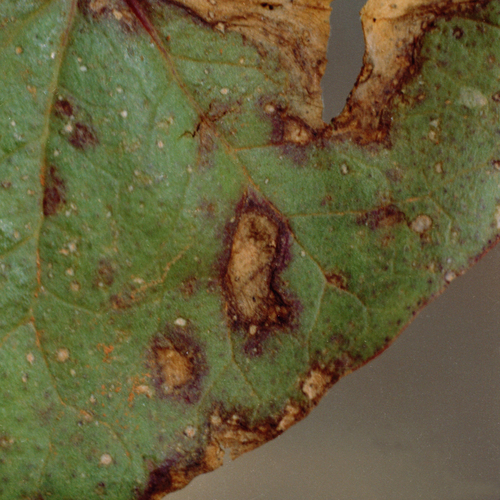
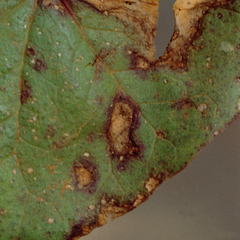 Phoma
Organisms pictured · Representative pictures of the matched species, not figures from the paper.
Verbatim
e0“more association of Aspergillus spp., Phoma sp. and Fusarium spp. were observed with the seeds during storage period in different containers”
t0“pea (Pisum sativum)”
Claim · model-written summary
Cloth bags had 16.40% microflora versus 20.56% in plastic boxes.
- Taxon
- peaLathyrus oleraceust0
- Treatment
- cloth bagse0
- Outcome
- microflorae0
- Direction
- fewere0
- Value
- 16.40%e0
- Qualifier
- 20.56%e0
- Comparator
- plastic boxese0
Organisms pictured · Representative pictures of the matched species, not figures from the paper.
Verbatim
e0“fewer microflora (16.40%) developed in cloth bags compared to plastic boxes (20.56%)”
t0“pea (Pisum sativum)”
The same questions in other papers
Allium sativum · growth · Lathyrus oleraceus (pea)Positive and negative results
1 in the opposite direction
- negative
Azadirachta indica · disease · Lathyrus oleraceus (pea)Results agree
4 papers in the same direction as this paper
- positive
- positive
- positive
1 paper more in this group
See all 5 papers →botanical · growth · Lathyrus oleraceus (pea)Positive and negative results
36 papers in the same direction as this paper · 24 in the opposite direction · 1 reporting no difference from an alternative
- negative
- no effect
- negative
58 papers more in this group
See all 62 papers →Claims are grouped by organism, treatment and what was measured or targeted. A paper counts as positive when any of its claims in the group is positive.