Abstract
Abstract Aims The spread of invasive weeds threatens biodiversity and stability of ecosystems. Jacobaea vulgaris is an invasive weed in some countries and an outbreak species in its native European range. Although biological control using specialist herbivores is available, controlling with soil microorganisms remains far less explored. Methods Twenty bacteria strains isolated from roots of J. vulgaris were used to examine bacterial effects on seed germination, root morphology and early plant growth. Moreover, we tested direct effects of the bacteria on a specialist herbivore of J. vulgaris , the leaf chewing caterpillar ( Tyria jacobaeae ), commonly used in biocontrol. We also tested indirect effects of bacteria, via the plant, on the performance of T. jacobaeae and the aphid species Aphis jacobaeae . Lastly, we examined the host specificity of two tested bacteria on three other forbs. Results Two Gammaproteobacteria, Pseudomonas brassicacearum and Serratia plymuthica , significantly reduced root growth of seedlings in-vitro, while seed germination was unaffected. However, these negative effects were observed across other forb species as well. Bacillus spp. injection led to the highest T. jacobaeae caterpillar mortality, while ingestion had no effect. Inoculation of the plants with bacteria did not affect aphid performance, but significantly affected T. jacobaeae preference. Specifically, P. syringae and one Bacillus sp. strain significantly increased T. jacobaeae preference. Conclusions Our results show that two root-associated bacteria inhibit J. vulgaris growth, but their lack of host specificity restricts their potential for biocontrol. Our study also highlights that belowground microorganisms can hamper or enhance the performance of aboveground insects.
Abstract from the paper’s OpenAlex record; open copy licensed cc-by. Read at the source ↗
The text the model read, with the source record’s inline markup (italics, sub- and superscripts) rendered and its character entities decoded; quote offsets refer to the raw text.
Claims 11
Claim · model-written summary
Pseudomonas brassicacearum significantly reduced J. vulgaris seedling root growth.
- Taxon
- Jacobaea vulgaris
 Jacobaea vulgarise1
- Treatment
- Pseudomonas brassicacearume0
- Interactor
- Pseudomonas brassicacearumPseudomonas brassicacearume0biocontrol_agent
- Outcome
- root growth of seedlingse0
- Direction
- reducede0
- Setting
- in-vitroe0
Not reportedComparator
Organisms pictured · Representative pictures of the matched species, not figures from the paper.

Verbatim
e0“Pseudomonas brassicacearum and Serratia plymuthica , significantly reduced root growth of seedlings in-vitro”
e1“Jacobaea vulgaris is an invasive weed”
Claim · model-written summary
Serratia plymuthica significantly reduced J. vulgaris seedling root growth.
- Taxon
- Jacobaea vulgarisJacobaea vulgarise1
- Treatment
- Serratia plymuthicae0
- Interactor
- Serratia plymuthica
 Serratia plymuthicae0biocontrol_agent
- Outcome
- root growth of seedlingse0
- Direction
- reducede0
Not reportedComparator
Organisms pictured · Representative pictures of the matched species, not figures from the paper.
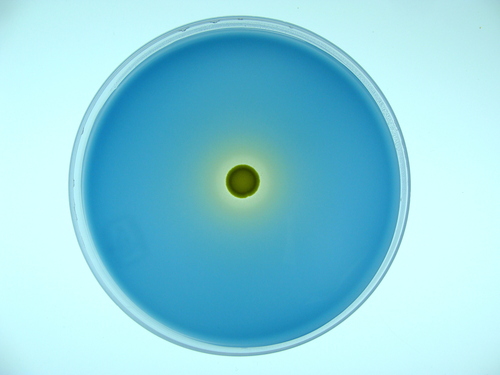
Verbatim
e0“Serratia plymuthica , significantly reduced root growth of seedlings in-vitro”
e1“Jacobaea vulgaris is an invasive weed”
Claim · model-written summary
Bacterial treatment left seed germination unaffected.
- Taxon
- Jacobaea vulgarisJacobaea vulgarise2
- Treatment
- bacteria strainse1
- Outcome
- seed germinatione0
- Direction
- unaffectede0
Not reportedComparator
Organisms pictured · Representative pictures of the matched species, not figures from the paper.
Verbatim
e0“while seed germination was unaffected”
e1“Twenty bacteria strains isolated from roots of J. vulgaris”
e2“Jacobaea vulgaris is an invasive weed”
Claim · model-written summary
The negative bacterial effects also occurred across other forb species.
- Taxon
- Jacobaea vulgarisJacobaea vulgarise1
- Outcome
- negative effects were observed across other forb speciese0
Organisms pictured · Representative pictures of the matched species, not figures from the paper.
Verbatim
e0“these negative effects were observed across other forb species as well”
e1“Jacobaea vulgaris is an invasive weed”
Claim · model-written summary
Bacillus injection led to the highest Tyria jacobaeae caterpillar mortality.
- Taxon
- Jacobaea vulgarisJacobaea vulgarise1
- Treatment
- Bacillus spp. injectione0
- Interactor
- T. jacobaeae
 Tyria jacobaeaee0herbivore
- Second interactor
- Bacillus spp.e0biocontrol_agent
- Outcome
- T. jacobaeae caterpillar mortalitye0
- Direction
- higheste0
Not reportedComparator
Organisms pictured · Representative pictures of the matched species, not figures from the paper.

Verbatim
e0“Bacillus spp. injection led to the highest T. jacobaeae caterpillar mortality”
e1“Jacobaea vulgaris is an invasive weed”
Claim · model-written summary
Ingestion of Bacillus had no effect on T. jacobaeae caterpillars.
- Taxon
- Jacobaea vulgarisJacobaea vulgarise1
- Treatment
- ingestione0
- Interactor
- T. jacobaeaeTyria jacobaeaee0herbivore
- Second interactor
- Bacillus spp.e0biocontrol_agent
- Outcome
- T. jacobaeae caterpillar mortalitye0
- Direction
- no effecte0
Not reportedComparator
Organisms pictured · Representative pictures of the matched species, not figures from the paper.
Verbatim
e0“Bacillus spp. injection led to the highest T. jacobaeae caterpillar mortality, while ingestion had no effect”
e1“Jacobaea vulgaris is an invasive weed”
Claim · model-written summary
Plant inoculation with bacteria did not affect aphid performance.
- Taxon
- Jacobaea vulgarisJacobaea vulgarise2
- Treatment
- Inoculation of the plants with bacteriae0
- Interactor
- Aphis jacobaeae
 Aphis jacobaeaee1herbivore
- Outcome
- aphid performancee0
- Direction
- did not affecte0
Not reportedComparator
Organisms pictured · Representative pictures of the matched species, not figures from the paper.
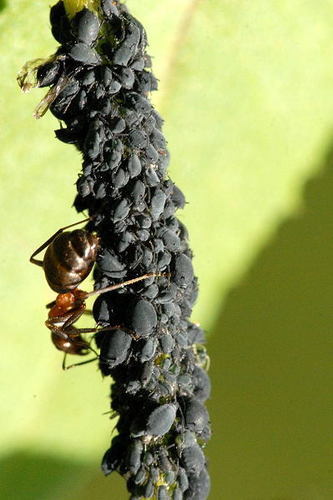
Verbatim
e0“Inoculation of the plants with bacteria did not affect aphid performance”
e1“the aphid species Aphis jacobaeae”
e2“Jacobaea vulgaris is an invasive weed”
Claim · model-written summary
Bacterial inoculation significantly affected T. jacobaeae preference.
- Taxon
- Jacobaea vulgarisJacobaea vulgarise1
- Treatment
- Inoculation of the plants with bacteriae0
- Interactor
- T. jacobaeaeTyria jacobaeaee0herbivore
- Outcome
- T. jacobaeae preferencee0
Not reportedComparatorDirection
Organisms pictured · Representative pictures of the matched species, not figures from the paper.
Verbatim
e0“Inoculation of the plants with bacteria did not affect aphid performance, but significantly affected T. jacobaeae preference”
e1“Jacobaea vulgaris is an invasive weed”
Claim · model-written summary
P. syringae increased T. jacobaeae preference significantly.
- Taxon
- Jacobaea vulgarisJacobaea vulgarise1
- Treatment
- P. syringaee0
- Interactor
- T. jacobaeaeTyria jacobaeaee0herbivore
- Second interactor
- P. syringae
 Pseudomonas syringaee0other
- Outcome
- T. jacobaeae preferencee0
- Direction
- increasede0
Not reportedComparator
Organisms pictured · Representative pictures of the matched species, not figures from the paper.

Verbatim
e0“P. syringae and one Bacillus sp. strain significantly increased T. jacobaeae preference”
e1“Jacobaea vulgaris is an invasive weed”
Claim · model-written summary
A Bacillus strain increased T. jacobaeae preference significantly.
- Taxon
- Jacobaea vulgarisJacobaea vulgarise1
- Treatment
- one Bacillus sp. straine0
- Interactor
- T. jacobaeaeTyria jacobaeaee0herbivore
- Second interactor
- Bacillus sp.e0other
- Outcome
- T. jacobaeae preferencee0
- Direction
- increasede0
Not reportedComparator
Organisms pictured · Representative pictures of the matched species, not figures from the paper.
Verbatim
e0“one Bacillus sp. strain significantly increased T. jacobaeae preference”
e1“Jacobaea vulgaris is an invasive weed”
Claim · model-written summary
Lack of host specificity restricts the two root bacteria for biocontrol.
- Taxon
- Jacobaea vulgarisJacobaea vulgarise1
- Outcome
- potential for biocontrole0
- Qualifier
- lack of host specificitye0
Organisms pictured · Representative pictures of the matched species, not figures from the paper.
Verbatim
e0“two root-associated bacteria inhibit J. vulgaris growth, but their lack of host specificity restricts their potential for biocontrol”
e1“Jacobaea vulgaris is an invasive weed”
The same questions in other papers
inoculation · growth · Jacobaea vulgaris (stinking willie)Results agree
3 papers in the same direction as this paper
- negative
- negative
- negative
Claims are grouped by organism, treatment and what was measured or targeted. A paper counts as positive when any of its claims in the group is positive.