Abstract
This study aimed to evaluate the productive and qualitative characteristics of Brachiaria decumbens andBrachiaria ruziziensis subjected to three levels of artificial shading (0, 36 and 54%) and four nitrogen (N) doses (0; 50; 100and 150 mg dm-3 soil), using completely randomized design with a factorial scheme 2 x 3 x 4, with three replications. The drymatter production (DMP), the number of tillers per pot, root weight and crude protein (CP) and neutral detergent fiber (NDF)contents were evaluated. Both grasses responded quadractly to N, but B. ruziziensis presented greater production under thetwo highest N doses. The tillers density increased with N dose and was reduced under shading. The root weight increased withN dose, linearly in the full sun and quadractly in the shade. The shading and N showed a positive influence on CP contents.For NDF content, was observed reduction with increase of N dose. The NDF content of B. decumbens increased with shadinglevels; for B. ruziziensis, the greatest value was observed under intermediate shading level. The N fertilization is an importantstrategy to improve DMP, tillers density and CP content, for both grasses. However, intense shading should be avoided, as itreduces tillering and root weight, which may threat pasture persistence.
Abstract from the paper’s OpenAlex record, shown for indexing and research. Copyright remains with the authors or the publisher. Read at the source ↗
The text the model read, with the source record’s inline markup (italics, sub- and superscripts) rendered and its character entities decoded; quote offsets refer to the raw text.
Claims 20
Claim · model-written summary
Brachiaria decumbens production responded quadratically to nitrogen.
- Taxon
- Brachiaria decumbens
 Urochloa decumbenst0
- Treatment
- Ne0
- Outcome
- productione0
- Qualifier
- quadractlye0
Not reportedComparatorDirection
Organisms pictured · Representative pictures of the matched species, not figures from the paper.

Verbatim
e0“Both grasses responded quadractly to N, but B. ruziziensis presented greater production under thetwo highest N doses.”
t0“Brachiaria decumbens”
Claim · model-written summary
Brachiaria ruziziensis production responded quadratically to nitrogen.
- Taxon
- Brachiaria ruziziensis
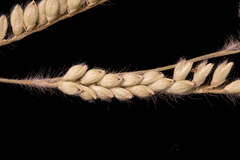 Urochloa ruziziensist0
- Treatment
- Ne0
- Outcome
- productione0
- Qualifier
- quadractlye0
Not reportedComparatorDirection
Organisms pictured · Representative pictures of the matched species, not figures from the paper.

Verbatim
e0“Both grasses responded quadractly to N, but B. ruziziensis presented greater production under thetwo highest N doses.”
t0“Brachiaria ruziziensis”
Claim · model-written summary
B. ruziziensis had greater production under the two highest nitrogen doses than the other grass.
- Taxon
- B. ruziziensisUrochloa ruziziensise0
- Treatment
- thetwo highest N dosese0
- Outcome
- productione0
- Direction
- greatere0
- Comparator
- Brachiaria decumbenst0
Organisms pictured · Representative pictures of the matched species, not figures from the paper.
Verbatim
e0“Both grasses responded quadractly to N, but B. ruziziensis presented greater production under thetwo highest N doses.”
t0“Brachiaria decumbens”
Claim · model-written summary
Nitrogen increased tiller density in Brachiaria decumbens.
- Taxon
- Brachiaria decumbensUrochloa decumbenst0
- Treatment
- N dosee0
- Outcome
- tillers densitye0
- Direction
- increasede0
Not reportedComparator
Organisms pictured · Representative pictures of the matched species, not figures from the paper.
Verbatim
e0“The tillers density increased with N dose and was reduced under shading.”
t0“Brachiaria decumbens”
Claim · model-written summary
Nitrogen increased tiller density in Brachiaria ruziziensis.
- Taxon
- Brachiaria ruziziensisUrochloa ruziziensist0
- Treatment
- N dosee0
- Outcome
- tillers densitye0
- Direction
- increasede0
Not reportedComparator
Organisms pictured · Representative pictures of the matched species, not figures from the paper.
Verbatim
e0“The tillers density increased with N dose and was reduced under shading.”
t0“Brachiaria ruziziensis”
Claim · model-written summary
Shading reduced tiller density in Brachiaria decumbens.
- Taxon
- Brachiaria decumbensUrochloa decumbenst0
- Treatment
- shadinge0
- Outcome
- tillers densitye0
- Direction
- reducede0
Not reportedComparator
Organisms pictured · Representative pictures of the matched species, not figures from the paper.
Verbatim
e0“The tillers density increased with N dose and was reduced under shading.”
t0“Brachiaria decumbens”
Claim · model-written summary
Shading reduced tiller density in Brachiaria ruziziensis.
- Taxon
- Brachiaria ruziziensisUrochloa ruziziensist0
- Treatment
- shadinge0
- Outcome
- tillers densitye0
- Direction
- reducede0
Not reportedComparator
Organisms pictured · Representative pictures of the matched species, not figures from the paper.
Verbatim
e0“The tillers density increased with N dose and was reduced under shading.”
t0“Brachiaria ruziziensis”
Claim · model-written summary
Nitrogen increased root weight of Brachiaria decumbens linearly in full sun and quadratically in shade.
- Taxon
- Brachiaria decumbensUrochloa decumbenst0
- Treatment
- N dosee0
- Outcome
- root weighte0
- Direction
- increasede0
- Qualifier
- linearly in the full sun and quadractly in the shadee0
Not reportedComparator
Organisms pictured · Representative pictures of the matched species, not figures from the paper.
Verbatim
e0“The root weight increased withN dose, linearly in the full sun and quadractly in the shade.”
t0“Brachiaria decumbens”
Claim · model-written summary
Nitrogen increased root weight of Brachiaria ruziziensis linearly in full sun and quadratically in shade.
- Taxon
- Brachiaria ruziziensisUrochloa ruziziensist0
- Treatment
- N dosee0
- Outcome
- root weighte0
- Direction
- increasede0
- Qualifier
- linearly in the full sun and quadractly in the shadee0
Not reportedComparator
Organisms pictured · Representative pictures of the matched species, not figures from the paper.
Verbatim
e0“The root weight increased withN dose, linearly in the full sun and quadractly in the shade.”
t0“Brachiaria ruziziensis”
Claim · model-written summary
Shading positively influenced crude protein content in Brachiaria decumbens.
- Taxon
- Brachiaria decumbensUrochloa decumbenst0
- Treatment
- shadinge0
- Outcome
- CP contentse0
Not reportedComparatorDirection
Organisms pictured · Representative pictures of the matched species, not figures from the paper.
Verbatim
e0“The shading and N showed a positive influence on CP contents.”
t0“Brachiaria decumbens”
Claim · model-written summary
Shading positively influenced crude protein content in Brachiaria ruziziensis.
- Taxon
- Brachiaria ruziziensisUrochloa ruziziensist0
- Treatment
- shadinge0
- Outcome
- CP contentse0
Not reportedComparatorDirection
Organisms pictured · Representative pictures of the matched species, not figures from the paper.
Verbatim
e0“The shading and N showed a positive influence on CP contents.”
t0“Brachiaria ruziziensis”
Claim · model-written summary
Nitrogen positively influenced crude protein content in Brachiaria decumbens.
- Taxon
- Brachiaria decumbensUrochloa decumbenst0
- Treatment
- Ne0
- Outcome
- CP contentse0
Not reportedComparatorDirection
Organisms pictured · Representative pictures of the matched species, not figures from the paper.
Verbatim
e0“The shading and N showed a positive influence on CP contents.”
t0“Brachiaria decumbens”
Claim · model-written summary
Nitrogen positively influenced crude protein content in Brachiaria ruziziensis.
- Taxon
- Brachiaria ruziziensisUrochloa ruziziensist0
- Treatment
- Ne0
- Outcome
- CP contentse0
Not reportedComparatorDirection
Organisms pictured · Representative pictures of the matched species, not figures from the paper.
Verbatim
e0“The shading and N showed a positive influence on CP contents.”
t0“Brachiaria ruziziensis”
Claim · model-written summary
Increasing nitrogen reduced neutral detergent fiber content in Brachiaria decumbens.
- Taxon
- Brachiaria decumbensUrochloa decumbenst0
- Treatment
- N dosee0
- Outcome
- NDF contente0
- Direction
- reductione0
Not reportedComparator
Organisms pictured · Representative pictures of the matched species, not figures from the paper.
Verbatim
e0“For NDF content, was observed reduction with increase of N dose.”
t0“Brachiaria decumbens”
Claim · model-written summary
Increasing nitrogen reduced neutral detergent fiber content in Brachiaria ruziziensis.
- Taxon
- Brachiaria ruziziensisUrochloa ruziziensist0
- Treatment
- N dosee0
- Outcome
- NDF contente0
- Direction
- reductione0
Not reportedComparator
Organisms pictured · Representative pictures of the matched species, not figures from the paper.
Verbatim
e0“For NDF content, was observed reduction with increase of N dose.”
t0“Brachiaria ruziziensis”
Claim · model-written summary
Shading increased neutral detergent fiber content in B. decumbens.
- Taxon
- B. decumbensUrochloa decumbense0
- Treatment
- shadinglevelse0
- Outcome
- NDF contente0
- Direction
- increasede0
Not reportedComparator
Organisms pictured · Representative pictures of the matched species, not figures from the paper.
Verbatim
e0“The NDF content of B. decumbens increased with shadinglevels;”
Claim · model-written summary
B. ruziziensis had its greatest neutral detergent fiber content under intermediate shading.
- Taxon
- B. ruziziensisUrochloa ruziziensise0
- Treatment
- intermediate shading levele0
- Outcome
- NDF contente0
- Direction
- greateste0
Not reportedComparator
Organisms pictured · Representative pictures of the matched species, not figures from the paper.
Verbatim
e0“The NDF content of B. decumbens increased with shadinglevels; for B. ruziziensis, the greatest value was observed under intermediate shading level.”
Claim · model-written summary
Nitrogen fertilization is recommended to improve dry matter production, tiller density and crude protein content in Brachiaria decumbens.
- Taxon
- Brachiaria decumbensUrochloa decumbenst0
- Outcome
- N fertilizatione0
- Qualifier
- to improve DMP, tillers density and CP contente0
Organisms pictured · Representative pictures of the matched species, not figures from the paper.
Verbatim
e0“The N fertilization is an importantstrategy to improve DMP, tillers density and CP content, for both grasses.”
t0“Brachiaria decumbens”
Claim · model-written summary
Nitrogen fertilization is recommended to improve dry matter production, tiller density and crude protein content in Brachiaria ruziziensis.
- Taxon
- Brachiaria ruziziensisUrochloa ruziziensist0
- Outcome
- N fertilizatione0
- Qualifier
- to improve DMP, tillers density and CP contente0
Organisms pictured · Representative pictures of the matched species, not figures from the paper.
Verbatim
e0“The N fertilization is an importantstrategy to improve DMP, tillers density and CP content, for both grasses.”
t0“Brachiaria ruziziensis”
Claim · model-written summary
Intense shading should be avoided for both grasses because it reduces tillering and root weight and may threaten pasture persistence.
- Taxon
- Brachiaria decumbens and Brachiaria ruziziensisUrochloa decumbensUrochloa ruziziensist0
- Outcome
- intense shading should be avoidede0
- Qualifier
- as itreduces tillering and root weight, which may threat pasture persistencee0
Organisms pictured · Representative pictures of the matched species, not figures from the paper.
Verbatim
e0“However, intense shading should be avoided, as itreduces tillering and root weight, which may threat pasture persistence.”
e1“The N fertilization is an importantstrategy to improve DMP, tillers density and CP content, for both grasses.”
t0“Brachiaria decumbens and Brachiaria ruziziensis”
The same questions in other papers
nitrogen · quality: grain · Urochloa decumbensPositive and negative results
1 in the opposite direction
- no effect
shade · quality: grain · Urochloa decumbensPositive and negative results
1 in the opposite direction
- positive
nitrogen · growth · Urochloa ruziziensis (Congo grass)Positive and negative results
1 paper in the same direction as this paper · 1 reporting no difference from an alternative
- no effect
- positive
nitrogen · growth · Urochloa decumbensPositive and negative results
3 papers in the same direction as this paper · 1 in the opposite direction
- no effect
- positive
- positive
1 paper more in this group
See all 5 papers →nitrogen · yield · Urochloa decumbensPositive and negative results
6 papers in the same direction as this paper · 1 in the opposite direction
- negative
- positive
- positive
4 papers more in this group
See all 8 papers →shade · yield · Urochloa ruziziensis (Congo grass)Results agree
1 paper in the same direction as this paper
- negative
nitrogen · quality: grain · Urochloa ruziziensis (Congo grass)Results agree
1 paper in the same direction as this paper
- positive
nitrogen · quality: protein · Urochloa decumbensResults agree
2 papers in the same direction as this paper
- positive
- positive
8 of 12 groups shown: named compounds and organisms first, then groups whose results differ (checked claim by claim), then those with positive and negative results, then the smaller groups.
Claims are grouped by organism, treatment and what was measured or targeted. A paper counts as positive when any of its claims in the group is positive.