Abstract
Asparagine (Asn) constitutes the major form of nitrogen translocated within Lotus japonicus plants. In this work we use knock-out (KO) LORE1 mutants-deficient in the asparagine synthetase gene (LjASN1), which is the most highly expressed ASN gene in plants grown under non-symbiotic (NS) conditions, but much less expressed under symbiotic (S) conditions. The analysis of two different Ljasn1 homozygous mutant lines grown under NS or S conditions indicated that a much higher biomass was produced in Ljasn1 mutants grown under NS conditions compared to the WT (wild-type), whereas little difference with the WT was observed in mutant plants under S conditions. Metabolomic analysis revealed that Ljasn1 mutant plants are quite distinct to WT plants when grown under NS conditions, but not under S conditions. Asn levels were considerably reduced in Ljasn1 mutant plants compared to the WT when plants were grown under NS but not under S conditions. A general decrease in amino acids and an increase in carbon compounds, such as sugars and oxo-acids, was detected in NS roots and shoots, respectively, which may explain the growth phenotypes observed. RNAseq analysis showed changes related to oxidative metabolism under NS conditions, and C/N metabolism under S conditions. The data indicate that the LjASN1 deficiency produces important changes in the C/N balance and metabolite allocation of L. japonicus plants resulting in higher biomass content and lower Asn levels, two interesting traits for biotechnological crops engineering.
Abstract from the paper’s OpenAlex record; open copy licensed cc-by. Read at the source ↗
The text the model read, with the source record’s inline markup (italics, sub- and superscripts) rendered and its character entities decoded; quote offsets refer to the raw text.
Claims 10
Claim · model-written summary
Ljasn1 mutants grown under NS conditions produced much higher biomass than WT.
- Taxon
- Lotus japonicus
 Lotus japonicust0
- Material
- Ljasn1 mutantse1
- Treatment
- NS conditionse1
- Outcome
- biomasse1
- Direction
- highere1
- Comparator
- WTe1
Organisms pictured · Representative pictures of the matched species, not figures from the paper.
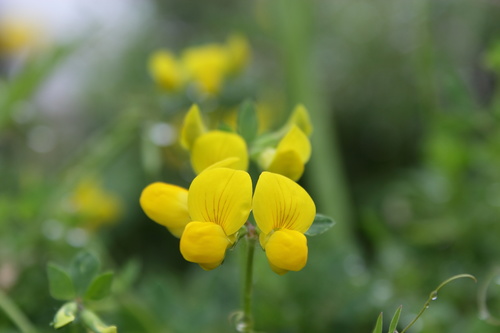
Verbatim
t0“Lotus japonicus”
e1“a much higher biomass was produced in Ljasn1 mutants grown under NS conditions compared to the WT (wild-type)”
Claim · model-written summary
Ljasn1 mutant biomass showed little difference from WT under S conditions.
- Taxon
- Lotus japonicusLotus japonicust0
- Material
- mutant plantse1
- Treatment
- S conditionse1
- Outcome
- biomasse1
- Direction
- no_changeinferrede1
- Comparator
- WTe1
Organisms pictured · Representative pictures of the matched species, not figures from the paper.
Verbatim
t0“Lotus japonicus”
e1“a much higher biomass was produced in Ljasn1 mutants grown under NS conditions compared to the WT (wild-type), whereas little difference with the WT was observed in mutant plants under S conditions”
Claim · model-written summary
Metabolomic profiles of Ljasn1 mutants were quite distinct from WT under NS conditions but not under S conditions.
- Taxon
- Lotus japonicusLotus japonicust0
- Material
- Ljasn1 mutant plantse1
- Treatment
- NS conditionse1
- Outcome
- Metabolomic analysise1
Organisms pictured · Representative pictures of the matched species, not figures from the paper.
Verbatim
t0“Lotus japonicus”
e1“Metabolomic analysis revealed that Ljasn1 mutant plants are quite distinct to WT plants when grown under NS conditions, but not under S conditions”
Claim · model-written summary
Asn levels were considerably reduced in Ljasn1 mutants compared with WT under NS conditions.
- Taxon
- Lotus japonicusLotus japonicust0
- Material
- Ljasn1 mutant plantse1
- Treatment
- NSe1
- Outcome
- Asn levelse1
- Direction
- reducede1
- Comparator
- WTe1
Organisms pictured · Representative pictures of the matched species, not figures from the paper.
Verbatim
t0“Lotus japonicus”
e1“Asn levels were considerably reduced in Ljasn1 mutant plants compared to the WT when plants were grown under NS but not under S conditions”
Claim · model-written summary
Asn levels did not differ between Ljasn1 mutants and WT under S conditions.
- Taxon
- Lotus japonicusLotus japonicust0
- Material
- Ljasn1 mutant plantse1
- Treatment
- S conditionse1
- Outcome
- Asn levelse1
- Direction
- no_changeinferrede1
- Comparator
- WTe1
Organisms pictured · Representative pictures of the matched species, not figures from the paper.
Verbatim
t0“Lotus japonicus”
e1“Asn levels were considerably reduced in Ljasn1 mutant plants compared to the WT when plants were grown under NS but not under S conditions”
Claim · model-written summary
Amino acids decreased in NS roots of Ljasn1 mutants.
- Taxon
- Lotus japonicusLotus japonicust0
- Organ / stage
- rootse1
- Treatment
- NSe1
- Outcome
- amino acidse1
- Direction
- decreasee1
Not reportedComparator
Organisms pictured · Representative pictures of the matched species, not figures from the paper.
Verbatim
t0“Lotus japonicus”
e1“A general decrease in amino acids and an increase in carbon compounds, such as sugars and oxo-acids, was detected in NS roots and shoots, respectively”
Claim · model-written summary
Carbon compounds such as sugars and oxo-acids increased in NS shoots.
- Taxon
- Lotus japonicusLotus japonicust0
- Organ / stage
- shootse1
- Treatment
- NSe1
- Outcome
- carbon compoundse1
- Direction
- increasee1
Not reportedComparator
Organisms pictured · Representative pictures of the matched species, not figures from the paper.
Verbatim
t0“Lotus japonicus”
e1“A general decrease in amino acids and an increase in carbon compounds, such as sugars and oxo-acids, was detected in NS roots and shoots, respectively”
Claim · model-written summary
RNAseq showed changes related to oxidative metabolism under NS conditions.
- Taxon
- Lotus japonicusLotus japonicust0
- Treatment
- NS conditionse1
- Outcome
- changes related to oxidative metabolisme1
Organisms pictured · Representative pictures of the matched species, not figures from the paper.
Verbatim
t0“Lotus japonicus”
e1“RNAseq analysis showed changes related to oxidative metabolism under NS conditions”
Claim · model-written summary
RNAseq showed changes related to C/N metabolism under S conditions.
- Taxon
- Lotus japonicusLotus japonicust0
- Treatment
- S conditionse1
- Outcome
- C/N metabolisme1
Organisms pictured · Representative pictures of the matched species, not figures from the paper.
Verbatim
t0“Lotus japonicus”
e1“RNAseq analysis showed changes related to oxidative metabolism under NS conditions, and C/N metabolism under S conditions”
Claim · model-written summary
LjASN1 deficiency produces changes in the C/N balance and metabolite allocation of L. japonicus.
- Taxon
- L. japonicusLotus japonicuse1
- Gene
- LjASN1e1
- Outcome
- C/N balance and metabolite allocatione1
Organisms pictured · Representative pictures of the matched species, not figures from the paper.
Verbatim
t0“Lotus japonicus”
e1“The data indicate that the LjASN1 deficiency produces important changes in the C/N balance and metabolite allocation of L. japonicus plants resulting in higher biomass content and lower Asn levels”