Abstract
ABSTRACT Veterinary medicines, which reach the soil mostly through the application of contaminated manures, can affect beneficial soil microorganisms, such as nitrogen‐fixing rhizobia bacteria, which engage in important symbiotic associations with plants. The anthelmintic compounds albendazole and fenbendazole were tested for toxicity against the nitrogen‐fixing rhizobium Mesorhizobium loti and its symbiotic relationship with the model legume Lotus japonicus . The effects of anthelmintics on rhizobial growth were tested in vitro in bacterial cultures, while their effects on the establishment of the symbiotic relationship were tested by phenotypic and molecular analyses of inoculated plants. None of the two compounds showed phytotoxicity. Albendazole and fenbendazole inhibited the growth of rhizobia at concentrations often (0.75 mg kg −1 ) or rarely (2.25 mg kg −1 ) found in agricultural soils. Albendazole reduced the number of infection threads formed in roots and downregulated key symbiosis‐related genes, indicating inhibition of symbiosis at early stages, unlike fenbendazole, which showed no effects. However, nodulation and nitrogenase activity were not significantly affected by albendazole at advanced stages of the symbiosis, suggesting a recovery possibly associated with the progressive dissipation of albendazole. Our results suggest different toxicity of albendazole and fenbendazole to the symbiotic nitrogen fixation system that may have serious implications for soil health.
Abstract from the paper’s OpenAlex record; open copy licensed cc-by-nc-nd. Read at the source ↗
The text the model read, with the source record’s inline markup (italics, sub- and superscripts) rendered and its character entities decoded; quote offsets refer to the raw text.
Claims 8
Claim · model-written summary
Neither compound was phytotoxic to Lotus japonicus.
- Taxon
- Lotus japonicus
 Lotus japonicust0
- Treatment
- two compoundse0
- Outcome
- phytotoxicitye0
Not reportedComparatorDirection
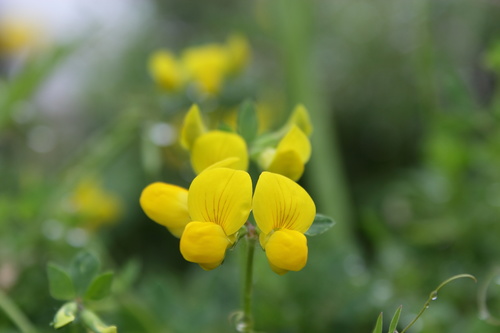
Organisms pictured · Representative pictures of the matched species, not figures from the paper.
Verbatim
e0“None of the two compounds showed phytotoxicity.”
t0“Benzimidazole Anthelmintic Compounds Albendazole and Fenbendazole Show Distinct Toxicity on the Nitrogen Fixing Bacterium Mesorhizobium loti and Its Symbiosis With Lotus japonicus”
e1“Albendazole reduced the number of infection threads formed in roots and downregulated key symbiosis‐related genes”
Claim · model-written summary
Albendazole inhibited rhizobial growth at 0.75 mg kg −1.
- Taxon
- Lotus japonicusLotus japonicust0
- Treatment
- Albendazolee0
- Interactor
- rhizobiae0symbiont
- Outcome
- growth of rhizobiae0
- Direction
- inhibitede0
- Value
- 0.75 mg kg −1e0
Not reportedComparator
Organisms pictured · Representative pictures of the matched species, not figures from the paper.
Verbatim
e0“Albendazole and fenbendazole inhibited the growth of rhizobia at concentrations often (0.75 mg kg −1 ) or rarely (2.25 mg kg −1 ) found in agricultural soils.”
t0“Benzimidazole Anthelmintic Compounds Albendazole and Fenbendazole Show Distinct Toxicity on the Nitrogen Fixing Bacterium Mesorhizobium loti and Its Symbiosis With Lotus japonicus”
e1“Albendazole reduced the number of infection threads formed in roots and downregulated key symbiosis‐related genes”
Claim · model-written summary
Fenbendazole inhibited rhizobial growth at 2.25 mg kg −1.
- Taxon
- Lotus japonicusLotus japonicust0
- Treatment
- fenbendazolee0
- Interactor
- rhizobiae0symbiont
- Outcome
- growth of rhizobiae0
- Direction
- inhibitede0
- Value
- 2.25 mg kg −1e0
Not reportedComparator
Organisms pictured · Representative pictures of the matched species, not figures from the paper.
Verbatim
e0“Albendazole and fenbendazole inhibited the growth of rhizobia at concentrations often (0.75 mg kg −1 ) or rarely (2.25 mg kg −1 ) found in agricultural soils.”
t0“Benzimidazole Anthelmintic Compounds Albendazole and Fenbendazole Show Distinct Toxicity on the Nitrogen Fixing Bacterium Mesorhizobium loti and Its Symbiosis With Lotus japonicus”
e1“Albendazole reduced the number of infection threads formed in roots and downregulated key symbiosis‐related genes”
Claim · model-written summary
Albendazole reduced root infection threads.
- Taxon
- Lotus japonicusLotus japonicust0
- Treatment
- Albendazolee0
- Interactor
- Mesorhizobium loti
 Mesorhizobium lotit0symbiont
- Outcome
- number of infection threads formed in rootse0
- Direction
- reducede0
Not reportedComparator
Organisms pictured · Representative pictures of the matched species, not figures from the paper.

Verbatim
e0“Albendazole reduced the number of infection threads formed in roots”
t0“Benzimidazole Anthelmintic Compounds Albendazole and Fenbendazole Show Distinct Toxicity on the Nitrogen Fixing Bacterium Mesorhizobium loti and Its Symbiosis With Lotus japonicus”
e1“Albendazole reduced the number of infection threads formed in roots and downregulated key symbiosis‐related genes”
Claim · model-written summary
Albendazole downregulated symbiosis genes.
- Taxon
- Lotus japonicusLotus japonicust0
- Treatment
- Albendazolee1
- Interactor
- Mesorhizobium lotiMesorhizobium lotit0symbiont
- Outcome
- key symbiosis‐related genese0
- Direction
- downregulatede0
Not reportedComparator
Organisms pictured · Representative pictures of the matched species, not figures from the paper.
Verbatim
e0“downregulated key symbiosis‐related genes”
t0“Benzimidazole Anthelmintic Compounds Albendazole and Fenbendazole Show Distinct Toxicity on the Nitrogen Fixing Bacterium Mesorhizobium loti and Its Symbiosis With Lotus japonicus”
e1“Albendazole reduced the number of infection threads formed in roots and downregulated key symbiosis‐related genes”
Claim · model-written summary
Fenbendazole showed no early symbiosis effects.
- Taxon
- Lotus japonicusLotus japonicust0
- Treatment
- fenbendazolee0
- Interactor
- Mesorhizobium lotiMesorhizobium lotit0symbiont
- Outcome
- no effectse0
Not reportedComparatorDirection
Organisms pictured · Representative pictures of the matched species, not figures from the paper.
Verbatim
e0“unlike fenbendazole, which showed no effects”
t0“Benzimidazole Anthelmintic Compounds Albendazole and Fenbendazole Show Distinct Toxicity on the Nitrogen Fixing Bacterium Mesorhizobium loti and Its Symbiosis With Lotus japonicus”
e1“Albendazole reduced the number of infection threads formed in roots and downregulated key symbiosis‐related genes”
Claim · model-written summary
Albendazole did not significantly affect nodulation at advanced symbiosis stages.
- Taxon
- Lotus japonicusLotus japonicust0
- Treatment
- albendazolee0
- Interactor
- Mesorhizobium lotiMesorhizobium lotit0symbiont
- Outcome
- nodulatione0
- Direction
- not significantly affectede0
Not reportedComparator
Organisms pictured · Representative pictures of the matched species, not figures from the paper.
Verbatim
e0“nodulation and nitrogenase activity were not significantly affected by albendazole at advanced stages of the symbiosis”
t0“Benzimidazole Anthelmintic Compounds Albendazole and Fenbendazole Show Distinct Toxicity on the Nitrogen Fixing Bacterium Mesorhizobium loti and Its Symbiosis With Lotus japonicus”
e1“Albendazole reduced the number of infection threads formed in roots and downregulated key symbiosis‐related genes”
Claim · model-written summary
Albendazole did not significantly affect nitrogenase activity at advanced symbiosis stages.
- Taxon
- Lotus japonicusLotus japonicust0
- Treatment
- albendazolee0
- Interactor
- Mesorhizobium lotiMesorhizobium lotit0symbiont
- Outcome
- nitrogenase activitye0
- Direction
- not significantly affectede0
Not reportedComparator
Organisms pictured · Representative pictures of the matched species, not figures from the paper.
Verbatim
e0“nodulation and nitrogenase activity were not significantly affected by albendazole at advanced stages of the symbiosis”
t0“Benzimidazole Anthelmintic Compounds Albendazole and Fenbendazole Show Distinct Toxicity on the Nitrogen Fixing Bacterium Mesorhizobium loti and Its Symbiosis With Lotus japonicus”
e1“Albendazole reduced the number of infection threads formed in roots and downregulated key symbiosis‐related genes”