Abstract
Antimicrobials are harmful to microorganisms. Antimicrobials deal with inhibiting the survival and living of microorganisms. Drugs that negatively affect the growth of microorganisms are used to fight microorganisms, including bacteria and fungi. Phytochemical studies deal with identifying the chemicals inherent in a plant and their usefulness in contributing to the use of the plant for various purposes, including preventing the thriving of microorganisms. It also means selective toxicity that kills microorganisms without harming humans or animals. This study was conducted to investigate the antimicrobial activities based on the phytochemicals present in the stem bark extract of C. echinata. The phytochemical studies of the plant were conducted by the addition of various standard reagents. The plant structures were also elucidated by qualitative microscopy and microscopical examination of the transverse section of the stem. Antimicrobial studies were carried out on microorganisms using the agar well diffusion method. The microorganisms tested included Staphylococcus aureus and others, and the concentrations from which the growth inhibition of microorganisms was observed were 50 mg/ml for both Escherichia coli and Salmonella typhi, but 100 mg/ml was noted for the fungus Candida albicans, and upwards of 200 mg/ml. Much activity was not recorded for S. pyogenes and E. faecalis. The antimicrobial analysis also showed that the plant stem extract was highly active against Escherichia coli with an inhibitory zone diameter (IZD) of 26mm ±2.83 at 200mg/ml and a pod borer diameter of 08mm. From this, it can be inferred that the IZD is about three times the pod borer diameter, which shows high activity at 200 mg/ml. 100 mg/ml concentration had an IZD of 20mm, but there was no significant activity at 25 mg/ml because no clear zone was observed around the extract in the bore. However, this is quite different from that seen in the control (neomycin and fluconacole were used), which has inhibition at concentrations as low as 2.5 mg/ml and 5 mg/ml, showing IZD of 17±1.41mm and 33±2.83 mm, respectively. From this, it can be inferred that the extract is not potent enough against conventional antimicrobials. In the sensitivity test, the extract of 50 mg/ml concentration was sensitive to the organisms. Thus, the presence of the secondary metabolites present in the plant, such as alkaloids, saponin, glycosides, protein, and tannins, contributed to the antimicrobial activity of this plant extract against microorganisms.
Abstract from the paper’s OpenAlex record; open copy licensed cc-by. Read at the source ↗
The text the model read, with the source record’s inline markup (italics, sub- and superscripts) rendered and its character entities decoded; quote offsets refer to the raw text.
Claims 8
Claim · model-written summary
Secondary metabolites such as alkaloids, saponins, glycosides, protein and tannins contributed to the antimicrobial activity of the stem bark extract.
- Taxon
- CALONCOBA ECHINATA
 Caloncoba echinatat0
- Compound
- alkaloids, saponin, glycosides, protein, and tanninse1
- Outcome
- antimicrobial activitye1
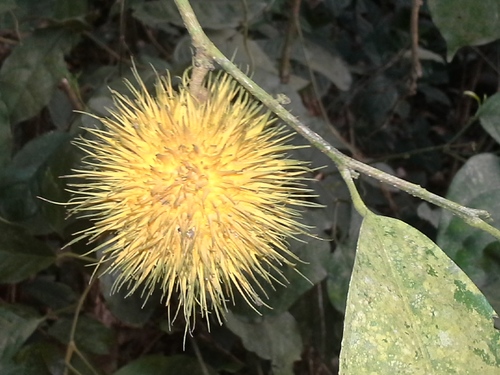
Organisms pictured · Representative pictures of the matched species, not figures from the paper.
Verbatim
t0“IN VITRO ANTIMICROBIAL ACTIVITY OF METHANOLIC STEM BARK EXTRACT OF CALONCOBA ECHINATA”
e1“the presence of the secondary metabolites present in the plant, such as alkaloids, saponin, glycosides, protein, and tannins, contributed to the antimicrobial activity of this plant extract”
Claim · model-written summary
Growth of Escherichia coli and Salmonella typhi was inhibited at 50 mg/ml of the extract.
- Taxon
- CALONCOBA ECHINATACaloncoba echinatat0
- Interactor
- Escherichia coli
 Escherichia colie2other
- Second interactor
- Salmonella typhi
 Salmonella enterica subsp. enterica serovar Typhie2other
- Outcome
- growth inhibitione2
- Value
- 50 mg/mle2
Organisms pictured · Representative pictures of the matched species, not figures from the paper.


Verbatim
t0“IN VITRO ANTIMICROBIAL ACTIVITY OF METHANOLIC STEM BARK EXTRACT OF CALONCOBA ECHINATA”
e2“the concentrations from which the growth inhibition of microorganisms was observed were 50 mg/ml for both Escherichia coli and Salmonella typhi, but 100 mg/ml was noted for the fungus Candida albicans, and upwards of 200 mg/ml”
Claim · model-written summary
Growth of Candida albicans was inhibited at 100 mg/ml of the extract.
- Taxon
- CALONCOBA ECHINATACaloncoba echinatat0
- Interactor
- Candida albicans
 Candida albicanse2other
- Outcome
- growth inhibitione2
- Value
- 100 mg/mle2
Organisms pictured · Representative pictures of the matched species, not figures from the paper.

Verbatim
t0“IN VITRO ANTIMICROBIAL ACTIVITY OF METHANOLIC STEM BARK EXTRACT OF CALONCOBA ECHINATA”
e2“the concentrations from which the growth inhibition of microorganisms was observed were 50 mg/ml for both Escherichia coli and Salmonella typhi, but 100 mg/ml was noted for the fungus Candida albicans, and upwards of 200 mg/ml”
Claim · model-written summary
The stem extract was highly active against Escherichia coli, with an inhibitory zone diameter of 26mm ±2.83 at 200mg/ml.
- Taxon
- CALONCOBA ECHINATACaloncoba echinatat0
- Treatment
- 200mg/mle3
- Interactor
- Escherichia coliEscherichia colie3other
- Outcome
- inhibitory zone diameter (IZD)e3
- Value
- 26mm ±2.83e3
- Qualifier
- highly activee3
Organisms pictured · Representative pictures of the matched species, not figures from the paper.
Verbatim
t0“IN VITRO ANTIMICROBIAL ACTIVITY OF METHANOLIC STEM BARK EXTRACT OF CALONCOBA ECHINATA”
e3“the plant stem extract was highly active against Escherichia coli with an inhibitory zone diameter (IZD) of 26mm ±2.83 at 200mg/ml”
Claim · model-written summary
No significant activity was found at 25 mg/ml of the extract.
- Taxon
- CALONCOBA ECHINATACaloncoba echinatat0
- Treatment
- 25 mg/mle4
- Outcome
- activitye4
Organisms pictured · Representative pictures of the matched species, not figures from the paper.
Verbatim
t0“IN VITRO ANTIMICROBIAL ACTIVITY OF METHANOLIC STEM BARK EXTRACT OF CALONCOBA ECHINATA”
e4“there was no significant activity at 25 mg/ml because no clear zone was observed around the extract in the bore”
Claim · model-written summary
Control antimicrobials (neomycin and fluconacole) showed inhibition at 2.5 mg/ml and 5 mg/ml, with inhibition zones of 17±1.41mm and 33±2.83 mm.
- Taxon
- CALONCOBA ECHINATACaloncoba echinatat0
- Treatment
- neomycin and fluconacolee5
- Outcome
- inhibitione5
- Value
- 17±1.41mm and 33±2.83 mme5
- Qualifier
- 2.5 mg/ml and 5 mg/mle5
Organisms pictured · Representative pictures of the matched species, not figures from the paper.
Verbatim
t0“IN VITRO ANTIMICROBIAL ACTIVITY OF METHANOLIC STEM BARK EXTRACT OF CALONCOBA ECHINATA”
e5“this is quite different from that seen in the control (neomycin and fluconacole were used), which has inhibition at concentrations as low as 2.5 mg/ml and 5 mg/ml, showing IZD of 17±1.41mm and 33±2.83 mm”
Claim · model-written summary
The stem bark extract is less potent than conventional antimicrobials.
- Taxon
- CALONCOBA ECHINATACaloncoba echinatat0
- Treatment
- extracte6
- Outcome
- potent enoughe6
- Direction
- not potent enoughe6
- Comparator
- conventional antimicrobialse6
Organisms pictured · Representative pictures of the matched species, not figures from the paper.
Verbatim
t0“IN VITRO ANTIMICROBIAL ACTIVITY OF METHANOLIC STEM BARK EXTRACT OF CALONCOBA ECHINATA”
e6“the extract is not potent enough against conventional antimicrobials”
Claim · model-written summary
In the sensitivity test, the 50 mg/ml extract was sensitive to the organisms.
- Taxon
- CALONCOBA ECHINATACaloncoba echinatat0
- Treatment
- extract of 50 mg/ml concentratione7
- Outcome
- sensitivitye7
- Qualifier
- sensitive to the organismse7
Organisms pictured · Representative pictures of the matched species, not figures from the paper.
Verbatim
t0“IN VITRO ANTIMICROBIAL ACTIVITY OF METHANOLIC STEM BARK EXTRACT OF CALONCOBA ECHINATA”
e7“In the sensitivity test, the extract of 50 mg/ml concentration was sensitive to the organisms”