View: List Claim type Research area Organism Taxon as written Decade Paper Intervention effect observed original result measured Claim · model-written summary
Higher density decrease d stem density in the top layer.
Not reported Treatment Comparator
Verbatim
e0 “a decrease in stem density in the top layer ”
✓ located verbatim in the source · abstract, characters 1024–1067 t0 “Abutilon theophrasti
✓ located verbatim in the source · title, characters 62–82 Other claims from this paper (7) Intervention effect observed original result negative measured Claim · model-written summary
Higher temperatures caused a small decrease in Euphrasia population density over three seasons.
Higher temperatures e0 population densities e0 during three seasons e0 Not reported Comparator
Verbatim
e0 “Higher temperatures resulted in a small decrease in population densities during three seasons. ”
✓ located verbatim in the source · abstract, characters 337–431 t0 “Euphrasia frigida
✓ located verbatim in the source · title, characters 129–146 Other claims from this paper (6) Association observed original result measured Claim · model-written summary
Soil pH decrease correlated with root length density .
Not reported Direction
Verbatim
e0 “the decrease in pH correlated well with in creased root length density of both species ( r 2 = 0 .9 8 , n = 9) ”
✓ located verbatim in the source · abstract, characters 816–925 e1 “lupins ( Lupinus angustifolius L.) and subterranean clover ( Trifolium subterraneum L.) ”
✓ located verbatim in the source · abstract, characters 322–409 Other claims from this paper (10) Observation observed review summary basis n/a Claim · model-written summary
Chilling, planting density , rubbing, cutting and repeated subculture generally decrease plant DNA methylation.
chilling, planting density, rubbing, cutting, and successive rounds of subculture e0 levels of DNA methylation e0 Verbatim
e0 “Abiotic stresses such as chilling, planting density , rubbing, cutting, and successive rounds of subculture generally decrease the levels of DNA methylation ”
✓ located verbatim in the source · abstract, characters 140–295 t0 “Plant genomic DNA methylation ”
✓ located verbatim in the source · title, characters 0–29 Other claims from this paper (5) Association observed original result measured Claim · model-written summary
Mean particle size in creased with hydration, in sufficiently to explain density decrease by aggregation.
Mean particle size e0 Not reported Taxon
Verbatim
e0 “Mean particle size in creased with hydration but not enough to suggest aggregation as the cause for this density decrease . ”
✓ located verbatim in the source · abstract, characters 336–457 Other claims from this paper (7) Mechanism author interpretation original result positive measured Claim · model-written summary
Higher in terspecies in teraction in tensity can decrease evaporation by in creasing root length density of the in tercropped crops
by increasing the root length density of intercropping crops e7 Verbatim
e0 “wheat ( Triticum aestivum )–maize ( Zea mays ) in tercropping system ”
✓ located verbatim in the source · abstract, characters 278–345 e7 “In creasing in terspecies in teraction in tensity can decrease evaporation by in creasing the root length density of in tercropping crops ”
✓ located verbatim in the source · abstract, characters 1483–1614 Other claims from this paper (8) Association observed original result negative measured Claim · model-written summary
In creasing shade was associated with a decrease in tiller population density .
tiller population density e0 Verbatim
e0 “the in crease in shading level was associated with a decrease in average tussock perimeter, tiller population density , and an in crease in the frequency of bare ground ”
✓ located verbatim in the source · abstract, characters 1286–1451 t0 “Piatã palisadegrass (Urochloa brizantha ) ”
✓ located verbatim in the source · title, characters 63–103 Other claims from this paper (7) Observation observed original result measured Claim · model-written summary
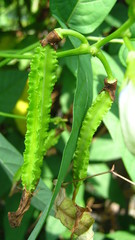
Entry II TPT 30 showed the greatest decrease in bulk density .
Entry II TPT 30 e1 1.02 kg/mm3-0.60 kg/mm3 e1 Verbatim
e0 “winged bean seed ”
✓ located verbatim in the source · abstract, characters 28–44 e1 “Entry II TPT 30 had the highest percentage bulk density (1.02 kg/mm3-0.60 kg/mm3) decrease ”
✓ located verbatim in the source · abstract, characters 641–731 Other claims from this paper (9) Association observed original result measured Claim · model-written summary
In crease in crown density correlated with decrease in light availability in the herb-shrub stratum.
plant species of the herb-shrub stratum t0 Increase in crown density e2 light availability e2 Verbatim
t0 “In fluence of tree-crown density on dominant plant species of the herb-shrub stratum in the zone of mixed forests ”
✓ located verbatim in the source · title, characters 0–112 e2 “In crease in crown density correlated with decrease in the light availability in the herb-shrub stratum ”
✓ located verbatim in the source · abstract, characters 1300–1402 Other claims from this paper (6) Intervention effect observed original result measured Claim · model-written summary
in dividual leaf surface area was decrease in relation to plant density .
individual leaf surface area e0 Not reported Comparator
Verbatim
e0 “It was found that each in crease in plant density by 20 thousand/ha leads to a decrease in the in dividual leaf surface area of the plant by 8.8–9.0 % (128–137 cm2) relative to the previous plant density . ”
✓ located verbatim in the source · abstract, characters 252–454 t0 “grain sorghum ”
✓ located verbatim in the source · title, characters 39–52 Other claims from this paper (17) Lexical search (BM25). All words must match; if nothing does, any word. Organism names also match every spelling of the same organism. No semantic search yet.
 Abutilon theophrastit0
 Euphrasia frigida
 Lupinus
 Zea mays
 Urochloa brizantha
 Psophocarpus tetragonolobus
 Sorghum bicolor