View: List Claim type Research area Organism Taxon as written Decade Paper Does Drought Increase the Risk of Insects Developing Behavioral Resistance to Systemic Insecticides? 4 Show all 4 → Association hypothesis review summary negative basis n/a Claim · model-written summary
Drought is hypothesized to decrease insecticide uptake by crop plants.
Verbatim
e0 “We hypothesize that more pronounced drought will decrease uptake and increase the magnitude of nonuniform translocation of systemic insecticides within treated crop plants ”
✓ located verbatim in the source · abstract, characters 659–830 Other claims from this paper (5) Association hypothesis review summary negative basis n/a Claim · model-written summary
Drought is hypothesized to increase nonuniform insecticide translocation.
magnitude of nonuniform translocation of systemic insecticides e0 Verbatim
e0 “We hypothesize that more pronounced drought will decrease uptake and increase the magnitude of nonuniform translocation of systemic insecticides within treated crop plants ”
✓ located verbatim in the source · abstract, characters 659–830 Other claims from this paper (5) Mechanism hypothesis review summary negative basis n/a Claim · model-written summary
Drought driven insecticide movement may reduce pesticide performance.
reduced pesticide performance e0 reduced pesticide performance e0 Verbatim
e0 “and that may have two concurrent consequences: 1) reduced pesticide performance, and 2) increased likelihood of insect pests evolving behavioral insecticide resistance. ”
✓ located verbatim in the source · abstract, characters 832–1000 e1 “We hypothesize that more pronounced drought will decrease uptake and increase the magnitude of nonuniform translocation of systemic insecticides within treated crop plants ”
✓ located verbatim in the source · abstract, characters 659–830 Other claims from this paper (5) Shelf-life of a BiocontrolPseudomonas putida Applied to Sugar Beet Seeds Using Commercial Coatings 2 Show all 2 → Observation observed original result measured Claim · model-written summary
After 52 weeks at 4°C, 40RNF declined one to two orders of magnitude .
40RNF e0 biocontrol_agent numbers of 40RNF e0 one to two orders of magnitude e0 Verbatim
e0 “After 52 weeks of storage at 4°C,the numbers of 40RNF had declined by one to two orders of magnitude , with a decrease of approximately 50% in disease control. ”
✓ located verbatim in the source · abstract, characters 617–775 t0 “Sugar Beet ”
✓ located verbatim in the source · title, characters 55–65 Other claims from this paper (7) Observation observed original result negative measured Claim · model-written summary
After 52 weeks at 4°C, disease control decrease d about 50%.
40RNF e0 biocontrol_agent Verbatim
e0 “After 52 weeks of storage at 4°C,the numbers of 40RNF had declined by one to two orders of magnitude , with a decrease of approximately 50% in disease control. ”
✓ located verbatim in the source · abstract, characters 617–775 t0 “Sugar Beet ”
✓ located verbatim in the source · title, characters 55–65 Other claims from this paper (7) Pilot-scale production and liquid formulation of Rhodotorula minuta , a potential biocontrol agent of mango anthracnose 2 Show all 2 → Observation observed original result negative measured Claim · model-written summary
At an initial concentration of 10(9) CFU ml(-1), yeast viability fell two orders in six months.
two orders of magnitude e0 Verbatim
t0 “Rhodotorula minuta , a potential biocontrol agent of mango anthracnose ”
✓ located verbatim in the source · title, characters 49–118 e0 “when it was formulated at 10(9) CFU ml(-1), the decrease was of two orders of magnitude in 6 months ”
✓ located verbatim in the source · abstract, characters 838–937 Other claims from this paper (7) Observation observed original result negative measured Claim · model-written summary
At an initial concentration of 10(10) CFU ml(-1), yeast viability fell 4-5 orders in one month.
Yeast initial concentration e0 4-5 orders of magnitude e0 after 1 month of storage at 4 degrees C e0 Verbatim
t0 “Rhodotorula minuta , a potential biocontrol agent of mango anthracnose ”
✓ located verbatim in the source · title, characters 49–118 e0 “Yeast initial concentration of 10(10) CFU ml(-1) resulted in 4-5 orders of magnitude decrease after 1 month of storage at 4 degrees C ”
✓ located verbatim in the source · abstract, characters 695–828 Other claims from this paper (7) The mid-Holocene Ulmus decline at Diss Mere, Norfolk, UK: a year-by-year pollen stratigraphy from annual laminations 2 Show all 2 → Mechanism hypothesis original result measured Claim · model-written summary
The form, magnitude , and rate of the Ulmus decline are consistent with a pathogenic attack.
pathogenic attack e2 Verbatim
e2 “The form, magnitude , and rate of decrease of the Ulmus decline at Diss Mere are all consistent with the hypothesis of a pathogenic attack ”
✓ located verbatim in the source · abstract, characters 1061–1198 Other claims from this paper (3) Mechanism author interpretation original result measured Claim · model-written summary
The mid-Holocene elm decline was caused by a combination of disease and human activity.
a combination of disease and human activity e4 Verbatim
e2 “The form, magnitude , and rate of decrease of the Ulmus decline at Diss Mere are all consistent with the hypothesis of a pathogenic attack ”
✓ located verbatim in the source · abstract, characters 1061–1198 e4 “All the available evidence from Diss supports the hypothesis that the mid-Holocene 'elm decline' was caused by a combination of disease and human activity ”
✓ located verbatim in the source · abstract, characters 1200–1354 Other claims from this paper (3) Critical Period for Weed Control in Grafted and Nongrafted Fresh Market Tomato 2 Show all 2 → Association observed original result negative measured Claim · model-written summary
Delaying weed removal increased weed biomass by the same magnitude .
removal of weeds e0 Verbatim
e0 “The delay in establishment and removal of weeds resulted in weed biomass decrease and increase of the same magnitude , respectively, regardless of transplant type. ”
✓ located verbatim in the source · abstract, characters 1179–1341 t0 “Tomato ”
✓ located verbatim in the source · title, characters 72–78 Other claims from this paper (8) Association observed original result positive measured Claim · model-written summary
Delaying weed establishment decrease d weed biomass.
delay in establishment e0 Verbatim
e0 “The delay in establishment and removal of weeds resulted in weed biomass decrease and increase of the same magnitude , respectively, regardless of transplant type. ”
✓ located verbatim in the source · abstract, characters 1179–1341 t0 “Tomato ”
✓ located verbatim in the source · title, characters 72–78 Other claims from this paper (8) RESPONSE OF GROUNDNUT TO INTERCROPPING WITH SOME SESAME VARIETIES UNDER DEFERENT PLANT DENSITY 1 Show all 1 → Association observed original result positive measured Claim · model-written summary
Groundnut pod yield per area responded linearly to decreasing sesame density, most strongly under Toshka 1.
decrease of sesame planting density e0 pod yield / fad. of groundnut e0 Verbatim
e0 “The re-sponse equations of pod yield / fad. of groundnut was linear with each decrease of sesame planting density and with higher magnitude under Toshka 1 than under the other to sesame varieties. ”
✓ located verbatim in the source · abstract, characters 1836–2032 Other claims from this paper (15) Better than nothing: Evolution of autonomous selfing under strong inbreeding depression in an alpine annual from the Qinghai–Tibet Plateau 1 Show all 1 → Intervention effect observed original result measured Claim · model-written summary
Inbreeding depression tended to be smaller under robbing than under netting.
robbing conditions e1 the magnitude of ID e1 Verbatim
e0 “Comastoma pulmonarium produced seeds via selfing at the study site
✓ located verbatim in the source · abstract, characters 490–556 e1 “in comparison with netting, the magnitude of ID under robbing conditions tended to decrease ”
✓ located verbatim in the source · abstract, characters 816–907 Other claims from this paper (6) Growth and mineral nutrition of non‐mycorrhizal and mycorrhizal Norway spruce (Picea abies ) seedlings grown in semi‐hydroponic sand culture 1 Show all 1 → Observation observed original result measured Claim · model-written summary
The root respiration increase was 7.4%.
root respiration e0 Verbatim
e0 “This increase in root respiration was of the same order of magnitude (7.4 %) as the decrease in dry matter production by mycorrhizal plants (10.1 %). ”
✓ located verbatim in the source · abstract, characters 1591–1740 t0 “Norway spruce ”
✓ located verbatim in the source · title, characters 64–77 Other claims from this paper (19) Evaluation of single-kernel density of scab-damaged winter wheat 1 Show all 1 → Observation author interpretation original result negative measured Claim · model-written summary
Scab infestation comparably decrease d kernel mass and volume.
relative decrease e0 Verbatim
e0 “comparable magnitude of relative decrease (due to infestation) of two features (mass and volume) ”
✓ located verbatim in the source · abstract, characters 372–468 t0 “winter wheat ”
✓ located verbatim in the source · title, characters 52–64 Other claims from this paper (3) Effect ofTomato yellow leaf curl bigeminivirus (TYLCV) infection on tomato cell ultrastructure and physiology 1 Show all 1 → Association observed original result measured Claim · model-written summary
The magnitude of changes in tomato leaf constituents varied with plant growth stage and the leaf stage at infection.
developmental stages of the leaf e0 TYLCV-K e1 pathogen level of increase or decrease of these constituents e0 Verbatim
t0 “tomato ”
✓ located verbatim in the source · title, characters 67–73 e0 “The level of increase or decrease of these constituents varied with different stages of plant growth (depending upon the developmental stages of the leaf at the time of infection) ”
✓ located verbatim in the source · abstract, characters 1370–1549 e1 “TYLCV-K infected tissues ”
✓ located verbatim in the source · abstract, characters 730–754 Other claims from this paper (14) Lexical search (BM25). All words must match; if nothing does, any word. Organism names also match every spelling of the same organism. No semantic search yet.
 Beta vulgaris subsp. vulgaris
 Mangifera indica
 Ulmus
 Solanum lycopersicum
 Arachis hypogaea
 Sesamum indicum
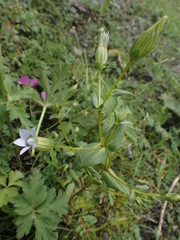 Comastoma pulmonarium
 Picea abies
 Triticum aestivum