Claim · model-written summary
Micrutalis calva was phytoplasma-positive and a newly recorded potential vector.
- Taxon
- Micrutalis calva
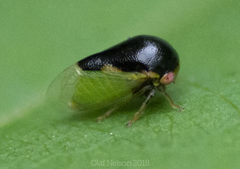 Micrutalis calvae0
- Outcome
- positivee0
- Qualifier
- potential vectorse1
Verbatim
e0“positive insects were Micrutalis calva and Balclutha mexicana.”
e1“Phytoplasma-carrying weeds and insects are new records as natural reservoirs and potential vectors.”
Title
Identification of phytoplasmas associated with Bunchy Top disease of papaya in Colima, Mexico
Pedro Valadez-Ramírez; Daniel Leobardo Ochoa-Martínez; Guadalupe Valdovinos-Ponce; et al. Revista mexicana de fitopatología(en línea)/Revista mexicana de fitopatología 2024. doi:10.18781/r.mex.fit.2403-2
Other claims from this paper (10)
- Observation Symptomatic papaya samples contained phytoplasma groups 16SrI-AF, 16SrX and 16SrXIII in 2.08% of samples.
- Observation In silico RFLP analysis indicated 16SrX and 16SrXIII subgroups.
- Observation Phytoplasmas 16SrI-AF and B were detected in 1.7% of papaya-associated weed samples.
- Observation Phytoplasmas 16SrI-AF and B were detected in 1.1% of papaya-associated insect samples.
- Observation Amaranthus palmeri was a phytoplasma-carrying weed, newly recorded as a natural reservoir.
- Observation Echinochloa colona was a phytoplasma-carrying weed, newly recorded as a natural reservoir.
- Observation Balclutha mexicana was phytoplasma-positive and a newly recorded potential vector.
- Observation The association of phytoplasmas 16SrI-AF, 16SrX and 16SrXIII with papaya Bunchy Top was first reported in Colima.
- Observation 16SrX phytoplasmas were first reported in papaya worldwide.
- Observation 16SrXIII phytoplasmas were first reported in papaya in Mexico.
 Spissistilus festinus
 Solanum tuberosum
 Glycine max