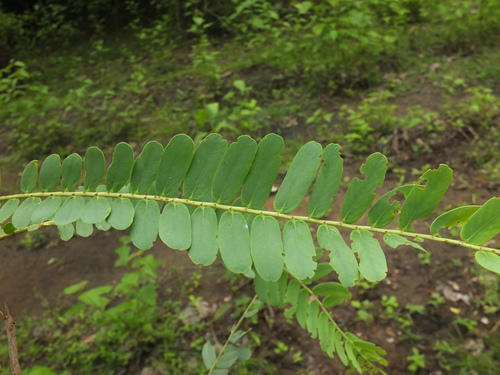
Emblica fischeri 18 claims

species · family Phyllanthaceae · green plant · NCBI Taxonomy ↗

Also written in claims: Phyllanthus indofischeri · P. indofischeri — NCBI synonyms: Phyllanthus indofischeri

5 spellings

Emblica fischeri
Emblica fischeriSiddarth Machado · CC BY 4.0 · iNaturalist ↗
Observationobservedoriginal resultmeasured

Claim · model-written summary

Mature seeds of Phyllanthus indofischeri gave the highest germination response when pre-soaked in water before sowing.

Taxon
Phyllanthus indofischeriEmblica fischerie0
Treatment
pre-soaked in water before sowinge1
Outcome
germination responsee1

Verbatim

e0

“The population of Phyllanthus indofischeri Bennet (Phyllanthaceae) has declined significantly”

✓ located verbatim in the source · abstract, characters 0–93
e1

“The highest germination response was obtained when mature seeds were pre-soaked in water before sowing”

✓ located verbatim in the source · abstract, characters 359–461
t0

“Seed germination studies of Phyllanthus indofischeri: An endemic and vulnerable tree species”

✓ located verbatim in the source · title, characters 0–92

Title

Seed germination studies of Phyllanthus indofischeri: An endemic and vulnerable tree species

Chennuru Nagendra; Buchanapalli Kumar; Araveeti Reddy Indian Journal of Forestry 2025. doi:10.54207/bsmps1000-2025-0j48wk

Other claims from this paper (3)
Observationobservedoriginal resultpositivemeasured

Claim · model-written summary

A 1:1:1:1 mixture of red soil, cocopeat, sand and vermicompost was the most suitable growth medium, with 68% germination.

Taxon
Phyllanthus indofischeriEmblica fischerie0
Treatment
1:1:1:1 mixture of red soil, cocopeat, sand, and vermicomposte2
Outcome
germination ratee2
Value
68%e2
Comparator
tested growth mediae2

Verbatim

e0

“The population of Phyllanthus indofischeri Bennet (Phyllanthaceae) has declined significantly”

✓ located verbatim in the source · abstract, characters 0–93
e2

“Among the tested growth media, a 1:1:1:1 mixture of red soil, cocopeat, sand, and vermicompost proved most suitable, recording a germination rate of 68%”

✓ located verbatim in the source · abstract, characters 463–615
t0

“Seed germination studies of Phyllanthus indofischeri: An endemic and vulnerable tree species”

✓ located verbatim in the source · title, characters 0–92

Title

Seed germination studies of Phyllanthus indofischeri: An endemic and vulnerable tree species

Chennuru Nagendra; Buchanapalli Kumar; Araveeti Reddy Indian Journal of Forestry 2025. doi:10.54207/bsmps1000-2025-0j48wk

Other claims from this paper (3)
Recommendationauthor interpretationoriginal resultpositivebasis n/a

Claim · model-written summary

Seed germination is an ideal approach for mass multiplication of Phyllanthus indofischeri.

Taxon
Phyllanthus indofischeriEmblica fischerie0
Outcome
mass multiplicatione3

Verbatim

e0

“The population of Phyllanthus indofischeri Bennet (Phyllanthaceae) has declined significantly”

✓ located verbatim in the source · abstract, characters 0–93
e3

“The findings indicate that seed germination is an ideal approach for the mass multiplication of this species”

✓ located verbatim in the source · abstract, characters 617–725
t0

“Seed germination studies of Phyllanthus indofischeri: An endemic and vulnerable tree species”

✓ located verbatim in the source · title, characters 0–92

Title

Seed germination studies of Phyllanthus indofischeri: An endemic and vulnerable tree species

Chennuru Nagendra; Buchanapalli Kumar; Araveeti Reddy Indian Journal of Forestry 2025. doi:10.54207/bsmps1000-2025-0j48wk

Other claims from this paper (3)
Recommendationauthor interpretationoriginal resultpositivebasis n/a

Claim · model-written summary

The seed-based propagation technique can play an important role in restoration and conservation of Phyllanthus indofischeri.

Taxon
Phyllanthus indofischeriEmblica fischerie0
Outcome
restoration and conservatione4

Verbatim

e0

“The population of Phyllanthus indofischeri Bennet (Phyllanthaceae) has declined significantly”

✓ located verbatim in the source · abstract, characters 0–93
e4

“This low-cost and efficient propagation technique can play an important role in the restoration and conservation of the species in its natural habitats”

✓ located verbatim in the source · abstract, characters 727–878
t0

“Seed germination studies of Phyllanthus indofischeri: An endemic and vulnerable tree species”

✓ located verbatim in the source · title, characters 0–92

Title

Seed germination studies of Phyllanthus indofischeri: An endemic and vulnerable tree species

Chennuru Nagendra; Buchanapalli Kumar; Araveeti Reddy Indian Journal of Forestry 2025. doi:10.54207/bsmps1000-2025-0j48wk

Other claims from this paper (3)
Associationobservedoriginal resultsignificant (as stated)measured

Claim · model-written summary

Grazing has significant impacts on population structure, regeneration and fruit production of the NTFP trees.

Taxon
Phyllanthus emblica, P. indofischeri, and Terminalia chebulaTerminalia chebulaEmblica officinalisEmblica fischerie0
Treatment
grazinge1
Outcome
population structures, regeneration, and fruit productione1

Not reportedDirection

Verbatim

e0

“NTFPs species (Phyllanthus emblica, P. indofischeri, and Terminalia chebula)”

✓ located verbatim in the source · abstract, characters 142–218
e1

“Multiple factor analysis determined that grazing, fire, and lantana have significant impacts on population structures, regeneration, and fruit production of NTFPs species”

✓ located verbatim in the source · abstract, characters 1056–1226

Title

Understanding the Phyllanthus and Terminalia chebula Species Population Change, Dependency and Sustainability: A Study in Malai Mahadeshwara Hills Wildlife Sanctuary, Southern India

R.P. Harisha; Setty R. Siddappa; G. Ravikanth International Journal of Environment 2023. doi:10.3126/ije.v12i1.52444

Other claims from this paper (4)
Associationobservedoriginal resultsignificant (as stated)measured

Claim · model-written summary

Fire has significant impacts on population structure, regeneration and fruit production of the NTFP trees.

Taxon
Phyllanthus emblica, P. indofischeri, and Terminalia chebulaTerminalia chebulaEmblica officinalisEmblica fischerie0
Treatment
firee1
Outcome
population structures, regeneration, and fruit productione1

Not reportedDirection

Verbatim

e0

“NTFPs species (Phyllanthus emblica, P. indofischeri, and Terminalia chebula)”

✓ located verbatim in the source · abstract, characters 142–218
e1

“Multiple factor analysis determined that grazing, fire, and lantana have significant impacts on population structures, regeneration, and fruit production of NTFPs species”

✓ located verbatim in the source · abstract, characters 1056–1226

Title

Understanding the Phyllanthus and Terminalia chebula Species Population Change, Dependency and Sustainability: A Study in Malai Mahadeshwara Hills Wildlife Sanctuary, Southern India

R.P. Harisha; Setty R. Siddappa; G. Ravikanth International Journal of Environment 2023. doi:10.3126/ije.v12i1.52444

Other claims from this paper (4)
Associationobservedoriginal resultsignificant (as stated)measured

Claim · model-written summary

Lantana has significant impacts on population structure, regeneration and fruit production of the NTFP trees.

Taxon
Phyllanthus emblica, P. indofischeri, and Terminalia chebulaTerminalia chebulaEmblica officinalisEmblica fischerie0
Treatment
lantanae1
Outcome
population structures, regeneration, and fruit productione1

Not reportedDirection

Verbatim

e0

“NTFPs species (Phyllanthus emblica, P. indofischeri, and Terminalia chebula)”

✓ located verbatim in the source · abstract, characters 142–218
e1

“Multiple factor analysis determined that grazing, fire, and lantana have significant impacts on population structures, regeneration, and fruit production of NTFPs species”

✓ located verbatim in the source · abstract, characters 1056–1226

Title

Understanding the Phyllanthus and Terminalia chebula Species Population Change, Dependency and Sustainability: A Study in Malai Mahadeshwara Hills Wildlife Sanctuary, Southern India

R.P. Harisha; Setty R. Siddappa; G. Ravikanth International Journal of Environment 2023. doi:10.3126/ije.v12i1.52444

Other claims from this paper (4)
Associationobservedoriginal resultmeasured

Claim · model-written summary

Hemi-parasite infection influenced the population structure and regeneration of the NTFP trees.

Taxon
Phyllanthus emblica, P. indofischeri, and Terminalia chebulaTerminalia chebulaEmblica officinalisEmblica fischerie0
Treatment
hemi-parasite infectione2
Interactor
hemi-parasitee2parasite
Outcome
population structure and regeneratione2

Not reportedDirection

Verbatim

e0

“NTFPs species (Phyllanthus emblica, P. indofischeri, and Terminalia chebula)”

✓ located verbatim in the source · abstract, characters 142–218
e2

“The results indicated that grazing, fire, hemi-parasite infection, and Lantana invasion influenced the tree population structure and regeneration of study species”

✓ located verbatim in the source · abstract, characters 724–886

Title

Understanding the Phyllanthus and Terminalia chebula Species Population Change, Dependency and Sustainability: A Study in Malai Mahadeshwara Hills Wildlife Sanctuary, Southern India

R.P. Harisha; Setty R. Siddappa; G. Ravikanth International Journal of Environment 2023. doi:10.3126/ije.v12i1.52444

Other claims from this paper (4)
Recommendationauthor interpretationoriginal resultbasis n/a

Claim · model-written summary

Forest managers should consider a site-specific adaptive approach for these NTFP species.

Taxon
Phyllanthus emblica, P. indofischeri, and Terminalia chebulaTerminalia chebulaEmblica officinalisEmblica fischerie0
Outcome
a site-specific adaptive approache3

Verbatim

e0

“NTFPs species (Phyllanthus emblica, P. indofischeri, and Terminalia chebula)”

✓ located verbatim in the source · abstract, characters 142–218
e3

“The study recommended that forest managers should consider a site-specific adaptive approach”

✓ located verbatim in the source · abstract, characters 1228–1320

Title

Understanding the Phyllanthus and Terminalia chebula Species Population Change, Dependency and Sustainability: A Study in Malai Mahadeshwara Hills Wildlife Sanctuary, Southern India

R.P. Harisha; Setty R. Siddappa; G. Ravikanth International Journal of Environment 2023. doi:10.3126/ije.v12i1.52444

Other claims from this paper (4)
Associationobservedoriginal resultno effectmeasured

Claim · model-written summary

P. indofischeri populations show no increase in growth rate after the fruit harvest ban.

Taxon
P. indofischeriEmblica fischerie2
Treatment
fruit harvest bane1
Outcome
populationse2
Direction
no such increasee2

Verbatim

e1

“the increase in P. emblica λs after the fruit harvest ban is due to higher adult survival and unrelated to fruit harvest”

✓ located verbatim in the source · abstract, characters 865–985
e2

“P. indofischeri populations show no such increase”

✓ located verbatim in the source · abstract, characters 987–1036

Title

Disentangling, again, the drivers of population decline for two harvested species: a response to Prasad et al. ()

Tamara Ticktin; Rengaian Ganesan; Mallegowda Paramesha; et al. Journal of Applied Ecology 2014. doi:10.1111/1365-2664.12249

Other claims from this paper (2)