Claim · model-written summary
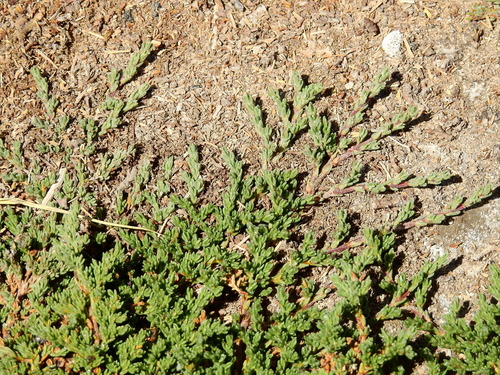
Leaves of F. juniperoides were hypostomatic.
- Taxon
- F. juniperoides
 Frankenia juniperoidese3
- Outcome
- hypostomatice3
Verbatim
e3“while in F. juniperoides they were hypostomatic”
Title
Morphoanatomical functional traits in xerophytic species of a saline environment
Pérez Cuadra V; V Cambi Phyton 2014. doi:10.32604/phyton.2014.83.389
Other claims from this paper (13)
- Observation Leaves of Asteraceae were amphistomatic.
- Observation Leaves of F. pulverulenta were amphistomatic.
- Observation All four species showed trichomes.
- Observation Only the Frankeniaceae had salt glands.
- Observation The mesophyll of Asteraceae was isolateral.
- Observation The mesophyll of Frankeniaceae was dorsiventral.
- Observation The number of foliar vascular bundles was variable among the four species.
- Observation Asteraceae stems showed subepidermal collenchyma or parenchyma alternating with chlorenchyma.
- Observation This tissue combination was not found in Frankeniaceae stems.
- Observation Baccharis tenella presented fibers in the cortex.
- Observation Baccharis spartioides had schysogenous ducts.
- Observation Stems of the four species showed a complete vascular cylinder and parenchymatic pith.
- Mechanism The anatomical differences among species most likely contribute to the survival and perpetuation of the species in the study region.