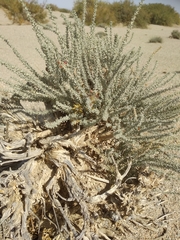
Tamaricaceae 3,186 claims

family · order Caryophyllales · 58 taxa · NCBI Taxonomy ↗

Showing the 50 largest of 58 entries — type to find more.

Tamarix ramosissimaalso T.ramosissima537 claims · 121 papersTamarix chinensisalso T.chinensis · also T.chinensis Lour509 claims · 91 papersTamarix466 claims · 139 papersTamarix hispidaalso T.hispida321 claims · 53 papersTamarix aphyllaAthel tamarisk · also Tamarix articulata · also T. aphylla L244 claims · 61 papersMyricaria laxifloraalso M.laxiflora199 claims · 24 papersReaumuria trigynaalso R.trigyna115 claims · 17 papersReaumuria songaricaalso Reaumuria soongarica · also R. soongarica100 claims · 16 papersTamarix gallica79 claims · 28 papersTamarix nilotica66 claims · 26 papersTamarix africana42 claims · 11 papersTamarix laxaalso T. laxa Willd · also T.laxa Willd39 claims · 7 papersTamaricaceaetamarix family38 claims · 21 papersTamarix taklamakanensisalso T.taklamakanensis37 claims · 5 papersMyricaria germanicaalso M.germanica33 claims · 14 papersTamarix androssowii30 claims · 6 papersTamarix austromongolicaalso T.austromongolica23 claims · 4 papersTamarix dioica22 claims · 2 papersTamarix elongata20 claims · 3 papersReaumuria hirtella18 claims · 3 papersTamarix usneoides17 claims · 5 papersMyricaria squamosa16 claims · 2 papersTamarix hohenackeri16 claims · 3 papersTamarix pentandra16 claims · 7 papersTamarix smyrnensis16 claims · 4 papersMyricaria bracteata15 claims · 4 papersTamarix tetragyna14 claims · 6 papersTamarix tetrandra13 claims · 5 papersMyricaria12 claims · 7 papersMyricaria longifolia12 claims · 2 papersMyricaria paniculataalso M.paniculata12 claims · 2 papersReaumuria vermiculata12 claims · 2 papersTamarix arceuthoides11 claims · 2 papersReaumuria10 claims · 3 papersTamarix aucheriana9 claims · 1 paperTamarix canariensisalso Saltcedar · also T. canariensis Willd9 claims · 5 papersTamarix parvifloraalso T. parviflora DC9 claims · 5 papersMyricaria elegansalso Tamaricaria elegans7 claims · 3 papersTamarix senegalensis7 claims · 3 papersTamarix arabica5 claims · 1 paperTamarix hampeana4 claims · 3 papersTamarix passerinoides4 claims · 3 papersTamarix stricta4 claims · 2 papersMyricaria alopecuroides3 claims · 1 paperTamarix mascatensis3 claims · 1 paperTamarix minoa3 claims · 2 papersReaumuria negevensis2 claims · 2 papersTamarix amplexicaulisalso T. amplexicaulis Ehrenb2 claims · 2 papersTamarix arborea2 claims · 2 papersTamarix boveana2 claims · 2 papers
Associationobservedoriginal resultmeasured

Claim · model-written summary

Reaumuria songarica exhibited the lowest overall variability.

Taxon
Reaumuria songaricaReaumuria songaricae0
Outcome
overall variabilitye1
Direction
loweste1
Setting
Zhundong open-pit coal mining area of Xinjiang, Chinae0

Verbatim

e0

“three typical desert shrubs, including Haloxylon ammodendron, Nitraria tangutorum, and Reaumuria songarica, were investigated in the Zhundong open-pit coal mining area of Xinjiang, China”

✓ located verbatim in the source · abstract, characters 513–699
e1

“Variability was generally higher in branches than in leaves for NSC, SS, and ST, with R. songarica exhibiting the lowest overall variability”

✓ located verbatim in the source · abstract, characters 1003–1143

Title

Divergent non-structural carbohydrate allocation strategies in desert shrubs under coal mining-induced environmental gradients in Xinjiang, Northwestern China

Xiaotian Su; Benfeng Yin; Yongxin Zang; et al. BMC Plant Biology 2026. doi:10.1186/s12870-026-08238-x

Other claims from this paper (8)
Associationobservedoriginal resultmeasured

Claim · model-written summary

NSC variation in Reaumuria songarica was identified with water and nutrient availability as the primary environmental predictor.

Taxon
Reaumuria songaricaReaumuria songaricae0
Compound
water and nutrient availabilitye4
Outcome
NSC variatione4

Not reportedDirection

Verbatim

e0

“three typical desert shrubs, including Haloxylon ammodendron, Nitraria tangutorum, and Reaumuria songarica, were investigated in the Zhundong open-pit coal mining area of Xinjiang, China”

✓ located verbatim in the source · abstract, characters 513–699
e4

“Redundancy analysis and hierarchical partitioning identified the primary environmental predictors of NSC variation (based on the measured soil-derived variables) as heavy metals (Cr) for H. ammodendron, soil pH and nitrogen for N. tangutorum, and water and nutrient availability for R. songarica”

✓ located verbatim in the source · abstract, characters 1693–1988

Title

Divergent non-structural carbohydrate allocation strategies in desert shrubs under coal mining-induced environmental gradients in Xinjiang, Northwestern China

Xiaotian Su; Benfeng Yin; Yongxin Zang; et al. BMC Plant Biology 2026. doi:10.1186/s12870-026-08238-x

Other claims from this paper (8)
Observationobservedoriginal resultmeasured

Claim · model-written summary

Tamarix austromongolica forms three distinct genetic lineages, each tied to a specific habitat

Taxon
Tamarix austromongolicaTamarix austromongolicae0
Outcome
three distinct genetic lineagese1
Setting
Yellow River basine0

Verbatim

e0

“Tamarix austromongolica is a native species widely used for ecological restoration in the Yellow River basin”

✓ located verbatim in the source · abstract, characters 9–117
e1

“Our results revealed three distinct genetic lineages, each corresponding to a specific habitat”

✓ located verbatim in the source · abstract, characters 789–883

Title

Whole‐Genome Resequencing Reveals the Demographic History and Adaptive Evolution of Tamarix austromongolica in the Yellow River Basin

Shuai Gong; Jia Sun; Jianmin Chu; et al. Ecology and Evolution 2026. doi:10.1002/ece3.72666

Other claims from this paper (4)
Observationobservedoriginal resultsimulated

Claim · model-written summary

In demographic modeling the Liujiaxia lineage diverged first, approximately 470,000 years ago

Taxon
Tamarix austromongolicaTamarix austromongolicae0
Outcome
the Liujiaxia lineage diverged firste2
Value
approximately 470,000 years agoe2

Verbatim

e0

“Tamarix austromongolica is a native species widely used for ecological restoration in the Yellow River basin”

✓ located verbatim in the source · abstract, characters 9–117
e2

“Demographic modeling indicated that the Liujiaxia lineage diverged first, approximately 470,000 years ago, likely due to glaciation‐induced isolation”

✓ located verbatim in the source · abstract, characters 993–1142

Title

Whole‐Genome Resequencing Reveals the Demographic History and Adaptive Evolution of Tamarix austromongolica in the Yellow River Basin

Shuai Gong; Jia Sun; Jianmin Chu; et al. Ecology and Evolution 2026. doi:10.1002/ece3.72666

Other claims from this paper (4)
Mechanismhypothesisoriginal resultbasis n/a

Claim · model-written summary

Glaciation-induced isolation is a likely cause of the early divergence of the Liujiaxia lineage

Taxon
Tamarix austromongolicaTamarix austromongolicae0
Outcome
the Liujiaxia lineage diverged firste2
Qualifier
likely due to glaciation‐induced isolatione2

Verbatim

e0

“Tamarix austromongolica is a native species widely used for ecological restoration in the Yellow River basin”

✓ located verbatim in the source · abstract, characters 9–117
e2

“Demographic modeling indicated that the Liujiaxia lineage diverged first, approximately 470,000 years ago, likely due to glaciation‐induced isolation”

✓ located verbatim in the source · abstract, characters 993–1142

Title

Whole‐Genome Resequencing Reveals the Demographic History and Adaptive Evolution of Tamarix austromongolica in the Yellow River Basin

Shuai Gong; Jia Sun; Jianmin Chu; et al. Ecology and Evolution 2026. doi:10.1002/ece3.72666

Other claims from this paper (4)
Associationobservedoriginal resultsignificant (as stated)measured

Claim · model-written summary

Significant asymmetric gene flow was detected between the Hetao and Sanmenxia lineages

Taxon
Tamarix austromongolicaTamarix austromongolicae0
Material
the Hetao and Sanmenxia lineagese3
Outcome
asymmetric gene flowe3

Not reportedDirection

Verbatim

e0

“Tamarix austromongolica is a native species widely used for ecological restoration in the Yellow River basin”

✓ located verbatim in the source · abstract, characters 9–117
e3

“significant asymmetric gene flow was detected between the Hetao and Sanmenxia lineages”

✓ located verbatim in the source · abstract, characters 1157–1243

Title

Whole‐Genome Resequencing Reveals the Demographic History and Adaptive Evolution of Tamarix austromongolica in the Yellow River Basin

Shuai Gong; Jia Sun; Jianmin Chu; et al. Ecology and Evolution 2026. doi:10.1002/ece3.72666

Other claims from this paper (4)
Associationobservedoriginal resultmeasured

Claim · model-written summary

Candidate genes for local adaptation in each lineage relate to environmental stress responses, DNA damage repair and pathogen defense

Taxon
Tamarix austromongolicaTamarix austromongolicae0
Material
each lineagee4
Outcome
functions primarily related to diverse environmental stress responses, DNA damage repair, and pathogen defensee4

Not reportedDirection

Verbatim

e0

“Tamarix austromongolica is a native species widely used for ecological restoration in the Yellow River basin”

✓ located verbatim in the source · abstract, characters 9–117
e4

“candidate genes associated with local adaptation in each lineage, with functions primarily related to diverse environmental stress responses, DNA damage repair, and pathogen defense”

✓ located verbatim in the source · abstract, characters 1345–1526

Title

Whole‐Genome Resequencing Reveals the Demographic History and Adaptive Evolution of Tamarix austromongolica in the Yellow River Basin

Shuai Gong; Jia Sun; Jianmin Chu; et al. Ecology and Evolution 2026. doi:10.1002/ece3.72666

Other claims from this paper (4)
Associationobservedoriginal resultmixedmeasured

Claim · model-written summary

Tamarix showed metal-specific accumulation or growth responses under cadmium, lead or zinc exposure.

Taxon
TamarixTamarixe5
Treatment
cadmium, lead or zinc exposuree5
Outcome
metal-specific accumulation or growth responsese5

Not reportedDirection

Verbatim

e5

“Ilex, Ficus, Euonymus, Platycladus, Tamarix and Salix showed metal-specific accumulation or growth responses under cadmium, lead or zinc exposure”

✓ located verbatim in the source · abstract, characters 741–886

Title

Global synthesis reveals how initial concentrations, metal types, and acidity control woody plant phytoremediation efficacy

Zhongyu Du; Yan Jiang; Shufeng Wang; et al. Communications Earth & Environment 2026. doi:10.1038/s43247-026-03637-2

Other claims from this paper (15)
Associationobservedoriginal resultmeasured

Claim · model-written summary

In the declining stage of coppice dunes, Tamarix ramosissima relied most on 180–500 cm soil water under drought (86.5%).

Taxon
Tamarix ramosissimaTamarix ramosissimae1
Organ / stage
declining stage of coppice dunese2
Treatment
drought conditionse2
Outcome
reliance on 180–500 cm soil watere2
Direction
higheste2
Value
86.5%e2
Setting
Gurbantunggut Deserte1

Verbatim

e1

“water use strategies of Tamarix ramosissima on coppice dunes at the southwestern edge of the Gurbantunggut Desert”

✓ located verbatim in the source · abstract, characters 161–274
e2

“Notably, T. ramosissima in the declining stage of coppice dunes showed the highest reliance on 180–500 cm soil water under drought conditions (86.5%), accompanied by reduced leaf water status”

✓ located verbatim in the source · abstract, characters 1120–1311

Title

Seasonal dynamics and precipitation responses of water use strategies in Tamarix ramosissima in different developmental stages of coppice dunes in the Gurbantunggut Desert, northwest China

Yanqin Xu; Qianlong Cui; Zhengwu Dong; et al. BMC Plant Biology 2026. doi:10.1186/s12870-026-08761-x

Other claims from this paper (10)
Associationobservedoriginal resultnegativemeasured

Claim · model-written summary

Drought-period leaf water status was reduced in the declining stage of coppice dunes.

Taxon
Tamarix ramosissimaTamarix ramosissimae1
Organ / stage
declining stage of coppice dunese2
Treatment
drought conditionse2
Outcome
leaf water statuse2
Direction
reducede2

Verbatim

e1

“water use strategies of Tamarix ramosissima on coppice dunes at the southwestern edge of the Gurbantunggut Desert”

✓ located verbatim in the source · abstract, characters 161–274
e2

“Notably, T. ramosissima in the declining stage of coppice dunes showed the highest reliance on 180–500 cm soil water under drought conditions (86.5%), accompanied by reduced leaf water status”

✓ located verbatim in the source · abstract, characters 1120–1311

Title

Seasonal dynamics and precipitation responses of water use strategies in Tamarix ramosissima in different developmental stages of coppice dunes in the Gurbantunggut Desert, northwest China

Yanqin Xu; Qianlong Cui; Zhengwu Dong; et al. BMC Plant Biology 2026. doi:10.1186/s12870-026-08761-x

Other claims from this paper (10)