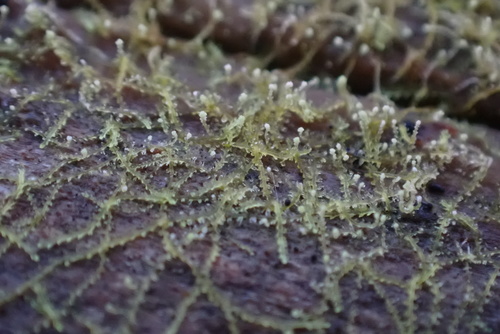
Claim · model-written summary
Liverworts with underground axes could regenerate better to around 12 cm and were found at 24–30 cm depth.
- Taxon
- Kurzia pauciflora (Dicks.) Grolle, K. sylvatica (Evans) Grolle, Odontoschisma sphagni (Dicks.) Dum., O. denudatum (Mart.) Dum., Cladopodiella fluitans (Nees) Buch, Cephalozia bicuspidata (L.) Dum. and C. connivens (Dicks.) Lindb.
 Cephalozia bicuspidata
 Odontoschisma denudatum
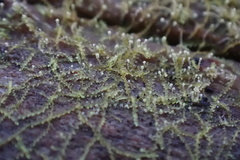 Fuscocephaloziopsis connivens
 Odontoschisma fluitans
 Odontoschisma sphagni
 Kurzia pauciflora
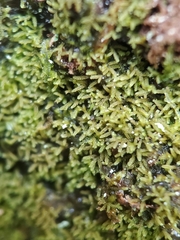 Kurzia sylvaticae0
- Organ / stage
- underground axese0
- Outcome
- regeneratee0
- Direction
- much bettere0
- Value
- 12 cme0
- Qualifier
- 24–30 cm depthe0
Verbatim
e0“Other species such as Kurzia pauciflora (Dicks.) Grolle, K. sylvatica (Evans) Grolle, Odontoschisma sphagni (Dicks.) Dum., O. denudatum (Mart.) Dum., Cladopodiella fluitans (Nees) Buch, Cephalozia bicuspidata (L.) Dum. and C. connivens (Dicks.) Lindb. which have underground axes, may regenerate poorly at the surface, much better down to 12 cm or so, and arc still found at 24–30 cm depth”
Title
Regeneration of bog liverworts
J. G. DUCKETT; R. S. CLYMO New Phytologist 1988. doi:10.1111/j.1469-8137.1988.tb00244.x
Other claims from this paper (5)
- Observation Liverwort species lacking underground axes regenerated most at the peat surface and not below 9 cm.
- Observation The depth patterns occurred on both live Sphagnum covered and older recolonized peat surfaces.
- Mechanism Regeneration appears mainly to arise from underground axes rather than spores or gemmae.
- Observation The underground axes appeared to have large biomass.
- Observation All underground axes had fungal associates.