
Claim · model-written summary
Soil of T. nilotica was fine sandy.
- Taxon
- T. nilotica
 Tamarix niloticae0
- Outcome
- fine sandye0
Not reportedDirection
Verbatim
e0“those of T. nilotica were fine sandy”
Title
Tahani Fahad Almutairi; Sabah Mohamed El-Gamal JOURNAL of QASSIM UNIVERSITY FOR SCIENCE 2026. doi:10.25259/jqus_21_2026
Other claims from this paper (17)
- Observation Rhizosphere soils were predominantly sandy.
- Observation Soils of L. shawii and P. undulata had medium-coarse texture.
- Observation Rhizosphere hydraulic conductivity ranged from 23.33 to 27 cm h -1.
- Observation Soil fertility was low by CEC and organic matter values.
- Observation T. nilotica soil had the highest subsurface CEC, 12.3 Meq/100 g.
- Observation T. nilotica soil had surface CEC of 11.27 Meq/100 g.
- Observation L. shawii soil had the lowest CEC at both depths.
- Observation T. nilotica soil had the highest surface organic matter, 0.83%.
- Observation T. nilotica soil had subsurface organic matter of 0.74%.
- Observation P. undulata and L. shawii soils had comparable but lower organic matter.
- Observation T. nilotica had the smallest leaf area, 0.66 cm 2 /plant.
- Observation T. nilotica had the highest carbohydrate content, 31.5%.
- Observation L. shawii had the lowest carbohydrate level, 16.8%.
- Observation P. undulata contained the highest chlorophyll and carotene levels.
- Observation L. shawii had the highest peroxidase activity, 477.33 u/g fresh weight/h.
- Observation P. undulata had the highest polyphenol oxidase activity, 38.94 u/g fresh weight/h.
- Recommendation The species are proposed as candidates for conservation and rehabilitation of saline areas.
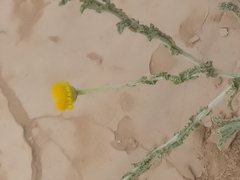 Francoeuria undulata
 Lycium shawii
 Arthrocaulon macrostachyum