Abstract
In order to study disease resistance mechanisms in rice against the rice blast fungus Magnaporthe grisea, we screened fungal elicitor-responsive genes from rice suspension-cultured cells treated with fungal elicitors employing differential hybridization (DH). By DH screening, 31 distinct rice clones were isolated and a majority of them were full-length cDNAs encoding pathogenesisrelated (PR) genes. Sixteen of the 31 genes were upregulated at 4, 8, and 12 h following fungal elicitor treatment. To elucidate the effect of signal molecules and biotic elicitors on the regulation of rice defense genes, we further characterized the transcriptional expression patterns of representative isolated PR genes; OsGlu1, OsGlu2, OsTLP, OsRLK, and OsPR-10, following treatment with fungal elicitor, phytohormones, cycloheximide, and inhibitors of protein phosphorylation. Jasmonic acid (JA) induced transcriptional expression of OsGlu1, OsTLP, and OsRLK, but not of OsGlu2 and OsPR-10 at any of the tested time points. Salicylic acid (SA) and abscisic acid weakly induced the expression of OsTLP and OsRLK. SA showed an antagonistic effect with fungal elicitor and JA. Cycloheximide suppressed all these genes upon elicitor treatment, except for OsGlu2. Staurosporine only induced the expression of OsRLK. Application of calyculin A strongly induced OsRLK expression, but suppressed the expression of OsGlu2. Our study yielded a number of PR genes that play a role in defense mechanisms against the rice blast fungus, as well as contribute towards the elucidation of crosstalk between phytohormones and other modifications during defense signaling.
Abstract from the paper’s OpenAlex record; open copy licensed cc-by-nc. Read at the source ↗
The text the model read, with the source record’s inline markup (italics, sub- and superscripts) rendered and its character entities decoded; quote offsets refer to the raw text.
Claims 14
Claim · model-written summary
Differential hybridization isolated 31 distinct rice clones, most encoding full-length PR gene cDNAs.
- Taxon
- rice
 Oryza sativae0
- Outcome
- distinct rice clonese0
- Value
- 31e0
- Qualifier
- a majority of them were full-length cDNAs encoding pathogenesisrelated (PR) genese0
Organisms pictured · Representative pictures of the matched species, not figures from the paper.

Verbatim
e0“By DH screening, 31 distinct rice clones were isolated and a majority of them were full-length cDNAs encoding pathogenesisrelated (PR) genes.”
Claim · model-written summary
Sixteen genes were upregulated at 4, 8 and 12 hours after fungal elicitor treatment.
- Taxon
- RiceOryza sativat0
- Treatment
- fungal elicitor treatmente0
- Outcome
- genese0
- Direction
- upregulatede0
- Value
- Sixteene0
- Qualifier
- at 4, 8, and 12 he0
Not reportedComparator
Organisms pictured · Representative pictures of the matched species, not figures from the paper.
Verbatim
t0“Rice”
e0“Sixteen of the 31 genes were upregulated at 4, 8, and 12 h following fungal elicitor treatment.”
Claim · model-written summary
Jasmonic acid induced OsGlu1, OsTLP and OsRLK transcription.
- Taxon
- RiceOryza sativat0
- Treatment
- Jasmonic acid (JA)e0
- Gene
- OsGlu1, OsTLP, and OsRLKe0
- Outcome
- transcriptional expressione0
- Direction
- inducede0
Not reportedComparator
Organisms pictured · Representative pictures of the matched species, not figures from the paper.
Verbatim
t0“Rice”
e0“Jasmonic acid (JA) induced transcriptional expression of OsGlu1, OsTLP, and OsRLK, but not of OsGlu2 and OsPR-10 at any of the tested time points.”
Claim · model-written summary
Jasmonic acid did not induce OsGlu2 or OsPR-10 at tested times.
- Taxon
- RiceOryza sativat0
- Treatment
- Jasmonic acid (JA)e0
- Gene
- OsGlu2 and OsPR-10e0
- Outcome
- transcriptional expressione0
- Direction
- note0
- Qualifier
- at any of the tested time pointse0
Not reportedComparator
Organisms pictured · Representative pictures of the matched species, not figures from the paper.
Verbatim
t0“Rice”
e0“Jasmonic acid (JA) induced transcriptional expression of OsGlu1, OsTLP, and OsRLK, but not of OsGlu2 and OsPR-10 at any of the tested time points.”
Claim · model-written summary
Salicylic acid weakly induced OsTLP and OsRLK expression.
- Taxon
- RiceOryza sativat0
- Treatment
- Salicylic acid (SA)e0
- Gene
- OsTLP and OsRLKe0
- Outcome
- expressione0
- Direction
- weakly inducede0
Not reportedComparator
Organisms pictured · Representative pictures of the matched species, not figures from the paper.
Verbatim
t0“Rice”
e0“Salicylic acid (SA) and abscisic acid weakly induced the expression of OsTLP and OsRLK.”
Claim · model-written summary
Abscisic acid weakly induced OsTLP and OsRLK expression.
- Taxon
- RiceOryza sativat0
- Treatment
- abscisic acide0
- Gene
- OsTLP and OsRLKe0
- Outcome
- expressione0
- Direction
- weakly inducede0
Not reportedComparator
Organisms pictured · Representative pictures of the matched species, not figures from the paper.
Verbatim
t0“Rice”
e0“Salicylic acid (SA) and abscisic acid weakly induced the expression of OsTLP and OsRLK.”
Claim · model-written summary
SA antagonized fungal elicitor effects.
- Taxon
- RiceOryza sativat0
- Treatment
- SAe0
- Outcome
- antagonistic effecte0
- Direction
- antagonistice0
- Qualifier
- fungal elicitore0
Not reportedComparator
Organisms pictured · Representative pictures of the matched species, not figures from the paper.
Verbatim
t0“Rice”
e0“SA showed an antagonistic effect with fungal elicitor and JA.”
Claim · model-written summary
SA antagonized JA effects.
- Taxon
- RiceOryza sativat0
- Treatment
- SAe0
- Outcome
- antagonistic effecte0
- Direction
- antagonistice0
- Qualifier
- JAe0
Not reportedComparator
Organisms pictured · Representative pictures of the matched species, not figures from the paper.
Verbatim
t0“Rice”
e0“SA showed an antagonistic effect with fungal elicitor and JA.”
Claim · model-written summary
Cycloheximide suppressed elicitor-induced OsGlu1, OsTLP and OsRLK.
- Taxon
- RiceOryza sativat0
- Treatment
- Cycloheximidee0
- Gene
- OsGlu1e1
- Outcome
- genese0
- Direction
- suppressede0
- Qualifier
- upon elicitor treatment, except for OsGlu2e0
Not reportedComparator
Organisms pictured · Representative pictures of the matched species, not figures from the paper.
Verbatim
t0“Rice”
e0“Cycloheximide suppressed all these genes upon elicitor treatment, except for OsGlu2.”
e1“OsGlu1, OsGlu2, OsTLP, OsRLK, and OsPR-10”
Claim · model-written summary
Cycloheximide also suppressed elicitor-induced OsPR-10; OsGlu2 was excepted from suppression.
- Taxon
- RiceOryza sativat0
- Treatment
- Cycloheximidee0
- Gene
- OsPR-10e1
- Outcome
- genese0
- Direction
- suppressede0
- Qualifier
- except for OsGlu2e0
Not reportedComparator
Organisms pictured · Representative pictures of the matched species, not figures from the paper.
Verbatim
t0“Rice”
e0“Cycloheximide suppressed all these genes upon elicitor treatment, except for OsGlu2.”
e1“OsGlu1, OsGlu2, OsTLP, OsRLK, and OsPR-10”
Claim · model-written summary
Staurosporine induced only OsRLK expression.
- Taxon
- RiceOryza sativat0
- Treatment
- Staurosporinee0
- Gene
- OsRLKe0
- Outcome
- expressione0
- Direction
- inducede0
- Qualifier
- onlye0
Not reportedComparator
Organisms pictured · Representative pictures of the matched species, not figures from the paper.
Verbatim
t0“Rice”
e0“Staurosporine only induced the expression of OsRLK.”
Claim · model-written summary
Calyculin A strongly induced OsRLK expression.
- Taxon
- RiceOryza sativat0
- Treatment
- calyculin Ae0
- Gene
- OsRLKe0
- Outcome
- expressione0
- Direction
- strongly inducede0
Not reportedComparator
Organisms pictured · Representative pictures of the matched species, not figures from the paper.
Verbatim
t0“Rice”
e0“Application of calyculin A strongly induced OsRLK expression, but suppressed the expression of OsGlu2.”
Claim · model-written summary
Calyculin A suppressed OsGlu2 expression.
Not reportedComparator
Organisms pictured · Representative pictures of the matched species, not figures from the paper.
Verbatim
t0“Rice”
e0“Application of calyculin A strongly induced OsRLK expression, but suppressed the expression of OsGlu2.”
Claim · model-written summary
The isolated PR genes are interpreted as contributing to rice blast defense mechanisms.
- Taxon
- riceOryza sativae0
- Interactor
- rice blast fungus
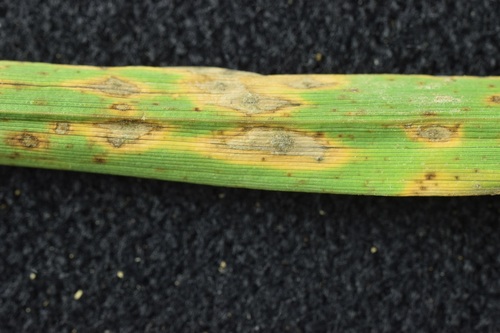
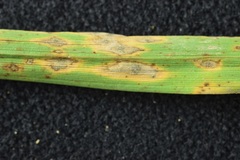 Pyricularia oryzaee0pathogen
- Gene
- PR genese0
- Outcome
- defense mechanismse0
Organisms pictured · Representative pictures of the matched species, not figures from the paper.
Verbatim
e0“Our study yielded a number of PR genes that play a role in defense mechanisms against the rice blast fungus, as well as contribute towards the elucidation of crosstalk between phytohormones and other modifications during defense signaling.”
The same questions in other papers
staurosporine · molecular: expression · Oryza sativa (rice)Positive and negative results
1 paper in the same direction as this paper · 1 in the opposite direction
- no effect
- positive
jasmonic acid · molecular: expression · Oryza sativa (rice)Positive and negative results
23 papers in the same direction as this paper · 5 in the opposite direction
- no effect
- negative
- no effect
25 papers more in this group
See all 29 papers →salicylic acid · molecular: expression · Oryza sativa (rice)Positive and negative results
27 papers in the same direction as this paper · 3 in the opposite direction
- no effect
- no effect
- no effect
27 papers more in this group
See all 31 papers →cycloheximide · molecular: expression · Oryza sativa (rice)Results agree
2 papers in the same direction as this paper
- no effect
- negative
resistance inducer · molecular: expression · Oryza sativa (rice)Positive and negative results
14 papers in the same direction as this paper · 2 in the opposite direction
- negative
- negative
- positive
13 papers more in this group
See all 17 papers →Claims are grouped by organism, treatment and what was measured or targeted. A paper counts as positive when any of its claims in the group is positive.