Abstract
Plant roots have important roles not only in absorption of water and nutrients, but also in stress tolerance such as desiccation, salt, and low temperature. We have investigated stress-response proteins from rice roots using 2-dimensional polyacrylamide-gel electrophoresis and found a rice protein, RO-292, which was induced specifically in roots when 2-week-old rice seedlings were subjected to salt and drought stress. The full-length RO-292 cDNA was cloned, and was determined to encode a protein of 160 amino acid residues (16.9 kDa, pI 4.74). The deduced amino acid sequence showed high similarity to known rice PR10 proteins, OsPR10a/PBZ1 and OsPR10b. RO-292 mRNA accumulated rapidly upon drought, NaCl, jasmonic acid and probenazole, but not by exposure to low temperature or by abscisic acid and salicylic acid. The RO-292 gene was also up-regulated by infection with rice blast fungus. Interestingly, induction was observed almost exclusively in roots, thus we named the gene RSOsPR10 (root specific rice PR10). The present results indicate that RSOsPR10 is a novel rice PR10 protein, which is rapidly induced in roots by salt, drought stresses and blast fungus infection possibly through activation of the jasmonic acid signaling pathway, but not the abscisic acid and salicylic acid signaling pathway.
Abstract from the paper’s OpenAlex record, shown for indexing and research. Copyright remains with the authors or the publisher. Read at the source ↗
The text the model read, with the source record’s inline markup (italics, sub- and superscripts) rendered and its character entities decoded; quote offsets refer to the raw text.
Claims 14
Claim · model-written summary
RO-292 protein was induced specifically in rice roots under salt and drought stress.
- Taxon
- rice
 Oryza sativae0
- Organ / stage
- rootse0
- Treatment
- salt and drought stresse0
- Gene
- RO-292e0
- Outcome
- RO-292e0
- Direction
- inducede0
Not reportedComparator
Organisms pictured · Representative pictures of the matched species, not figures from the paper.

Verbatim
e0“a rice protein, RO-292, which was induced specifically in roots when 2-week-old rice seedlings were subjected to salt and drought stress”
Claim · model-written summary
RO-292 cDNA encodes a 160 amino acid protein.
- Taxon
- RiceOryza sativat0
- Gene
- RO-292e0
- Outcome
- proteine0
- Value
- 160 amino acid residuese0
- Qualifier
- 16.9 kDa, pI 4.74e0
Organisms pictured · Representative pictures of the matched species, not figures from the paper.
Verbatim
e0“The full-length RO-292 cDNA was cloned, and was determined to encode a protein of 160 amino acid residues (16.9 kDa, pI 4.74)”
t0“Rice”
Claim · model-written summary
RO-292 sequence was highly similar to known rice PR10 proteins.
- Taxon
- riceOryza sativae0
- Gene
- OsPR10a/PBZ1 and OsPR10be0
- Outcome
- amino acid sequencee0
- Direction
- high similaritye0
Organisms pictured · Representative pictures of the matched species, not figures from the paper.
Verbatim
e0“The deduced amino acid sequence showed high similarity to known rice PR10 proteins, OsPR10a/PBZ1 and OsPR10b”
Claim · model-written summary
Drought rapidly accumulated RO-292 mRNA.
- Taxon
- RiceOryza sativat0
- Treatment
- droughte0
- Gene
- RO-292e0
- Outcome
- RO-292 mRNAe0
- Direction
- accumulated rapidlye0
Not reportedComparator
Organisms pictured · Representative pictures of the matched species, not figures from the paper.
Verbatim
e0“RO-292 mRNA accumulated rapidly upon drought”
t0“Rice”
Claim · model-written summary
NaCl rapidly accumulated RO-292 mRNA.
- Taxon
- RiceOryza sativat0
- Treatment
- NaCle0
- Gene
- RO-292e0
- Outcome
- RO-292 mRNAe0
- Direction
- accumulated rapidlye0
Not reportedComparator
Organisms pictured · Representative pictures of the matched species, not figures from the paper.
Verbatim
e0“RO-292 mRNA accumulated rapidly upon drought, NaCl”
t0“Rice”
Claim · model-written summary
Jasmonic acid rapidly accumulated RO-292 mRNA.
- Taxon
- RiceOryza sativat0
- Treatment
- jasmonic acide0
- Gene
- RO-292e0
- Outcome
- RO-292 mRNAe0
- Direction
- accumulated rapidlye0
Not reportedComparator
Organisms pictured · Representative pictures of the matched species, not figures from the paper.
Verbatim
e0“RO-292 mRNA accumulated rapidly upon drought, NaCl, jasmonic acid”
t0“Rice”
Claim · model-written summary
Probenazole rapidly accumulated RO-292 mRNA.
- Taxon
- RiceOryza sativat0
- Treatment
- probenazolee0
- Gene
- RO-292e0
- Outcome
- RO-292 mRNAe0
- Direction
- accumulated rapidlye0
Not reportedComparator
Organisms pictured · Representative pictures of the matched species, not figures from the paper.
Verbatim
e0“RO-292 mRNA accumulated rapidly upon drought, NaCl, jasmonic acid and probenazole”
t0“Rice”
Claim · model-written summary
Low temperature did not accumulate RO-292 mRNA.
- Taxon
- RiceOryza sativat0
- Treatment
- low temperaturee0
- Outcome
- RO-292 mRNAe1
- Direction
- note0
Not reportedComparator
Organisms pictured · Representative pictures of the matched species, not figures from the paper.
Verbatim
e0“but not by exposure to low temperature”
t0“Rice”
e1“RO-292 mRNA accumulated rapidly upon drought”
Claim · model-written summary
Abscisic acid did not accumulate RO-292 mRNA.
- Taxon
- RiceOryza sativat0
- Treatment
- abscisic acide0
- Outcome
- RO-292 mRNAe1
- Direction
- note0
Not reportedComparator
Organisms pictured · Representative pictures of the matched species, not figures from the paper.
Verbatim
e0“but not by exposure to low temperature or by abscisic acid and salicylic acid”
t0“Rice”
e1“RO-292 mRNA accumulated rapidly upon drought”
Claim · model-written summary
Salicylic acid did not accumulate RO-292 mRNA.
- Taxon
- RiceOryza sativat0
- Treatment
- salicylic acide0
- Outcome
- RO-292 mRNAe1
- Direction
- note0
Not reportedComparator
Organisms pictured · Representative pictures of the matched species, not figures from the paper.
Verbatim
e0“but not by exposure to low temperature or by abscisic acid and salicylic acid”
t0“Rice”
e1“RO-292 mRNA accumulated rapidly upon drought”
Claim · model-written summary
Rice blast fungus infection upregulated RO-292.
- Taxon
- riceOryza sativae0
- Treatment
- infection with rice blast funguse0
- Interactor
- rice blast fungus
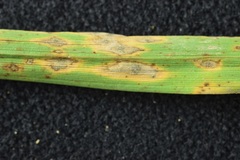 Pyricularia oryzaee0pathogen
- Gene
- RO-292e0
- Outcome
- RO-292 genee0
- Direction
- up-regulatede0
Not reportedComparator
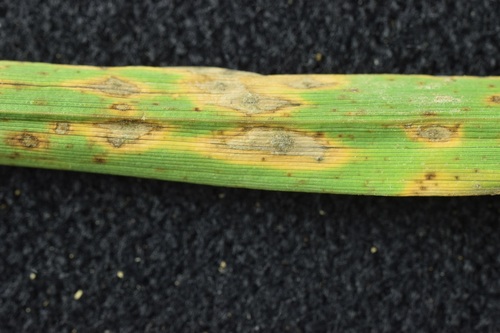
Organisms pictured · Representative pictures of the matched species, not figures from the paper.
Verbatim
e0“The RO-292 gene was also up-regulated by infection with rice blast fungus”
Claim · model-written summary
RO-292 induction occurred almost exclusively in roots.
- Taxon
- RiceOryza sativat0
- Organ / stage
- rootse0
- Outcome
- inductione0
Organisms pictured · Representative pictures of the matched species, not figures from the paper.
Verbatim
e0“induction was observed almost exclusively in roots”
t0“Rice”
Claim · model-written summary
The authors identified RSOsPR10 as a novel rice PR10 protein.
- Taxon
- riceOryza sativae0
- Gene
- RSOsPR10e0
- Outcome
- novel rice PR10 proteine0
Organisms pictured · Representative pictures of the matched species, not figures from the paper.
Verbatim
e0“RSOsPR10 is a novel rice PR10 protein”
Claim · model-written summary
The authors propose jasmonic acid signaling as a possible route for stress induction of RSOsPR10.
- Taxon
- RiceOryza sativat0
- Outcome
- RSOsPR10e1
- Qualifier
- activation of the jasmonic acid signaling pathwaye0
Organisms pictured · Representative pictures of the matched species, not figures from the paper.
Verbatim
e0“possibly through activation of the jasmonic acid signaling pathway”
t0“Rice”
e1“RSOsPR10 is a novel rice PR10 protein”
The same questions in other papers
sodium chloride · molecular: expression · Oryza sativa (rice)Positive and negative results
15 papers in the same direction as this paper · 4 in the opposite direction
- no effect
- no effect
- negative
16 papers more in this group
See all 20 papers →Pyricularia oryzae · molecular: expression · Oryza sativa (rice)Positive and negative results
17 papers in the same direction as this paper · 4 in the opposite direction
- positive
- negative
- no effect
18 papers more in this group
See all 22 papers →jasmonic acid · molecular: expression · Oryza sativa (rice)Positive and negative results
23 papers in the same direction as this paper · 5 in the opposite direction
- positive
- positive
- no effect
25 papers more in this group
See all 29 papers →salicylic acid · molecular: expression · Oryza sativa (rice)Positive and negative results
2 papers in the same direction as this paper · 28 in the opposite direction
- positive
- positive
- positive
27 papers more in this group
See all 31 papers →cold · molecular: expression · Oryza sativa (rice)Positive and negative results
16 papers in the same direction as this paper · 30 in the opposite direction
- positive
- positive
- positive
43 papers more in this group
See all 47 papers →infection · molecular: expression · Oryza sativa (rice)Positive and negative results
40 papers in the same direction as this paper · 16 in the opposite direction
- no effect
- negative
- no effect
53 papers more in this group
See all 57 papers →drought · molecular: expression · Oryza sativa (rice)Positive and negative results
57 papers in the same direction as this paper · 22 in the opposite direction
- negative
- negative
- negative
76 papers more in this group
See all 80 papers →Claims are grouped by organism, treatment and what was measured or targeted. A paper counts as positive when any of its claims in the group is positive.