Abstract
A large-scale metabolic screen was performed for 51,180 targeted knockout mutants of the haploid moss Physcomitrella patens (Hedw.) Bruch & Schimp. The growth ability of each mutant was compared to the wild type. Plants were cultured on a minimal medium which contained only macroelements, as well as on a supplemented medium, additionally containing microelements, glucose, vitamins, ammonium tartrate, adenine, peptone and Na-palmitic acid. The screen resulted in the identification of 20 (0.04 %) auxotrophs. Medium supplementation tests were performed for five auxotrophs, which showed no growth on minimal medium, but were rescued on supplemented medium. One vitamin-deficient mutant was identified as p-aminobenzoic acid auxotroph, three plants were nitrate assimilation deficient mutants and one transformant showed undefined growth requirements. The screen resulted further in the identification of two physiological mutants, exhibiting an albino phenotype on minimal medium but a green wild type phenotype on the supplemented medium. The culture of both albinos under low light intensities could not prevent bleaching, revealing that the missing production of chlorophyll was not caused by light sensitivity. Astonishingly, the supplementation of the minimal medium with selected compounds of the supplemented medium did also not prevent bleaching. Moreover, both mutants produced green protonemata, even if single substances of the supplemented medium were lacking. It was concluded that a complex network of interactions related to photosynthesis in Physcomitrella was disturbed. This is the first detailed study of auxotrophic and albino Physcomitrella mutants produced by transformation-mediated gene disruption. The described physiological mutants provide valuable resources for the identification of essential gene functions of plant metabolism.
Abstract from the paper’s OpenAlex record, shown for indexing and research. Copyright remains with the authors or the publisher. Read at the source ↗
The text the model read, with the source record’s inline markup (italics, sub- and superscripts) rendered and its character entities decoded; quote offsets refer to the raw text.
Claims 11
Claim · model-written summary
A screen of targeted knockout mutants of Physcomitrella patens identified 20 (0.04 %) auxotrophs.
- Taxon
- Physcomitrella patens
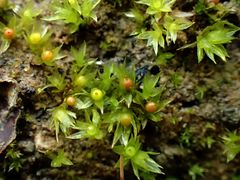 Physcomitrium patense0
- Outcome
- auxotrophse1
- Value
- 20 (0.04 %)e1
Organisms pictured · Representative pictures of the matched species, not figures from the paper.
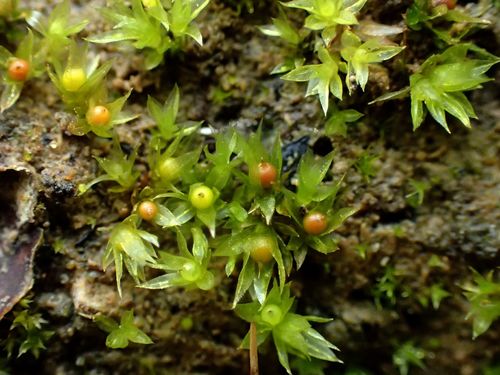
Verbatim
e0“haploid moss Physcomitrella patens”
e1“The screen resulted in the identification of 20 (0.04 %) auxotrophs”
Claim · model-written summary
Five auxotrophs showed no growth on minimal medium but were rescued on supplemented medium.
- Taxon
- Physcomitrella patensPhyscomitrium patense0
- Treatment
- supplemented mediume2
- Outcome
- auxotrophse2
- Value
- fivee2
- Qualifier
- no growth on minimal mediume2
Organisms pictured · Representative pictures of the matched species, not figures from the paper.
Verbatim
e0“haploid moss Physcomitrella patens”
e2“Medium supplementation tests were performed for five auxotrophs, which showed no growth on minimal medium, but were rescued on supplemented medium”
Claim · model-written summary
One vitamin-deficient mutant was identified as a p-aminobenzoic acid auxotroph.
- Taxon
- Physcomitrella patensPhyscomitrium patense0
- Compound
- p-aminobenzoic acide3
- Outcome
- auxotrophe3
Organisms pictured · Representative pictures of the matched species, not figures from the paper.
Verbatim
e0“haploid moss Physcomitrella patens”
e3“One vitamin-deficient mutant was identified as p-aminobenzoic acid auxotroph”
Claim · model-written summary
Three plants were nitrate assimilation deficient mutants.
- Taxon
- Physcomitrella patensPhyscomitrium patense0
- Outcome
- nitrate assimilation deficient mutantse4
- Value
- threee4
Organisms pictured · Representative pictures of the matched species, not figures from the paper.
Verbatim
e0“haploid moss Physcomitrella patens”
e4“three plants were nitrate assimilation deficient mutants”
Claim · model-written summary
One transformant showed undefined growth requirements.
- Taxon
- Physcomitrella patensPhyscomitrium patense0
- Outcome
- growth requirementse5
- Qualifier
- undefinede5
Organisms pictured · Representative pictures of the matched species, not figures from the paper.
Verbatim
e0“haploid moss Physcomitrella patens”
e5“one transformant showed undefined growth requirements”
Claim · model-written summary
Two physiological mutants showed an albino phenotype on minimal medium but a green wild type phenotype on supplemented medium.
- Taxon
- Physcomitrella patensPhyscomitrium patense0
- Treatment
- minimal mediume6
- Outcome
- albino phenotypee6
- Value
- twoe6
- Qualifier
- green wild type phenotype on the supplemented mediume6
Organisms pictured · Representative pictures of the matched species, not figures from the paper.
Verbatim
e0“haploid moss Physcomitrella patens”
e6“two physiological mutants, exhibiting an albino phenotype on minimal medium but a green wild type phenotype on the supplemented medium”
Claim · model-written summary
Culturing the albino mutants under low light intensities could not prevent bleaching.
- Taxon
- Physcomitrella patensPhyscomitrium patense0
- Treatment
- low light intensitiese7
- Outcome
- bleachinge7
- Qualifier
- could not prevente7
Organisms pictured · Representative pictures of the matched species, not figures from the paper.
Verbatim
e0“haploid moss Physcomitrella patens”
e7“The culture of both albinos under low light intensities could not prevent bleaching”
Claim · model-written summary
The missing chlorophyll production in the albino mutants was not caused by light sensitivity.
- Taxon
- Physcomitrella patensPhyscomitrium patense0
- Outcome
- production of chlorophylle1
- Qualifier
- not caused by light sensitivitye1
Organisms pictured · Representative pictures of the matched species, not figures from the paper.
Verbatim
e0“haploid moss Physcomitrella patens”
e1“revealing that the missing production of chlorophyll was not caused by light sensitivity”
Claim · model-written summary
Supplementing the minimal medium with selected compounds of the supplemented medium did not prevent bleaching.
- Taxon
- Physcomitrella patensPhyscomitrium patense0
- Treatment
- selected compounds of the supplemented mediume1
- Outcome
- bleachinge1
- Direction
- not prevente1
- Comparator
- minimal mediume1
Organisms pictured · Representative pictures of the matched species, not figures from the paper.
Verbatim
e0“haploid moss Physcomitrella patens”
e1“Astonishingly, the supplementation of the minimal medium with selected compounds of the supplemented medium did also not prevent bleaching”
Claim · model-written summary
Both mutants produced green protonemata even when single substances of the supplemented medium were lacking.
- Taxon
- Physcomitrella patensPhyscomitrium patense0
- Outcome
- green protonematae1
- Qualifier
- even if single substances of the supplemented medium were lackinge1
Organisms pictured · Representative pictures of the matched species, not figures from the paper.
Verbatim
e0“haploid moss Physcomitrella patens”
e1“Moreover, both mutants produced green protonemata, even if single substances of the supplemented medium were lacking”
Claim · model-written summary
A complex network of interactions related to photosynthesis was disturbed in Physcomitrella.
- Taxon
- Physcomitrella
 Physcomitriume1
- Outcome
- network of interactions related to photosynthesise1
- Qualifier
- complex networke1
Organisms pictured · Representative pictures of the matched species, not figures from the paper.

Verbatim
e0“haploid moss Physcomitrella patens”
e1“It was concluded that a complex network of interactions related to photosynthesis in Physcomitrella was disturbed”