Abstract
Abstract Experiments were conducted using combinations of commercially available biological control agents (BCAs) to control infection of detached strawberry leaves by Botrytis cinerea Pers.;Fr. Combinations were tested either as mixtures, or as sequential treatments before and after disease loading. Five BCAs were initially tested, giving a range of mechanisms of antagonism. Only three (Sentinel™, Serenade™ and Trianum™) were effective in single agent experiments and were taken forward for combinatorial tests. Biocontrol efficacies, relative to the control, varied considerably among replicate trials, but all treatments involving Sentinel (BCA: Trichoderma atroviride P. Karsten LC52) and Trianum (BCA: Trichoderma harzianum Rifai T22) were very effective, either in sequential combination with other BCA or alone. Serenade (BCA: Bacillus subtilis (Ehrenberg) Cohn) was least effective, and sometimes did not result in any significant reduction in disease. Combinations of BCAs as mixtures resulted in less control (i.e., higher disease) than when the most effective BCA within the combination was applied alone, indicating possible antagonism between the BCAs. However, when two BCAs were applied sequentially about 48 h apart, there was no strong evidence for antagonism between the BCAs; this was also confirmed in an experiment using whole plants in controlled environment cabinets. We conclude that there was usually no benefit in applying two BCAs either together or sequentially, so in general we would not advise combinations as the method of choice. Thus, research is necessary to investigate possible interference among specific BCAs, since several BCAs may be applied simultaneously under field conditions to control several diseases.
Abstract from the paper’s OpenAlex record, shown for indexing and research. Copyright remains with the authors or the publisher. Read at the source ↗
The text the model read, with the source record’s inline markup (italics, sub- and superscripts) rendered and its character entities decoded; quote offsets refer to the raw text.
Claims 10
Claim · model-written summary
Only three of five tested BCAs (Sentinel, Serenade and Trianum) were effective in single-agent experiments on strawberry leaves.
- Taxon
- strawberry
 Fragaria ×ananassae0
- Treatment
- Sentinel™, Serenade™ and Trianum™e1
- Interactor
- Botrytis cinerea
 Botrytis cinereae0pathogen
- Outcome
- effectivee1
Not reportedComparatorDirection
Organisms pictured · Representative pictures of the matched species, not figures from the paper.


Verbatim
e0“detached strawberry leaves by Botrytis cinerea Pers.;Fr.”
e1“Only three (Sentinel™, Serenade™ and Trianum™) were effective in single agent experiments”
Claim · model-written summary
Treatments involving Sentinel (Trichoderma atroviride LC52) were very effective against B. cinerea, in sequential combination with another BCA or alone.
- Taxon
- strawberryFragaria ×ananassae0
- Treatment
- Sentinel (BCA: Trichoderma atroviride P. Karsten LC52)e1
- Interactor
- Botrytis cinereaBotrytis cinereae0pathogen
- Second interactor
- Trichoderma atroviride P. Karsten LC52
 Trichoderma atroviridee1biocontrol_agent
- Outcome
- very effectivee1
Not reportedComparatorDirection
Organisms pictured · Representative pictures of the matched species, not figures from the paper.
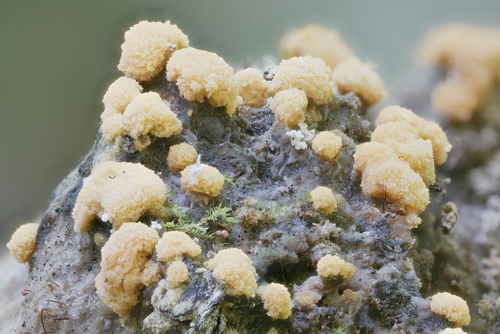
Verbatim
e0“detached strawberry leaves by Botrytis cinerea Pers.;Fr.”
e1“all treatments involving Sentinel (BCA: Trichoderma atroviride P. Karsten LC52) and Trianum (BCA: Trichoderma harzianum Rifai T22) were very effective, either in sequential combination with other BCA or alone”
Claim · model-written summary
Treatments involving Trianum (Trichoderma harzianum T22) were very effective against B. cinerea, in sequential combination with another BCA or alone.
- Taxon
- strawberryFragaria ×ananassae0
- Treatment
- Trianum (BCA: Trichoderma harzianum Rifai T22)e1
- Interactor
- Botrytis cinereaBotrytis cinereae0pathogen
- Second interactor
- Trichoderma harzianum Rifai T22
 Trichoderma harzianume1biocontrol_agent
- Outcome
- very effectivee1
Not reportedComparatorDirection
Organisms pictured · Representative pictures of the matched species, not figures from the paper.

Verbatim
e0“detached strawberry leaves by Botrytis cinerea Pers.;Fr.”
e1“all treatments involving Sentinel (BCA: Trichoderma atroviride P. Karsten LC52) and Trianum (BCA: Trichoderma harzianum Rifai T22) were very effective, either in sequential combination with other BCA or alone”
Claim · model-written summary
Serenade (Bacillus subtilis) was the least effective BCA and sometimes gave no significant disease reduction.
- Taxon
- strawberryFragaria ×ananassae0
- Treatment
- Serenade (BCA: Bacillus subtilis (Ehrenberg) Cohn)e1
- Interactor
- Botrytis cinereaBotrytis cinereae0pathogen
- Second interactor
- Bacillus subtilis (Ehrenberg) Cohn
 Bacillus subtilise1biocontrol_agent
- Outcome
- reduction in diseasee1
- Direction
- least effectivee1
Not reportedComparator
Organisms pictured · Representative pictures of the matched species, not figures from the paper.

Verbatim
e0“detached strawberry leaves by Botrytis cinerea Pers.;Fr.”
e1“Serenade (BCA: Bacillus subtilis (Ehrenberg) Cohn) was least effective, and sometimes did not result in any significant reduction in disease”
Claim · model-written summary
BCA mixtures gave less control (higher disease) than the most effective BCA applied alone.
- Taxon
- strawberryFragaria ×ananassae0
- Treatment
- Combinations of BCAs as mixturese1
- Interactor
- Botrytis cinereaBotrytis cinereae0pathogen
- Outcome
- controle1
- Direction
- less controle1
- Comparator
- the most effective BCA within the combination was applied alonee1
Organisms pictured · Representative pictures of the matched species, not figures from the paper.
Verbatim
e0“detached strawberry leaves by Botrytis cinerea Pers.;Fr.”
e1“Combinations of BCAs as mixtures resulted in less control (i.e., higher disease) than when the most effective BCA within the combination was applied alone”
Claim · model-written summary
The authors suggest possible antagonism between BCAs in mixtures.
- Taxon
- strawberryFragaria ×ananassae0
- Outcome
- antagonism between the BCAse1
- Qualifier
- possiblee1
Organisms pictured · Representative pictures of the matched species, not figures from the paper.
Verbatim
e0“detached strawberry leaves by Botrytis cinerea Pers.;Fr.”
e1“indicating possible antagonism between the BCAs”
Claim · model-written summary
When two BCAs were applied sequentially about 48 h apart, there was no strong evidence for antagonism between them.
- Taxon
- strawberryFragaria ×ananassae0
- Outcome
- antagonism between the BCAse1
- Qualifier
- no strong evidencee1
Organisms pictured · Representative pictures of the matched species, not figures from the paper.
Verbatim
e0“detached strawberry leaves by Botrytis cinerea Pers.;Fr.”
e1“when two BCAs were applied sequentially about 48 h apart, there was no strong evidence for antagonism between the BCAs”
Claim · model-written summary
The absence of strong evidence for antagonism with sequential application was confirmed in a whole-plant experiment in controlled environment cabinets.
- Taxon
- strawberryFragaria ×ananassae0
- Organ / stage
- whole plantse1
- Outcome
- confirmede1
- Setting
- controlled environment cabinetse1
Organisms pictured · Representative pictures of the matched species, not figures from the paper.
Verbatim
e0“detached strawberry leaves by Botrytis cinerea Pers.;Fr.”
e1“this was also confirmed in an experiment using whole plants in controlled environment cabinets”
Claim · model-written summary
There was usually no benefit in applying two BCAs either together or sequentially.
- Taxon
- strawberryFragaria ×ananassae0
- Interactor
- Botrytis cinereaBotrytis cinereae0pathogen
- Outcome
- no benefite1
Organisms pictured · Representative pictures of the matched species, not figures from the paper.
Verbatim
e0“detached strawberry leaves by Botrytis cinerea Pers.;Fr.”
e1“there was usually no benefit in applying two BCAs either together or sequentially”
Claim · model-written summary
The authors do not advise BCA combinations as the method of choice.
- Taxon
- strawberryFragaria ×ananassae0
- Outcome
- not advise combinations as the method of choicee1
Organisms pictured · Representative pictures of the matched species, not figures from the paper.
Verbatim
e0“detached strawberry leaves by Botrytis cinerea Pers.;Fr.”
e1“we would not advise combinations as the method of choice”
The same questions in other papers
Bacillus subtilis · Botrytis cinerea · Fragaria x ananassa (strawberry)Positive and negative results
3 in the opposite direction
- positive
- positive
- positive
Trichoderma atroviride · Botrytis cinerea · Fragaria x ananassa (strawberry)Results agree
1 paper in the same direction as this paper
- positive
Trichoderma harzianum · Botrytis cinerea · Fragaria x ananassa (strawberry)Results agree
8 papers in the same direction as this paper
- positive
- positive
- positive
5 papers more in this group
See all 9 papers →biocontrol · Botrytis cinerea · Fragaria x ananassa (strawberry)Positive and negative results
1 paper in the same direction as this paper · 6 in the opposite direction
- positive
- no effect
- positive
4 papers more in this group
See all 8 papers →Claims are grouped by organism, treatment and what was measured or targeted. A paper counts as positive when any of its claims in the group is positive.