Abstract
Abstract The essential oils from Mentha piperita, Lavandula angustifolia, Foeniculum vulgare and Cuminum cyminum were characterized and tested against three common postharvest fungi rot in strawberry fruits. Menthol (36.2 %) and menthone (32.4 %) in M. piperita and linalool (49.2 %) and lavandulyl acetate (12.3 %) in L. angustifolia oils were characterized as major components. The high proportion of trans-anethole (75.8 %) was detected in F. vulgare oil and y-terpinene (29.2 %) and ß-pinene (20.1%) were the principal constituents in C. cyminum oil. The in vitro experiment of four essential oils exhibited antifungal activity against Botrytis cinerea, Rhizopus stolonifer and Aspergillus niger. The incorporation of 750Ul.l−1 from C. cyminum oils to PDA medium was more active than others and completely inhibit growth of B. cinerea, R. stolonifer and A. niger. The minimum decay incidence was achieved, when fruits dipped or sprayed with M. piperita essential oil, which was more effective than chemical treatments with Tiabandazol. The present study suggests that the use of essential oil especially M. piperita may be a useful alternative to the use of synthetic fungicides. Key words: StrawberrypostharvestMentha piperitaLavandula angustifoliaFoeniculum vulgareCuminum cyminumessential oilantifungal activity
Abstract from the paper’s OpenAlex record, shown for indexing and research. Copyright remains with the authors or the publisher. Read at the source ↗
The text the model read, with the source record’s inline markup (italics, sub- and superscripts) rendered and its character entities decoded; quote offsets refer to the raw text.
Claims 16
Claim · model-written summary
Menthol was a major component of M. piperita oil at 36.2 %.
- Taxon
- M. piperita
 Mentha ×piperitae0
- Outcome
- Menthole0
- Value
- 36.2 %e0
Organisms pictured · Representative pictures of the matched species, not figures from the paper.

Verbatim
e0“Menthol (36.2 %) and menthone (32.4 %) in M. piperita and linalool (49.2 %) and lavandulyl acetate (12.3 %) in L. angustifolia oils were characterized as major components.”
Claim · model-written summary
menthone was a major component of M. piperita oil at 32.4 %.
- Taxon
- M. piperitaMentha ×piperitae0
- Outcome
- menthonee0
- Value
- 32.4 %e0
Organisms pictured · Representative pictures of the matched species, not figures from the paper.
Verbatim
e0“Menthol (36.2 %) and menthone (32.4 %) in M. piperita and linalool (49.2 %) and lavandulyl acetate (12.3 %) in L. angustifolia oils were characterized as major components.”
Claim · model-written summary
linalool was a major component of L. angustifolia oil at 49.2 %.
- Taxon
- L. angustifolia
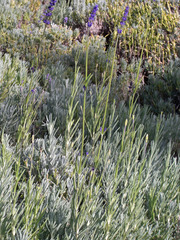 Lavandula angustifoliae0
- Outcome
- linaloole0
- Value
- 49.2 %e0
Organisms pictured · Representative pictures of the matched species, not figures from the paper.
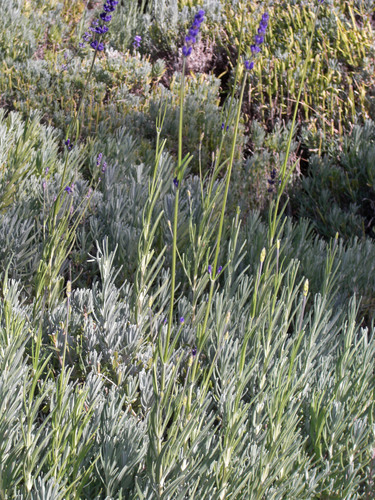
Verbatim
e0“Menthol (36.2 %) and menthone (32.4 %) in M. piperita and linalool (49.2 %) and lavandulyl acetate (12.3 %) in L. angustifolia oils were characterized as major components.”
Claim · model-written summary
lavandulyl acetate was a major component of L. angustifolia oil at 12.3 %.
- Taxon
- L. angustifoliaLavandula angustifoliae0
- Outcome
- lavandulyl acetatee0
- Value
- 12.3 %e0
Organisms pictured · Representative pictures of the matched species, not figures from the paper.
Verbatim
e0“Menthol (36.2 %) and menthone (32.4 %) in M. piperita and linalool (49.2 %) and lavandulyl acetate (12.3 %) in L. angustifolia oils were characterized as major components.”
Claim · model-written summary
trans-anethole was a major component of F. vulgare oil at 75.8 %.
- Taxon
- F. vulgare
 Anethum foeniculume0
- Outcome
- trans-anetholee0
- Value
- 75.8 %e0
Organisms pictured · Representative pictures of the matched species, not figures from the paper.

Verbatim
e0“The high proportion of trans-anethole (75.8 %) was detected in F. vulgare oil and y-terpinene (29.2 %) and ß-pinene (20.1%) were the principal constituents in C. cyminum oil.”
Claim · model-written summary
y-terpinene was a major component of C. cyminum oil at 29.2 %.
- Taxon
- C. cyminum
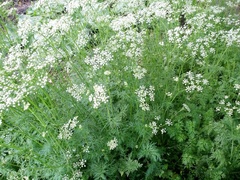 Cuminum cyminume0
- Outcome
- y-terpinenee0
- Value
- 29.2 %e0
Organisms pictured · Representative pictures of the matched species, not figures from the paper.
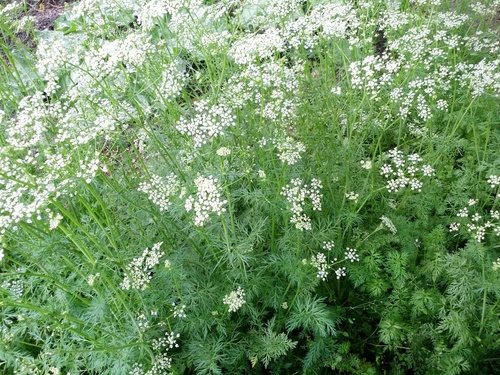
Verbatim
e0“The high proportion of trans-anethole (75.8 %) was detected in F. vulgare oil and y-terpinene (29.2 %) and ß-pinene (20.1%) were the principal constituents in C. cyminum oil.”
Claim · model-written summary
ß-pinene was a major component of C. cyminum oil at 20.1%.
- Taxon
- C. cyminumCuminum cyminume0
- Outcome
- ß-pinenee0
- Value
- 20.1%e0
Organisms pictured · Representative pictures of the matched species, not figures from the paper.
Verbatim
e0“The high proportion of trans-anethole (75.8 %) was detected in F. vulgare oil and y-terpinene (29.2 %) and ß-pinene (20.1%) were the principal constituents in C. cyminum oil.”
Claim · model-written summary
Four essential oils had in vitro antifungal activity against Botrytis cinerea.
- Taxon
- strawberry
 Fragaria ×ananassat0
- Treatment
- four essential oilse0
- Interactor
- Botrytis cinerea
 Botrytis cinereae0pathogen
- Outcome
- antifungal activitye0
Not reportedComparatorDirection
Organisms pictured · Representative pictures of the matched species, not figures from the paper.


Verbatim
e0“The in vitro experiment of four essential oils exhibited antifungal activity against Botrytis cinerea, Rhizopus stolonifer and Aspergillus niger.”
t0“Strawberry”
Claim · model-written summary
Four essential oils had in vitro antifungal activity against Rhizopus stolonifer.
- Taxon
- strawberryFragaria ×ananassat0
- Treatment
- four essential oilse0
- Interactor
- Rhizopus stolonifer
 Rhizopus stolonifere0pathogen
- Outcome
- antifungal activitye0
Not reportedComparatorDirection
Organisms pictured · Representative pictures of the matched species, not figures from the paper.

Verbatim
e0“The in vitro experiment of four essential oils exhibited antifungal activity against Botrytis cinerea, Rhizopus stolonifer and Aspergillus niger.”
t0“Strawberry”
Claim · model-written summary
Four essential oils had in vitro antifungal activity against Aspergillus niger.
- Taxon
- strawberryFragaria ×ananassat0
- Treatment
- four essential oilse0
- Interactor
- Aspergillus niger
 Aspergillus nigere0pathogen
- Outcome
- antifungal activitye0
Not reportedComparatorDirection
Organisms pictured · Representative pictures of the matched species, not figures from the paper.

Verbatim
e0“The in vitro experiment of four essential oils exhibited antifungal activity against Botrytis cinerea, Rhizopus stolonifer and Aspergillus niger.”
t0“Strawberry”
Claim · model-written summary
C. cyminum oil at 750Ul.l−1 completely inhibited B. cinerea growth in PDA medium.
- Taxon
- strawberryFragaria ×ananassat0
- Treatment
- 750Ul.l−1 from C. cyminum oilse0
- Interactor
- B. cinereaBotrytis cinereae0pathogen
- Outcome
- growthe0
- Direction
- completely inhibite0
- Comparator
- otherse0
Organisms pictured · Representative pictures of the matched species, not figures from the paper.
Verbatim
e0“The incorporation of 750Ul.l−1 from C. cyminum oils to PDA medium was more active than others and completely inhibit growth of B. cinerea, R. stolonifer and A. niger.”
t0“Strawberry”
Claim · model-written summary
C. cyminum oil at 750Ul.l−1 completely inhibited R. stolonifer growth in PDA medium.
- Taxon
- strawberryFragaria ×ananassat0
- Treatment
- 750Ul.l−1 from C. cyminum oilse0
- Interactor
- R. stoloniferRhizopus stolonifere0pathogen
- Outcome
- growthe0
- Direction
- completely inhibite0
- Comparator
- otherse0
Organisms pictured · Representative pictures of the matched species, not figures from the paper.
Verbatim
e0“The incorporation of 750Ul.l−1 from C. cyminum oils to PDA medium was more active than others and completely inhibit growth of B. cinerea, R. stolonifer and A. niger.”
t0“Strawberry”
Claim · model-written summary
C. cyminum oil at 750Ul.l−1 completely inhibited A. niger growth in PDA medium.
- Taxon
- strawberryFragaria ×ananassat0
- Treatment
- 750Ul.l−1 from C. cyminum oilse0
- Interactor
- A. nigerAspergillus nigere0pathogen
- Outcome
- growthe0
- Direction
- completely inhibite0
- Comparator
- otherse0
Organisms pictured · Representative pictures of the matched species, not figures from the paper.
Verbatim
e0“The incorporation of 750Ul.l−1 from C. cyminum oils to PDA medium was more active than others and completely inhibit growth of B. cinerea, R. stolonifer and A. niger.”
t0“Strawberry”
Claim · model-written summary
Fruit dipped with M. piperita oil had minimum decay incidence and outperformed Tiabandazol.
- Taxon
- strawberryFragaria ×ananassat0
- Treatment
- dippede0
- Interactor
- M. piperitaMentha ×piperitae0other
- Outcome
- decay incidencee0
- Direction
- minimume0
- Comparator
- chemical treatments with Tiabandazole0
Organisms pictured · Representative pictures of the matched species, not figures from the paper.
Verbatim
e0“The minimum decay incidence was achieved, when fruits dipped or sprayed with M. piperita essential oil, which was more effective than chemical treatments with Tiabandazol.”
t0“Strawberry”
Claim · model-written summary
Fruit sprayed with M. piperita oil had minimum decay incidence and outperformed Tiabandazol.
- Taxon
- strawberryFragaria ×ananassat0
- Treatment
- sprayede0
- Interactor
- M. piperitaMentha ×piperitae0other
- Outcome
- decay incidencee0
- Direction
- minimume0
- Comparator
- chemical treatments with Tiabandazole0
Organisms pictured · Representative pictures of the matched species, not figures from the paper.
Verbatim
e0“The minimum decay incidence was achieved, when fruits dipped or sprayed with M. piperita essential oil, which was more effective than chemical treatments with Tiabandazol.”
t0“Strawberry”
Claim · model-written summary
The authors suggest M. piperita essential oil as an alternative to synthetic fungicides.
- Taxon
- strawberryFragaria ×ananassat0
- Outcome
- use of essential oil especially M. piperitae0
- Comparator
- synthetic fungicidese0
Organisms pictured · Representative pictures of the matched species, not figures from the paper.
Verbatim
e0“The present study suggests that the use of essential oil especially M. piperita may be a useful alternative to the use of synthetic fungicides.”
t0“Strawberry”
The same questions in other papers
Cuminum cyminum · Botrytis cinerea · Fragaria x ananassa (strawberry)Results agree
1 paper in the same direction as this paper
- positive
botanical · Botrytis cinerea · Fragaria x ananassa (strawberry)Positive and negative results
31 papers in the same direction as this paper · 2 in the opposite direction
- negative
- negative
- positive
30 papers more in this group
See all 34 papers →botanical · Rhizopus stolonifer · Fragaria x ananassa (strawberry)Results agree
3 papers in the same direction as this paper
- positive
- positive
- positive
Claims are grouped by organism, treatment and what was measured or targeted. A paper counts as positive when any of its claims in the group is positive.