Abstract
Rhizosphere-competent fungi of the genus Trichoderma are widely used as biofertilizers and biopesticides in commercial formulates because of the multiple beneficial effects on plant growth and disease resistance. In this work, we demonstrate that genetic variability among wild and cultivated tomato lines affects the outcome of the interaction with two 'elite' biocontrol strains of T. atroviride and T. harzianum. The beneficial response, which included enhanced growth and systemic resistance against Botrytis cinerea, was clearly evident for some, but not all, the tested lines. At least in one case (line M82), treatment with the biocontrol agents had no effect or was even detrimental. Expression studies on defence-related genes suggested that the fungus is able to trigger, in the responsive lines, a long-lasting up-regulation of the salicylic acid pathway in the absence of a pathogen, possibly activating a priming mechanism in the plant. Consequently, infection with B. cinerea on plants pretreated with Trichoderma is followed by enhanced activation of jasmonate-responsive genes, eventually boosting systemic resistance to the pathogen in a plant genotype-dependent manner. Our data indicate that, at least in tomato, the Trichoderma induced systemic resistance mechanism is much more complex than considered so far, and the ability of the plant to benefit from this symbiotic-like interaction can be genetically improved.
Abstract from the paper’s OpenAlex record, shown for indexing and research. Copyright remains with the authors or the publisher. Read at the source ↗
The text the model read, with the source record’s inline markup (italics, sub- and superscripts) rendered and its character entities decoded; quote offsets refer to the raw text.
Claims 5
Claim · model-written summary
Genetic variability among wild and cultivated tomato lines affects the outcome of the interaction with the biocontrol strains T. atroviride and T. harzianum.
- Taxon
- tomato
 Solanum lycopersicume0
- Material
- wild and cultivated tomato linese0
- Interactor
- T. atroviride
 Trichoderma atroviridee0biocontrol_agent
- Second interactor
- T. harzianum
 Trichoderma harzianume0biocontrol_agent
- Outcome
- outcome of the interactione0
Not reportedDirection
Organisms pictured · Representative pictures of the matched species, not figures from the paper.

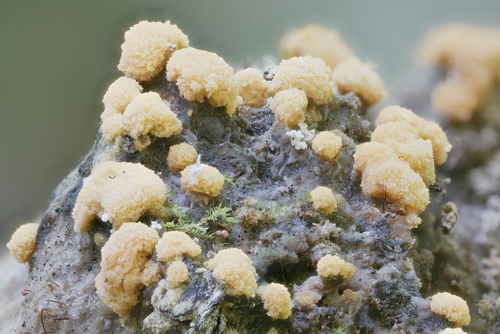

Verbatim
e0“genetic variability among wild and cultivated tomato lines affects the outcome of the interaction with two 'elite' biocontrol strains of T. atroviride and T. harzianum”
Claim · model-written summary
The beneficial response to the Trichoderma strains, including enhanced growth and systemic resistance against Botrytis cinerea, was clearly evident for some but not all tested tomato lines.
- Taxon
- tomatoSolanum lycopersicume1
- Treatment
- biocontrol strains of T. atroviride and T. harzianume1
- Interactor
- Botrytis cinerea
 Botrytis cinereae0pathogen
- Second interactor
- T. atrovirideTrichoderma atroviridee1biocontrol_agent
- Outcome
- enhanced growth and systemic resistance against Botrytis cinereae0
- Direction
- enhancede0
Not reportedComparator
Organisms pictured · Representative pictures of the matched species, not figures from the paper.

Verbatim
e0“The beneficial response, which included enhanced growth and systemic resistance against Botrytis cinerea, was clearly evident for some, but not all, the tested lines”
e1“genetic variability among wild and cultivated tomato lines affects the outcome of the interaction with two 'elite' biocontrol strains of T. atroviride and T. harzianum”
Claim · model-written summary
In tomato line M82, treatment with the biocontrol agents had no effect or was even detrimental.
- Taxon
- tomatoSolanum lycopersicumt0
- Material
- line M82e0
- Treatment
- treatment with the biocontrol agentse0
- Outcome
- effecte0
- Direction
- no effect or was even detrimentale0
Not reportedComparator
Organisms pictured · Representative pictures of the matched species, not figures from the paper.
Verbatim
t0“Trichoderma spp. on tomato”
e0“At least in one case (line M82), treatment with the biocontrol agents had no effect or was even detrimental”
Claim · model-written summary
Expression studies on defence-related genes suggested that the fungus triggers, in the responsive lines, a long-lasting up-regulation of the salicylic acid pathway in the absence of a pathogen, possibly activating a priming mechanism.
- Taxon
- tomatoSolanum lycopersicumt0
- Gene
- defence-related genese0
- Outcome
- up-regulation of the salicylic acid pathwaye0
Organisms pictured · Representative pictures of the matched species, not figures from the paper.
Verbatim
t0“Trichoderma spp. on tomato”
e0“Expression studies on defence-related genes suggested that the fungus is able to trigger, in the responsive lines, a long-lasting up-regulation of the salicylic acid pathway in the absence of a pathogen”
Claim · model-written summary
Infection with B. cinerea on tomato plants pretreated with Trichoderma was followed by enhanced activation of jasmonate-responsive genes, boosting systemic resistance in a plant genotype-dependent manner.
- Taxon
- tomatoSolanum lycopersicumt0
- Treatment
- pretreated with Trichodermae0
- Interactor
- B. cinereaBotrytis cinereae0pathogen
- Second interactor
- TrichodermaTrichodermae0biocontrol_agent
- Outcome
- activation of jasmonate-responsive genese0
- Direction
- enhancede0
Not reportedComparator
Organisms pictured · Representative pictures of the matched species, not figures from the paper.
Verbatim
t0“Trichoderma spp. on tomato”
e0“infection with B. cinerea on plants pretreated with Trichoderma is followed by enhanced activation of jasmonate-responsive genes”
The same questions in other papers
Trichoderma · Botrytis cinerea · Solanum lycopersicum (tomato)Results agree
4 papers in the same direction as this paper
- positive
- positive
- positive
1 paper more in this group
See all 5 papers →Claims are grouped by organism, treatment and what was measured or targeted. A paper counts as positive when any of its claims in the group is positive.