Abstract
The soil is a complex system where processes have direct influence on crop nutrition and plant health. Unfortunately, most of the agricultural soil management practices, compact them producing poor oxygenation, low benefic microorganism populations and metabolic disorders in plants. Those factors induce abnormal plant development and predisposition to the attack of soil borne plant pathogens as: Sclerotium cepivorum, Sclerotium ro4fsi, Sclerotinia sclerotiorum, Rhizoctonia solani, Rosellinia spp. But also, some air borne pathogens as Colletotrichum sp., are more aggressive under those conditions. In Costa Rica some practical trails done by farmers, have shown that the addition of Trichoderma spp. to organic fertilizers like vermicompost, Bocashi, and other composts, has a positive effect on the structure and microbial diversity, that improves nutrient movement in plants and pathogen suppression. Vegetative material of leather fern (Rumohra adiantiformis) infected by Rosellinia spp., planted with bocashi amended with. T. asperellum (T. harzianum), showed more tip root growth and new fern rhizomes. Also the plants produced higher number of fiddleheads and high quality fronds. Non-treated material showed a total loss. In some leaf vegetables as lettuce the use of vermicompost followed by Trichoderma viride application, inhibited S. sclerotiorum development on the crop, in this study sclerotia were infected and plant yields were increased. Compost previously inoculated with Trichoderma, inhibited 100% the Botrytis and R. solani infection, in nurseries, and plant nutrition was improved. The observed results are attributed to the antagonistic effect of Trichoderma on soil and airborne pathogens, production of growth regulators, solubilization of some microelements and better mineral absorption with the development of more roots and elimination of diseased roots. As conclusion, the organic substrates inoculated with Trichoderma spp., besides the organic matter source, they improve the structural characteristics of soil, promote the biochemical processes, increases the level of growth regulator substances and inhibit plant disease as well.
Abstract from the paper’s OpenAlex record, shown for indexing and research. Copyright remains with the authors or the publisher. Read at the source ↗
The text the model read, with the source record’s inline markup (italics, sub- and superscripts) rendered and its character entities decoded; quote offsets refer to the raw text.
Claims 12
Claim · model-written summary
Bocashi amended with T. asperellum (T. harzianum) gave leather fern infected by Rosellinia more tip root growth and new rhizomes than non-treated material.
- Taxon
- Rumohra adiantiformis
 Rumohra adiantiformise0
- Treatment
- bocashi amended with. T. asperellum (T. harzianum)e0
- Interactor
- Rosellinia spp.
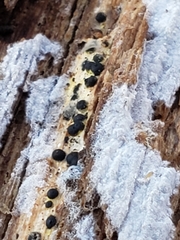 Roselliniae0pathogen
- Outcome
- tip root growth and new fern rhizomese0
- Direction
- moree0
- Comparator
- Non-treated materiale1
Organisms pictured · Representative pictures of the matched species, not figures from the paper.

Verbatim
e0“Vegetative material of leather fern (Rumohra adiantiformis) infected by Rosellinia spp., planted with bocashi amended with. T. asperellum (T. harzianum), showed more tip root growth and new fern rhizomes”
e1“Non-treated material showed a total loss”
Claim · model-written summary
Bocashi amended with T. asperellum (T. harzianum) gave leather fern more fiddleheads and high quality fronds.
- Taxon
- Rumohra adiantiformisRumohra adiantiformise0
- Treatment
- bocashi amended with. T. asperellum (T. harzianum)e0
- Outcome
- number of fiddleheads and high quality frondse2
- Direction
- highere2
Not reportedComparator
Organisms pictured · Representative pictures of the matched species, not figures from the paper.
Verbatim
e0“Vegetative material of leather fern (Rumohra adiantiformis) infected by Rosellinia spp., planted with bocashi amended with. T. asperellum (T. harzianum), showed more tip root growth and new fern rhizomes”
e2“Also the plants produced higher number of fiddleheads and high quality fronds”
Claim · model-written summary
Non-treated leather fern material showed a total loss.
- Taxon
- Rumohra adiantiformisRumohra adiantiformise0
- Treatment
- Non-treated materiale1
- Outcome
- total losse1
Organisms pictured · Representative pictures of the matched species, not figures from the paper.
Verbatim
e0“Vegetative material of leather fern (Rumohra adiantiformis) infected by Rosellinia spp., planted with bocashi amended with. T. asperellum (T. harzianum), showed more tip root growth and new fern rhizomes”
e1“Non-treated material showed a total loss”
Claim · model-written summary
Vermicompost followed by Trichoderma viride application inhibited Sclerotinia sclerotiorum development on lettuce.
- Taxon
- lettuce
 Lactuca sativae3
- Treatment
- vermicompost followed by Trichoderma viride applicatione3
- Interactor
- S. sclerotiorum
 Sclerotinia sclerotiorume3pathogen
- Second interactor
- Trichoderma viride
 Trichoderma viridee3biocontrol_agent
- Outcome
- S. sclerotiorum developmente3
- Direction
- inhibitede3
Not reportedComparator
Organisms pictured · Representative pictures of the matched species, not figures from the paper.



Verbatim
e3“In some leaf vegetables as lettuce the use of vermicompost followed by Trichoderma viride application, inhibited S. sclerotiorum development on the crop, in this study sclerotia were infected and plant yields were increased”
Claim · model-written summary
Vermicompost followed by Trichoderma viride application increased lettuce plant yields.
- Taxon
- lettuceLactuca sativae3
- Treatment
- vermicompost followed by Trichoderma viride applicatione3
- Outcome
- plant yieldse3
- Direction
- increasede3
Not reportedComparator
Organisms pictured · Representative pictures of the matched species, not figures from the paper.
Verbatim
e3“In some leaf vegetables as lettuce the use of vermicompost followed by Trichoderma viride application, inhibited S. sclerotiorum development on the crop, in this study sclerotia were infected and plant yields were increased”
Claim · model-written summary
Sclerotia were infected in the lettuce trial with vermicompost and Trichoderma viride.
- Taxon
- lettuceLactuca sativae3
- Outcome
- sclerotia were infectede3
Organisms pictured · Representative pictures of the matched species, not figures from the paper.
Verbatim
e3“In some leaf vegetables as lettuce the use of vermicompost followed by Trichoderma viride application, inhibited S. sclerotiorum development on the crop, in this study sclerotia were infected and plant yields were increased”
Claim · model-written summary
Compost inoculated with Trichoderma inhibited 100% of Botrytis and R. solani infection in nurseries.
- Taxon
- plante4
- Treatment
- Compost previously inoculated with Trichodermae4
- Second interactor
- R. solani
 Rhizoctonia solanie4pathogen
- Outcome
- Botrytis and R. solani infectione4
- Direction
- inhibitede4
- Value
- 100%e4
- Setting
- nurseriese4
 Botrytis
Not reportedComparator
Organisms pictured · Representative pictures of the matched species, not figures from the paper.


Verbatim
e4“Compost previously inoculated with Trichoderma, inhibited 100% the Botrytis and R. solani infection, in nurseries, and plant nutrition was improved”
Claim · model-written summary
Compost inoculated with Trichoderma improved plant nutrition.
- Taxon
- plante4
- Treatment
- Compost previously inoculated with Trichodermae4
- Outcome
- plant nutritione4
- Direction
- improvede4
Not reportedComparator
Verbatim
e4“Compost previously inoculated with Trichoderma, inhibited 100% the Botrytis and R. solani infection, in nurseries, and plant nutrition was improved”
Claim · model-written summary
The observed results are attributed to Trichoderma antagonism of pathogens, growth-regulator production, microelement solubilization and better mineral absorption.
Verbatim
e4“Compost previously inoculated with Trichoderma, inhibited 100% the Botrytis and R. solani infection, in nurseries, and plant nutrition was improved”
e5“The observed results are attributed to the antagonistic effect of Trichoderma on soil and airborne pathogens, production of growth regulators, solubilization of some microelements and better mineral absorption”
Claim · model-written summary
Organic substrates inoculated with Trichoderma spp. increase the level of growth regulator substances in plants.
- Taxon
- plante6
- Treatment
- organic substrates inoculated with Trichoderma spp.e6
- Outcome
- level of growth regulator substancese6
- Direction
- increasese6
Not reportedComparator
Verbatim
e6“the organic substrates inoculated with Trichoderma spp., besides the organic matter source, they improve the structural characteristics of soil, promote the biochemical processes, increases the level of growth regulator substances and inhibit plant disease as well”
Claim · model-written summary
Organic substrates inoculated with Trichoderma spp. inhibit plant disease.
- Taxon
- plante6
- Treatment
- organic substrates inoculated with Trichoderma spp.e6
- Outcome
- plant diseasee6
- Direction
- inhibite6
Not reportedComparator
Verbatim
e6“the organic substrates inoculated with Trichoderma spp., besides the organic matter source, they improve the structural characteristics of soil, promote the biochemical processes, increases the level of growth regulator substances and inhibit plant disease as well”
Claim · model-written summary
Organic substrates inoculated with Trichoderma spp. improve the structural characteristics of soil.
- Taxon
- plante6
- Treatment
- organic substrates inoculated with Trichoderma spp.e6
- Outcome
- structural characteristics of soile6
- Direction
- improvee6
Not reportedComparator
Verbatim
e6“the organic substrates inoculated with Trichoderma spp., besides the organic matter source, they improve the structural characteristics of soil, promote the biochemical processes, increases the level of growth regulator substances and inhibit plant disease as well”
The same questions in other papers
Trichoderma viride · Sclerotinia sclerotiorum · Lactuca sativa (garden lettuce)Results agree
1 paper in the same direction as this paper
- positive
fertilization · yield · Lactuca sativa (garden lettuce)Positive and negative results
212 papers in the same direction as this paper · 34 in the opposite direction · 2 reporting no difference from an alternative
- negative
- no effect
- negative
245 papers more in this group
See all 249 papers →fertilization · Sclerotinia sclerotiorum · Lactuca sativa (garden lettuce)Results agree
2 papers in the same direction as this paper
- positive
- positive
Claims are grouped by organism, treatment and what was measured or targeted. A paper counts as positive when any of its claims in the group is positive.