Abstract
Ribes sardoum, the most threatened endemic plant of Sardinia, is included in the Habitats Directive (92/43/EEC) and it was considered Critically Endangered in the global IUCN Red Lists. This species has been reported to have an extremely low fertility, scarce fruit production, low seed viability and a general inability to reproduce sexually. Fruits were collected for the first time from the remnant population, and the requirements for seed germination were investigated in the laboratory. Seeds were incubated at different temperatures (10, 15, and 20°C) and, in addition, they were exposed to a warm stratification (W) or a move-along treatment characterized by three cold temperature regimes (CCC). Seeds were also sown on the surface of 1% agar water with 250 mg·L−1 of GA3. At maturity, seeds have a linear underdeveloped embryo. Germination percentage between 35% and 65% were detected in the control and W groups. A low germination percentage occurred after CCC and during GA3 treatment. W treatment speeds up seed germination. Our results demonstrate that fruits of R. sardoum produce viable seeds, that are able to germinate under controlled conditions, with the assumption that the seeds have morphophysiological dormancy (MPD), and that propagation from the seeds is possible. Although the ability of seed germination was demonstrated, the lack of seedlings in the natural population seems to be a consequence of unfavourable climatic conditions for recruitment. However, our results indicate that seedlings obtained under controlled conditions could be useful for future translocation reducing and/or mitigating the extinction likelihood of this highly threatened plant.
Abstract from the paper’s OpenAlex record, shown for indexing and research. Copyright remains with the authors or the publisher. Read at the source ↗
The text the model read, with the source record’s inline markup (italics, sub- and superscripts) rendered and its character entities decoded; quote offsets refer to the raw text.
Claims 10
Claim · model-written summary
Mature seeds have a linear underdeveloped embryo.
- Taxon
- Ribes sardoum
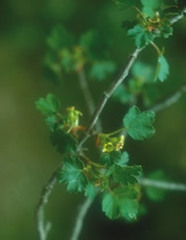 Ribes sardoumt0
- Organ / stage
- seedse0
- Outcome
- linear underdeveloped embryoe0
Organisms pictured · Representative pictures of the matched species, not figures from the paper.
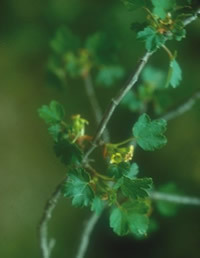
Verbatim
t0“Ribes sardoum”
e0“At maturity, seeds have a linear underdeveloped embryo.”
Claim · model-written summary
Control and warm-stratified seeds germinated at 35% to 65%.
- Taxon
- Ribes sardoumRibes sardoumt0
- Treatment
- We0
- Outcome
- Germination percentagee0
- Value
- 35% and 65%e0
- Comparator
- controle0
Not reportedDirection
Organisms pictured · Representative pictures of the matched species, not figures from the paper.
Verbatim
t0“Ribes sardoum”
e0“Germination percentage between 35% and 65% were detected in the control and W groups.”
Claim · model-written summary
Germination was low after the CCC treatment.
- Taxon
- Ribes sardoumRibes sardoumt0
- Treatment
- CCCe0
- Outcome
- germination percentagee0
- Direction
- lowe0
Not reportedComparator
Organisms pictured · Representative pictures of the matched species, not figures from the paper.
Verbatim
t0“Ribes sardoum”
e0“A low germination percentage occurred after CCC and during GA3 treatment.”
Claim · model-written summary
Germination was low during GA3 treatment.
- Taxon
- Ribes sardoumRibes sardoumt0
- Treatment
- GA3 treatmente0
- Outcome
- germination percentagee0
- Direction
- lowe0
Not reportedComparator
Organisms pictured · Representative pictures of the matched species, not figures from the paper.
Verbatim
t0“Ribes sardoum”
e0“A low germination percentage occurred after CCC and during GA3 treatment.”
Claim · model-written summary
Warm stratification sped up seed germination.
- Taxon
- Ribes sardoumRibes sardoumt0
- Treatment
- W treatmente0
- Outcome
- seed germinatione0
- Direction
- speeds upe0
Not reportedComparator
Organisms pictured · Representative pictures of the matched species, not figures from the paper.
Verbatim
t0“Ribes sardoum”
e0“W treatment speeds up seed germination.”
Claim · model-written summary
Fruits produce viable seeds able to germinate under controlled conditions.
- Taxon
- Ribes sardoumRibes sardoumt0
- Outcome
- viable seeds, that are able to germinatee0
- Setting
- controlled conditionse0
Organisms pictured · Representative pictures of the matched species, not figures from the paper.
Verbatim
t0“Ribes sardoum”
e0“fruits of R. sardoum produce viable seeds, that are able to germinate under controlled conditions”
Claim · model-written summary
The authors infer morphophysiological dormancy in the seeds.
- Taxon
- Ribes sardoumRibes sardoumt0
- Organ / stage
- seedse0
- Outcome
- morphophysiological dormancy (MPD)e0
Organisms pictured · Representative pictures of the matched species, not figures from the paper.
Verbatim
t0“Ribes sardoum”
e0“with the assumption that the seeds have morphophysiological dormancy (MPD)”
Claim · model-written summary
Propagation from seeds is possible.
- Taxon
- Ribes sardoumRibes sardoumt0
- Outcome
- propagation from the seeds is possiblee0
Organisms pictured · Representative pictures of the matched species, not figures from the paper.
Verbatim
t0“Ribes sardoum”
e0“propagation from the seeds is possible”
Claim · model-written summary
The authors attribute the lack of natural seedlings to unfavorable recruitment climate.
- Taxon
- Ribes sardoumRibes sardoumt0
- Outcome
- lack of seedlings in the natural populatione0
- Qualifier
- unfavourable climatic conditions for recruitmente0
Organisms pictured · Representative pictures of the matched species, not figures from the paper.
Verbatim
t0“Ribes sardoum”
e0“the lack of seedlings in the natural population seems to be a consequence of unfavourable climatic conditions for recruitment”
Claim · model-written summary
Controlled-condition seedlings could be useful for future translocation to reduce extinction risk.
- Taxon
- Ribes sardoumRibes sardoumt0
- Outcome
- future translocation reducing and/or mitigating the extinction likelihoode0
- Qualifier
- controlled conditionse0
Organisms pictured · Representative pictures of the matched species, not figures from the paper.
Verbatim
t0“Ribes sardoum”
e0“seedlings obtained under controlled conditions could be useful for future translocation reducing and/or mitigating the extinction likelihood”