Abstract
Silicon (Si) accumulation in shoots differs greatly with plant species, but the molecular mechanisms for this interspecific difference are unknown. Here, we isolated homologous genes of rice Si influx (SlLsi1) and efflux (SlLsi2) transporter genes in tomato (Solanum lycopersicum L.) and functionally characterized these genes. SlLsi1 showed transport activity for Si when expressed in both rice lsi1 mutant and Xenopus laevis oocytes. SlLsi1 was constitutively expressed in the roots. Immunostaining showed that SlLsi1 was localized at the plasma membrane of both root tip and basal region without polarity. Furthermore, overexpression of SlLsi1 in tomato increased Si concentration in the roots and root cell sap but did not alter the Si concentration in the shoots. By contrast, two Lsi2-like proteins did not show efflux transport activity for Si in Xenopus oocytes. However, when functional CsLsi2 from cucumber was expressed in tomato, the Si uptake was significantly increased, resulting in higher Si accumulation in the leaves and enhanced tolerance of the leaves to water deficit and high temperature. Our results suggest that the low Si accumulation in tomato is attributed to the lack of functional Si efflux transporter Lsi2 required for active Si uptake although SlLsi1 is functional.
Abstract from the paper’s OpenAlex record, shown for indexing and research. Copyright remains with the authors or the publisher. Read at the source ↗
The text the model read, with the source record’s inline markup (italics, sub- and superscripts) rendered and its character entities decoded; quote offsets refer to the raw text.
Claims 10
Claim · model-written summary
SlLsi1 transported silicon in rice mutants and Xenopus oocytes.
- Taxon
- rice
 Oryza sativae0
- Material
- lsi1 mutante0
- Gene
- SlLsi1e0
- Outcome
- transport activity for Sie0
Organisms pictured · Representative pictures of the matched species, not figures from the paper.

Verbatim
e0“SlLsi1 showed transport activity for Si when expressed in both rice lsi1 mutant and Xenopus laevis oocytes.”
Claim · model-written summary
SlLsi1 was constitutively expressed in tomato roots.
- Taxon
- Tomato
 Solanum lycopersicumt0
- Organ / stage
- rootse0
- Gene
- SlLsi1e0
- Outcome
- constitutively expressede0
Organisms pictured · Representative pictures of the matched species, not figures from the paper.

Verbatim
e0“SlLsi1 was constitutively expressed in the roots.”
t0“Tomato”
Claim · model-written summary
SlLsi1 localized to the plasma membrane of root tips and basal regions without polarity.
- Taxon
- TomatoSolanum lycopersicumt0
- Organ / stage
- root tip and basal regione0
- Gene
- SlLsi1e0
- Outcome
- localized at the plasma membranee0
- Qualifier
- without polaritye0
Organisms pictured · Representative pictures of the matched species, not figures from the paper.
Verbatim
e0“SlLsi1 was localized at the plasma membrane of both root tip and basal region without polarity.”
t0“Tomato”
Claim · model-written summary
SlLsi1 overexpression raised silicon concentration in tomato roots and root cell sap.
- Taxon
- tomatoSolanum lycopersicume0
- Treatment
- overexpression of SlLsi1e0
- Gene
- SlLsi1e0
- Outcome
- Si concentration in the roots and root cell sape0
- Direction
- increasede0
Not reportedComparator
Organisms pictured · Representative pictures of the matched species, not figures from the paper.
Verbatim
e0“overexpression of SlLsi1 in tomato increased Si concentration in the roots and root cell sap”
Claim · model-written summary
SlLsi1 overexpression did not alter silicon concentration in tomato shoots.
- Taxon
- tomatoSolanum lycopersicume0
- Treatment
- overexpression of SlLsi1e0
- Gene
- SlLsi1e0
- Outcome
- Si concentration in the shootse0
- Direction
- did not altere0
Not reportedComparator
Organisms pictured · Representative pictures of the matched species, not figures from the paper.
Verbatim
e0“overexpression of SlLsi1 in tomato increased Si concentration in the roots and root cell sap but did not alter the Si concentration in the shoots.”
Claim · model-written summary
Two Lsi2-like proteins showed no silicon efflux activity in Xenopus oocytes.
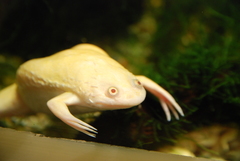 Xenopus
Organisms pictured · Representative pictures of the matched species, not figures from the paper.

Verbatim
e0“two Lsi2-like proteins did not show efflux transport activity for Si in Xenopus oocytes.”
Claim · model-written summary
Expressing cucumber CsLsi2 in tomato significantly increased silicon uptake.
- Taxon
- tomatoSolanum lycopersicume0
- Treatment
- CsLsi2 from cucumber was expressede0
- Gene
- CsLsi2e0
- Outcome
- Si uptakee0
- Direction
- increasede0
Not reportedComparator
Organisms pictured · Representative pictures of the matched species, not figures from the paper.
Verbatim
e0“when functional CsLsi2 from cucumber was expressed in tomato, the Si uptake was significantly increased”
Claim · model-written summary
Expressing CsLsi2 increased silicon accumulation in tomato leaves.
- Taxon
- tomatoSolanum lycopersicume0
- Treatment
- CsLsi2 from cucumber was expressede0
- Gene
- CsLsi2e0
- Outcome
- Si accumulation in the leavese0
- Direction
- highere0
Not reportedComparator
Organisms pictured · Representative pictures of the matched species, not figures from the paper.
Verbatim
e0“when functional CsLsi2 from cucumber was expressed in tomato, the Si uptake was significantly increased, resulting in higher Si accumulation in the leaves”
Claim · model-written summary
Expressing CsLsi2 enhanced tomato leaf tolerance to water deficit and heat.
- Taxon
- tomatoSolanum lycopersicume0
- Treatment
- CsLsi2 from cucumber was expressede0
- Gene
- CsLsi2e0
- Outcome
- tolerance of the leaves to water deficit and high temperaturee0
- Direction
- enhancede0
Not reportedComparator
Organisms pictured · Representative pictures of the matched species, not figures from the paper.
Verbatim
e0“when functional CsLsi2 from cucumber was expressed in tomato, the Si uptake was significantly increased, resulting in higher Si accumulation in the leaves and enhanced tolerance of the leaves to water deficit and high temperature.”
Claim · model-written summary
The authors attribute low tomato silicon accumulation to the lack of a functional Lsi2 efflux transporter.
- Taxon
- tomatoSolanum lycopersicume0
- Gene
- Lsi2e0
- Outcome
- low Si accumulatione0
- Qualifier
- lack of functional Si efflux transporter Lsi2e0
Organisms pictured · Representative pictures of the matched species, not figures from the paper.
Verbatim
e0“the low Si accumulation in tomato is attributed to the lack of functional Si efflux transporter Lsi2 required for active Si uptake although SlLsi1 is functional.”
The same questions in other papers
Cucumis sativus · nutrient: content · Solanum lycopersicum (tomato)Results agree
1 paper in the same direction as this paper
- positive
Cucumis sativus · disease · Solanum lycopersicum (tomato)Results agree
3 papers in the same direction as this paper
- positive
- positive
- positive
Claims are grouped by organism, treatment and what was measured or targeted. A paper counts as positive when any of its claims in the group is positive.