Abstract
Seed dormancy is a trait that has evolved to maximize germination when environmental conditions are optimal for successful recruitment of new individuals into a population. Physical dormancy is one such trait common in legumes and release from this condition is often associated with disturbance events, such as fire. Changes to the specific conditions (e.g., climate, fire regimes) that release seeds from dormancy can have negative effects on populations, especially of rare species. Therefore, understanding the species-specific requirements needed to release seeds from dormancy and induce germination provides insight into ecological processes, effects of changing environmental conditions, and potential conservation actions. Amorpha georgiana (Fabaceae) is a rare subshrub with indehiscent fruits (pods) found in fire-maintained longleaf pine habitats in the southeastern United States. The germination ecology of this species is largely unknown. The goals of this study were to determine the presence of physically dormant seed in A. georgiana and then, through a series of laboratory-based experiments, resolve the fire related factors that effectively overcome dormancy and promote germination. The seeds of A. georgiana exhibit physical dormancy and show significantly higher germination after brief exposure to hot water (94 °C) compared to all other temperatures and treatments assessed. Regardless of treatment, seeds have low germination when retained in their pods, but the pod is not the cause of physical dormancy. We found enclosure within an indehiscent pod and exposure to pyrogenic temperatures (> 80 °C) both affect dormancy release and germination of A. georgiana. The 3.5-fold increase in germination at pyrogenic temperatures suggests the response is highly fire-adapted and fits the definition of obligate pyrogenic dormancy release. While season of fire exposure was not significant in our study, we did find consistent negative effects on the germination response. Our results suggest pulses of heat from periodic growing season fires are likely necessary to promote recruitment and maintain populations of this rare species.
Abstract from the paper’s OpenAlex record, shown for indexing and research. Copyright remains with the authors or the publisher. Read at the source ↗
The text the model read, with the source record’s inline markup (italics, sub- and superscripts) rendered and its character entities decoded; quote offsets refer to the raw text.
Claims 10
Claim · model-written summary
Brief exposure to hot water (94 °C) gave significantly higher germination of Amorpha georgiana seeds than all other temperatures and treatments assessed.
- Taxon
- Amorpha georgiana
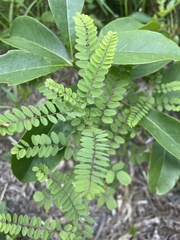 Amorpha georgianat0
- Organ / stage
- seedse1
- Treatment
- brief exposure to hot water (94 °C)e1
- Outcome
- germinatione1
- Direction
- highere1
- Comparator
- all other temperatures and treatments assessede1
Organisms pictured · Representative pictures of the matched species, not figures from the paper.
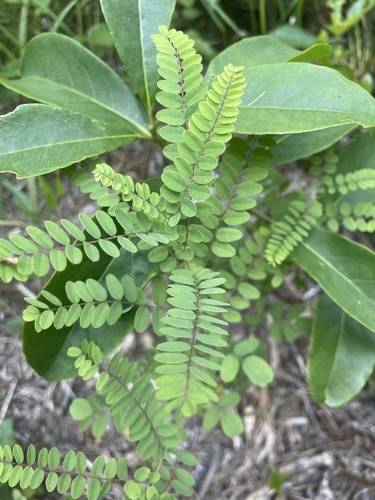
Verbatim
t0“Amorpha georgiana”
e1“The seeds of A. georgiana exhibit physical dormancy and show significantly higher germination after brief exposure to hot water (94 °C) compared to all other temperatures and treatments assessed”
Claim · model-written summary
Seeds of Amorpha georgiana have low germination when retained in their pods, regardless of treatment.
- Taxon
- Amorpha georgianaAmorpha georgianat0
- Treatment
- retained in their podse2
- Outcome
- germinatione2
- Direction
- lowe2
Organisms pictured · Representative pictures of the matched species, not figures from the paper.
Verbatim
t0“Amorpha georgiana”
e2“seeds have low germination when retained in their pods”
Claim · model-written summary
The pod is not the cause of physical dormancy in Amorpha georgiana.
- Taxon
- Amorpha georgianaAmorpha georgianat0
- Outcome
- physical dormancye3
- Qualifier
- the pod is not the causee3
Organisms pictured · Representative pictures of the matched species, not figures from the paper.
Verbatim
t0“Amorpha georgiana”
e3“the pod is not the cause of physical dormancy”
Claim · model-written summary
Enclosure within an indehiscent pod affects dormancy release and germination of Amorpha georgiana (direction not stated).
- Taxon
- Amorpha georgianaAmorpha georgianat0
- Treatment
- enclosure within an indehiscent pode4
- Outcome
- dormancy release and germinatione4
Not reportedDirection
Organisms pictured · Representative pictures of the matched species, not figures from the paper.
Verbatim
t0“Amorpha georgiana”
e4“We found enclosure within an indehiscent pod and exposure to pyrogenic temperatures (> 80 °C) both affect dormancy release and germination of A. georgiana”
Claim · model-written summary
Exposure to pyrogenic temperatures (> 80 °C) affects dormancy release and germination of Amorpha georgiana (direction not stated).
- Taxon
- Amorpha georgianaAmorpha georgianat0
- Treatment
- exposure to pyrogenic temperatures (> 80 °C)e4
- Outcome
- dormancy release and germinatione4
Not reportedDirection
Organisms pictured · Representative pictures of the matched species, not figures from the paper.
Verbatim
t0“Amorpha georgiana”
e4“We found enclosure within an indehiscent pod and exposure to pyrogenic temperatures (> 80 °C) both affect dormancy release and germination of A. georgiana”
Claim · model-written summary
Germination of Amorpha georgiana increased 3.5-fold at pyrogenic temperatures.
- Taxon
- Amorpha georgianaAmorpha georgianat0
- Treatment
- pyrogenic temperaturese5
- Outcome
- germinatione5
- Direction
- increasee5
- Value
- 3.5-folde5
Not reportedComparator
Organisms pictured · Representative pictures of the matched species, not figures from the paper.
Verbatim
t0“Amorpha georgiana”
e5“The 3.5-fold increase in germination at pyrogenic temperatures”
Claim · model-written summary
Season of fire exposure did not significantly affect the germination response of Amorpha georgiana.
- Taxon
- Amorpha georgianaAmorpha georgianat0
- Treatment
- season of fire exposuree6
- Outcome
- germination responsee6
Not reportedDirection
Organisms pictured · Representative pictures of the matched species, not figures from the paper.
Verbatim
t0“Amorpha georgiana”
e6“While season of fire exposure was not significant in our study, we did find consistent negative effects on the germination response”
Claim · model-written summary
Consistent negative effects on the germination response of Amorpha georgiana were found (the factor is not named in the abstract).
- Taxon
- Amorpha georgianaAmorpha georgianat0
- Outcome
- germination responsee6
- Qualifier
- consistent negative effectse6
Organisms pictured · Representative pictures of the matched species, not figures from the paper.
Verbatim
t0“Amorpha georgiana”
e6“While season of fire exposure was not significant in our study, we did find consistent negative effects on the germination response”
Claim · model-written summary
Pulses of heat from periodic growing season fires are likely necessary to promote recruitment and maintain populations of this rare species.
- Taxon
- Amorpha georgianaAmorpha georgianat0
- Treatment
- pulses of heat from periodic growing season firese7
- Outcome
- promote recruitment and maintain populationse7
Organisms pictured · Representative pictures of the matched species, not figures from the paper.
Verbatim
t0“Amorpha georgiana”
e7“pulses of heat from periodic growing season fires are likely necessary to promote recruitment and maintain populations of this rare species”
Claim · model-written summary
The 3.5-fold germination increase at pyrogenic temperatures suggests Amorpha georgiana is highly fire-adapted and fits obligate pyrogenic dormancy release.
- Taxon
- Amorpha georgianaAmorpha georgianat0
- Outcome
- highly fire-adaptede1
- Qualifier
- obligate pyrogenic dormancy releasee1
Organisms pictured · Representative pictures of the matched species, not figures from the paper.
Verbatim
t0“Amorpha georgiana”
e1“The 3.5-fold increase in germination at pyrogenic temperatures suggests the response is highly fire-adapted and fits the definition of obligate pyrogenic dormancy release”