Abstract
BACKGROUND: Trichoderma spp. are soil fungi that interact with plant roots and associated biota such as other microorganisms and soil fauna. However, information about their interactions with root-feeding insects is limited. Here, interactions between Trichoderma harzianum and the root-feeding insect Phyllophaga vetula, a common insect pest in maize agroecosystems, were examined. RESULTS: Applications of T. harzianum and P. vetula to the root system increased and decreased maize growth, respectively. Induced tolerance against herbivore attack was provided by T. harzianum maintaining a robust and functional root system as evidenced by the increased uptake of Cu, Ca, Mg, Na and K. Herbivore tolerance also coincided with changes in the emission of root volatile terpenes known to induce indirect defense responses and attract natural enemies of the herbivore. More importantly, T. harzianum induced de novo emission of several sesquiterpenes such as β-caryophyllene and δ-cadinene. In addition, single and combined applications of T. harzianum and P. vetula altered the sucrose content of the roots. Finally, T. harzianum produced 6-pentyl-2H-pyran-2-one (6-PP) a volatile compound that may act as an antifeedant-signaling compound mitigating root herbivory by P. vetula. CONCLUSION: Our results provide novel information about belowground multitrophic plant-microbe-arthropod interactions between T. harzianum and P. vetula in the maize rhizosphere resulting in alterations in maize phenotypic plant responses, inducing root herbivore tolerance.
Abstract from the paper’s OpenAlex record, shown for indexing and research. Copyright remains with the authors or the publisher. Read at the source ↗
The text the model read, with the source record’s inline markup (italics, sub- and superscripts) rendered and its character entities decoded; quote offsets refer to the raw text.
Claims 10
Claim · model-written summary
Application of T. harzianum to the root system increased maize growth.
- Treatment
- Applications of T. harzianume1
- Interactor
- T. harzianum
 Trichoderma harzianume1symbiont
- Outcome
- maize growthe1
- Direction
- increasede1
 Zea mays
Not reportedComparator
Organisms pictured · Representative pictures of the matched species, not figures from the paper.


Verbatim
e1“Applications of T. harzianum and P. vetula to the root system increased and decreased maize growth, respectively”
t0“Trichoderma harzianum induces maize root herbivore tolerance against Phyllophaga vetula”
Claim · model-written summary
Application of P. vetula to the root system decreased maize growth.
- Treatment
- P. vetula to the root systeme1
- Interactor
- P. vetula
 Phyllophaga vetulae1pest
- Outcome
- maize growthe1
- Direction
- decreasede1
Not reportedComparator
Organisms pictured · Representative pictures of the matched species, not figures from the paper.
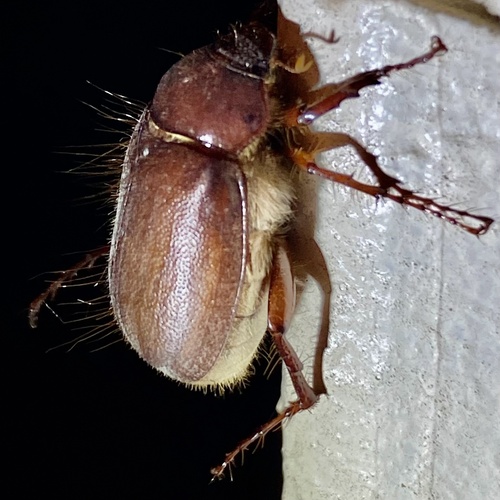
Verbatim
e1“Applications of T. harzianum and P. vetula to the root system increased and decreased maize growth, respectively”
t0“Trichoderma harzianum induces maize root herbivore tolerance against Phyllophaga vetula”
Claim · model-written summary
T. harzianum maintained a robust and functional root system, providing induced tolerance against herbivore attack.
- Treatment
- T. harzianume1
- Interactor
- Phyllophaga vetulaPhyllophaga vetulat0pest
- Second interactor
- T. harzianumTrichoderma harzianume1biocontrol_agent
- Outcome
- Induced tolerance against herbivore attacke1
- Qualifier
- maintaining a robust and functional root systeme1
Organisms pictured · Representative pictures of the matched species, not figures from the paper.
Verbatim
e1“Induced tolerance against herbivore attack was provided by T. harzianum maintaining a robust and functional root system”
t0“Trichoderma harzianum induces maize root herbivore tolerance against Phyllophaga vetula”
Claim · model-written summary
T. harzianum increased the uptake of Cu, Ca and Mg in maize.
- Treatment
- T. harzianume1
- Interactor
- T. harzianumTrichoderma harzianume1symbiont
- Outcome
- uptake of Cu, Ca, Mge1
- Direction
- increasede1
Not reportedComparator
Organisms pictured · Representative pictures of the matched species, not figures from the paper.
Verbatim
e1“T. harzianum maintaining a robust and functional root system as evidenced by the increased uptake of Cu, Ca, Mg, Na and K”
t0“Trichoderma harzianum induces maize root herbivore tolerance against Phyllophaga vetula”
Claim · model-written summary
T. harzianum increased the uptake of Na and K in maize.
- Treatment
- T. harzianume1
- Interactor
- T. harzianumTrichoderma harzianume1symbiont
- Outcome
- Na and Ke1
- Direction
- increasede1
Not reportedComparator
Organisms pictured · Representative pictures of the matched species, not figures from the paper.
Verbatim
e1“T. harzianum maintaining a robust and functional root system as evidenced by the increased uptake of Cu, Ca, Mg, Na and K”
t0“Trichoderma harzianum induces maize root herbivore tolerance against Phyllophaga vetula”
Claim · model-written summary
Herbivore tolerance coincided with changes in the emission of root volatile terpenes.
Not reportedDirection
Organisms pictured · Representative pictures of the matched species, not figures from the paper.
Verbatim
e1“Herbivore tolerance also coincided with changes in the emission of root volatile terpenes”
t0“Trichoderma harzianum induces maize root herbivore tolerance against Phyllophaga vetula”
Claim · model-written summary
T. harzianum induced de novo emission of several sesquiterpenes such as beta-caryophyllene and delta-cadinene.
- Treatment
- T. harzianume1
- Interactor
- T. harzianumTrichoderma harzianume1symbiont
- Outcome
- de novo emission of several sesquiterpenes such as β-caryophyllene and δ-cadinenee1
- Direction
- increaseinferrede1
Not reportedComparator
Organisms pictured · Representative pictures of the matched species, not figures from the paper.
Verbatim
e1“T. harzianum induced de novo emission of several sesquiterpenes such as β-caryophyllene and δ-cadinene”
t0“Trichoderma harzianum induces maize root herbivore tolerance against Phyllophaga vetula”
Claim · model-written summary
Single and combined applications of T. harzianum and P. vetula altered the sucrose content of the roots.
- Treatment
- single and combined applications of T. harzianum and P. vetulae1
- Interactor
- P. vetulaPhyllophaga vetulae1pest
- Second interactor
- T. harzianumTrichoderma harzianume1symbiont
- Outcome
- sucrose content of the rootse1
Not reportedComparatorDirection
Organisms pictured · Representative pictures of the matched species, not figures from the paper.
Verbatim
e1“single and combined applications of T. harzianum and P. vetula altered the sucrose content of the roots”
t0“Trichoderma harzianum induces maize root herbivore tolerance against Phyllophaga vetula”
Claim · model-written summary
T. harzianum produced the volatile compound 6-pentyl-2H-pyran-2-one (6-PP).
- Taxon
- T. harzianumTrichoderma harzianume1
- Outcome
- produced 6-pentyl-2H-pyran-2-one (6-PP)e1
Organisms pictured · Representative pictures of the matched species, not figures from the paper.
Verbatim
e1“T. harzianum produced 6-pentyl-2H-pyran-2-one (6-PP)”
Claim · model-written summary
The volatile 6-PP may act as an antifeedant-signaling compound mitigating root herbivory by P. vetula.
- Interactor
- P. vetulaPhyllophaga vetulae1pest
- Compound
- 6-pentyl-2H-pyran-2-one (6-PP)e2
- Outcome
- mitigating root herbivorye1
Organisms pictured · Representative pictures of the matched species, not figures from the paper.
Verbatim
e1“a volatile compound that may act as an antifeedant-signaling compound mitigating root herbivory by P. vetula”
e2“6-pentyl-2H-pyran-2-one (6-PP)”
t0“Trichoderma harzianum induces maize root herbivore tolerance against Phyllophaga vetula”
The same questions in other papers
Trichoderma harzianum · growth · Zea mays (maize)Positive and negative results
17 papers in the same direction as this paper · 2 in the opposite direction
- no effect
- negative
- positive
16 papers more in this group
See all 20 papers →Trichoderma harzianum · nutrient: content · Zea mays (maize)Results agree
1 paper in the same direction as this paper
- positive
Claims are grouped by organism, treatment and what was measured or targeted. A paper counts as positive when any of its claims in the group is positive.