Abstract
This study examined the phytotoxicity of the extract of Datura metel. It involved the planting of seeds of monocot, yellow maize (Zea mays) and a dicot, brown bean (Phaseolus vulgaris), growth and analysis of seedlings of the two plants. Seeds of Z. mays were collected at the Institute of Agricultural Research and Training (IAR&T), Ibadan and the seeds of P. vulgaris were collected at International Institute for Tropical Agriculture (IITA), Ibadan, Nigeria. The leaf of D. metel was collected. The plant was identified and authenticated (FHI 111862) at Forestry Research Institute of Nigeria (FRIN) Ibadan, Nigeria. The collected leaves were carefully washed under running tap water and air-dried at room temperature for four weeks. The dry leaves were milled into a fine powder and extracted. The phytotoxic potentials of the extract were evaluated using a standard method. At the end of the experiment, seedlings were harvested, stem and leaf were separately collected, and shoot length of seedlings was measured, and kept frozen for the estimation of total protein, soluble sugar, free amino acids, proline, and plant pigments. The findings revealed that different concentrations of aqueous extract of the leaf of D. metel retarded the rate of germination of seeds, significantly inhibited the shoot length of P. vulgaris and Z. mays andreduced concentrations of chlorophyll, free amino acids, protein, sugar, and proline. In conclusion, this study revealed that the extract exhibited a deleterious effect on germination, growth and biochemical parameters in seedlings of P. vulgaris and Z. mays.
Abstract from the paper’s OpenAlex record; open copy licensed cc-by. Read at the source ↗
The text the model read, with the source record’s inline markup (italics, sub- and superscripts) rendered and its character entities decoded; quote offsets refer to the raw text.
Claims 8
Claim · model-written summary
Datura extract retarded maize seed germination.
- Treatment
- different concentrations of aqueous extract of the leaf of D. metele0
- Interactor
- D. metel
 Datura metele0other
- Outcome
- rate of germinatione0
- Direction
- retardede0
 Zea mays
Not reportedComparator
Organisms pictured · Representative pictures of the matched species, not figures from the paper.

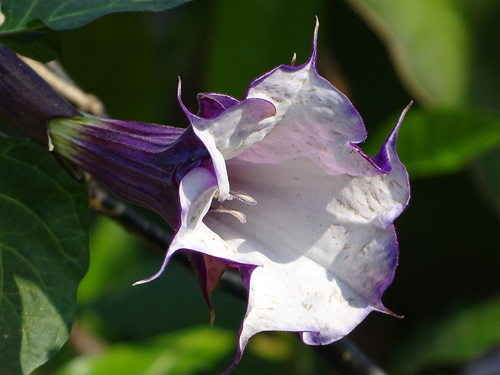
Verbatim
e0“different concentrations of aqueous extract of the leaf of D. metel retarded the rate of germination of seeds”
e1“seedlings of P. vulgaris and Z. mays”
t0“Zea mays”
Claim · model-written summary
Datura extract retarded bean seed germination.
- Taxon
- Phaseolus vulgaris
 Phaseolus vulgarist0
- Treatment
- different concentrations of aqueous extract of the leaf of D. metele0
- Interactor
- D. metelDatura metele0other
- Outcome
- rate of germinatione0
- Direction
- retardede0
Not reportedComparator
Organisms pictured · Representative pictures of the matched species, not figures from the paper.

Verbatim
e0“different concentrations of aqueous extract of the leaf of D. metel retarded the rate of germination of seeds”
t0“Phaseolus vulgaris”
Claim · model-written summary
Datura extract significantly inhibited bean shoot length.
- Taxon
- P. vulgarisPhaseolus vulgarise0
- Treatment
- aqueous extract of the leaf of D. metele1
- Interactor
- D. metelDatura metele1other
- Outcome
- shoot lengthe0
- Direction
- inhibitede0
Not reportedComparator
Organisms pictured · Representative pictures of the matched species, not figures from the paper.
Verbatim
e0“significantly inhibited the shoot length of P. vulgaris and Z. mays”
e1“aqueous extract of the leaf of D. metel”
Claim · model-written summary
Datura extract significantly inhibited maize shoot length.
- Treatment
- aqueous extract of the leaf of D. metele1
- Interactor
- D. metelDatura metele1other
- Outcome
- shoot lengthe0
- Direction
- inhibitede0
Not reportedComparator
Organisms pictured · Representative pictures of the matched species, not figures from the paper.
Verbatim
e0“significantly inhibited the shoot length of P. vulgaris and Z. mays”
e1“aqueous extract of the leaf of D. metel”
Claim · model-written summary
Datura extract reduced chlorophyll, free amino acids and protein in bean seedlings.
- Taxon
- P. vulgarisPhaseolus vulgarise1
- Treatment
- aqueous extract of the leaf of D. metele2
- Interactor
- D. metelDatura metele2other
- Outcome
- concentrations of chlorophyll, free amino acids, proteine0
- Direction
- reducede0
Not reportedComparator
Organisms pictured · Representative pictures of the matched species, not figures from the paper.
Verbatim
e0“reduced concentrations of chlorophyll, free amino acids, protein, sugar, and proline.”
e1“seedlings of P. vulgaris and Z. mays”
e2“aqueous extract of the leaf of D. metel”
Claim · model-written summary
Datura extract reduced sugar and proline in bean seedlings.
- Taxon
- P. vulgarisPhaseolus vulgarise1
- Treatment
- aqueous extract of the leaf of D. metele2
- Interactor
- D. metelDatura metele2other
- Outcome
- sugar, and prolinee0
- Direction
- reducede0
Not reportedComparator
Organisms pictured · Representative pictures of the matched species, not figures from the paper.
Verbatim
e0“reduced concentrations of chlorophyll, free amino acids, protein, sugar, and proline.”
e1“seedlings of P. vulgaris and Z. mays”
e2“aqueous extract of the leaf of D. metel”
Claim · model-written summary
Datura extract reduced chlorophyll, free amino acids and protein in maize seedlings.
- Treatment
- aqueous extract of the leaf of D. metele2
- Interactor
- D. metelDatura metele2other
- Outcome
- concentrations of chlorophyll, free amino acids, proteine0
- Direction
- reducede0
Not reportedComparator
Organisms pictured · Representative pictures of the matched species, not figures from the paper.
Verbatim
e0“reduced concentrations of chlorophyll, free amino acids, protein, sugar, and proline.”
e1“seedlings of P. vulgaris and Z. mays”
e2“aqueous extract of the leaf of D. metel”
Claim · model-written summary
Datura extract reduced sugar and proline in maize seedlings.
- Treatment
- aqueous extract of the leaf of D. metele2
- Interactor
- D. metelDatura metele2other
- Outcome
- sugar, and prolinee0
- Direction
- reducede0
Not reportedComparator
Organisms pictured · Representative pictures of the matched species, not figures from the paper.
Verbatim
e0“reduced concentrations of chlorophyll, free amino acids, protein, sugar, and proline.”
e1“seedlings of P. vulgaris and Z. mays”
e2“aqueous extract of the leaf of D. metel”
The same questions in other papers
botanical · physiology: osmolytes · Phaseolus vulgaris (common bean)Positive and negative results
2 papers in the same direction as this paper · 2 in the opposite direction
- positive
- positive
- no effect
1 paper more in this group
See all 5 papers →botanical · physiology: pigments · Phaseolus vulgaris (common bean)Positive and negative results
2 papers in the same direction as this paper · 9 in the opposite direction
- positive
- positive
- positive
8 papers more in this group
See all 12 papers →botanical · physiology: osmolytes · Zea mays (maize)Positive and negative results
2 papers in the same direction as this paper · 10 in the opposite direction
- positive
- positive
- positive
9 papers more in this group
See all 13 papers →botanical · physiology: pigments · Zea mays (maize)Positive and negative results
7 papers in the same direction as this paper · 18 in the opposite direction
- positive
- positive
- positive
22 papers more in this group
See all 26 papers →botanical · growth · Phaseolus vulgaris (common bean)Positive and negative results
37 papers in the same direction as this paper · 50 in the opposite direction
- positive
- positive
- positive
84 papers more in this group
See all 88 papers →botanical · growth · Zea mays (maize)Positive and negative results
141 papers in the same direction as this paper · 198 in the opposite direction
- positive
- positive
- positive
336 papers more in this group
See all 340 papers →Claims are grouped by organism, treatment and what was measured or targeted. A paper counts as positive when any of its claims in the group is positive.