Abstract
The simultaneous occurrence of biotic and abiotic stresses affects the performance of the crops in salt–affected agro-ecologies. The plant–microbe interaction, with effective rhizobacteria can effectively manage these stresses. This study characterized the biocontrol, plant growth promotion, and responsiveness of rhizobacteria in wheat under salt-affected soils. Out of the 184 rhizobacteria isolates, the 20 isolates showed 41-72% growth inhibition of fungal phytopathogens of seedling blight of wheat (Fusarium sp.), head blight of wheat (Fusarium oxysporum), onion molds (Penicillium sp. and, Aspergillus sp.), root rot of wheat (Rhizoctonia solani), ear rot of corn (Aspergillus sp.) and spot blotch of wheat (Bipolaris sorokininana). The potent three rhizobacterial isolates identified as close neighbours of Bacillus amyloliquefaciens strain TA124, B. subtilis strain SB67 and B. subtilis strain BJ171 caused 65.5–71.1% growth inhibition of B. sorokiniana. The extracellular organic acid, siderophore, and chitinase enzymes played a significant role in rhizobacterial performance for fungal growth inhibition; and P and Zn solubilization in growth media. The foliar spray of bioformulations aids 15–20% reduction in the B. sorokiniana disease severity. The rhizobacterial responsiveness to the dual inoculation through seed treatment and foliar spray was 12.6–51, 15.8–46.3, and 13.2–148.1% for grain yield, P uptake, and disease suppression, respectively. The changes caused by rhizobacterial bioformulation in soil (Olsen's–P and microbial biomass carbon) and plant (proline, malondialdehyde, peroxidase, and Na+/K+ ratio) explained 85% variability in the yield, P nutrition, and disease severity. Therefore, native rhizobacteria with biocontrol and plant growth-promoting capabilities can be an effective option for managing multiple stresses of crops in salt–affected agro-ecologies.
Abstract from the paper’s OpenAlex record; open copy licensed cc-by-nc-nd. Read at the source ↗
The text the model read, with the source record’s inline markup (italics, sub- and superscripts) rendered and its character entities decoded; quote offsets refer to the raw text.
Claims 9
Claim · model-written summary
Twenty rhizobacterial isolates inhibited growth of fungal phytopathogens by 41-72%.
- Taxon
- wheat
 Triticum aestivume0
- Interactor
- fungal phytopathogense0pathogen
- Outcome
- growth inhibition of fungal phytopathogense0
- Direction
- inhibitione0
- Value
- 41-72%e0
Organisms pictured · Representative pictures of the matched species, not figures from the paper.

Verbatim
e0“the 20 isolates showed 41-72% growth inhibition of fungal phytopathogens of seedling blight of wheat (Fusarium sp.), head blight of wheat (Fusarium oxysporum), onion molds (Penicillium sp. and, Aspergillus sp.), root rot of wheat (Rhizoctonia solani), ear rot of corn (Aspergillus sp.) and spot blotch of wheat (Bipolaris sorokininana)”
Claim · model-written summary
Three potent rhizobacterial isolates inhibited B. sorokiniana growth by 65.5–71.1%.
- Taxon
- wheatTriticum aestivumt0
- Interactor
- B. sorokiniana
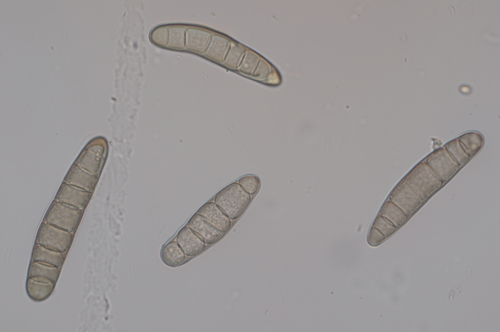
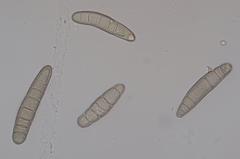 Bipolaris sorokinianae0pathogen
- Outcome
- growth inhibition of B. sorokinianae0
- Direction
- inhibitione0
- Value
- 65.5–71.1%e0
Organisms pictured · Representative pictures of the matched species, not figures from the paper.
Verbatim
e0“The potent three rhizobacterial isolates identified as close neighbours of Bacillus amyloliquefaciens strain TA124, B. subtilis strain SB67 and B. subtilis strain BJ171 caused 65.5–71.1% growth inhibition of B. sorokiniana”
t0“wheat”
Claim · model-written summary
Extracellular organic acid, siderophore, and chitinase enzymes significantly contributed to rhizobacterial fungal growth inhibition and P and Zn solubilization.
- Taxon
- wheatTriticum aestivumt0
- Gene
- chitinase enzymese0
- Outcome
- fungal growth inhibition; and P and Zn solubilizatione0
- Qualifier
- extracellular organic acid, siderophore, and chitinase enzymese0
Not reportedDirection
Organisms pictured · Representative pictures of the matched species, not figures from the paper.
Verbatim
e0“The extracellular organic acid, siderophore, and chitinase enzymes played a significant role in rhizobacterial performance for fungal growth inhibition; and P and Zn solubilization in growth media”
t0“wheat”
Claim · model-written summary
Foliar bioformulations reduced B. sorokiniana disease severity by 15–20%.
- Taxon
- wheatTriticum aestivumt0
- Treatment
- foliar spray of bioformulationse0
- Interactor
- B. sorokinianaBipolaris sorokinianae0pathogen
- Outcome
- B. sorokiniana disease severitye0
- Direction
- reductione0
- Value
- 15–20%e0
Not reportedComparator
Organisms pictured · Representative pictures of the matched species, not figures from the paper.
Verbatim
e0“The foliar spray of bioformulations aids 15–20% reduction in the B. sorokiniana disease severity”
t0“wheat”
Claim · model-written summary
Dual seed and foliar rhizobacterial inoculation increased grain yield by 12.6–51%.
- Taxon
- wheatTriticum aestivumt0
- Treatment
- dual inoculation through seed treatment and foliar spraye0
- Interactor
- rhizobacteriale0symbiont
- Outcome
- grain yielde0
- Value
- 12.6–51e0
Not reportedComparatorDirection
Organisms pictured · Representative pictures of the matched species, not figures from the paper.
Verbatim
e0“The rhizobacterial responsiveness to the dual inoculation through seed treatment and foliar spray was 12.6–51, 15.8–46.3, and 13.2–148.1% for grain yield, P uptake, and disease suppression, respectively”
t0“wheat”
Claim · model-written summary
Dual seed and foliar rhizobacterial inoculation improved P uptake by 15.8–46.3%.
- Taxon
- wheatTriticum aestivumt0
- Treatment
- dual inoculation through seed treatment and foliar spraye0
- Interactor
- rhizobacteriale0symbiont
- Outcome
- P uptakee0
- Value
- 15.8–46.3e0
Not reportedComparatorDirection
Organisms pictured · Representative pictures of the matched species, not figures from the paper.
Verbatim
e0“The rhizobacterial responsiveness to the dual inoculation through seed treatment and foliar spray was 12.6–51, 15.8–46.3, and 13.2–148.1% for grain yield, P uptake, and disease suppression, respectively”
t0“wheat”
Claim · model-written summary
Dual seed and foliar rhizobacterial inoculation improved disease suppression by 13.2–148.1%.
- Taxon
- wheatTriticum aestivumt0
- Treatment
- dual inoculation through seed treatment and foliar spraye0
- Interactor
- rhizobacteriale0symbiont
- Outcome
- disease suppressione0
- Value
- 13.2–148.1%e0
Not reportedComparatorDirection
Organisms pictured · Representative pictures of the matched species, not figures from the paper.
Verbatim
e0“The rhizobacterial responsiveness to the dual inoculation through seed treatment and foliar spray was 12.6–51, 15.8–46.3, and 13.2–148.1% for grain yield, P uptake, and disease suppression, respectively”
t0“wheat”
Claim · model-written summary
Soil and plant changes caused by rhizobacterial bioformulation explained 85% of variation in yield, P nutrition, and disease severity.
- Taxon
- wheatTriticum aestivumt0
- Treatment
- rhizobacterial bioformulatione0
- Outcome
- variability in the yield, P nutrition, and disease severitye0
- Value
- 85%e0
Not reportedDirection
Organisms pictured · Representative pictures of the matched species, not figures from the paper.
Verbatim
e0“The changes caused by rhizobacterial bioformulation in soil (Olsen's–P and microbial biomass carbon) and plant (proline, malondialdehyde, peroxidase, and Na+/K+ ratio) explained 85% variability in the yield, P nutrition, and disease severity”
t0“wheat”
Claim · model-written summary
The authors recommend native rhizobacteria to manage multiple crop stresses in salt-affected agro-ecologies.
- Taxon
- wheatTriticum aestivumt0
- Interactor
- native rhizobacteriae0symbiont
- Outcome
- managing multiple stresses of crops in salt–affected agro-ecologiese0
Organisms pictured · Representative pictures of the matched species, not figures from the paper.
Verbatim
e0“native rhizobacteria with biocontrol and plant growth-promoting capabilities can be an effective option for managing multiple stresses of crops in salt–affected agro-ecologies”
t0“wheat”
The same questions in other papers
inoculation · control · Triticum aestivum (wheat)Positive and negative results
9 papers in the same direction as this paper · 2 in the opposite direction
- negative
- negative
- positive
8 papers more in this group
See all 12 papers →seed treatment · nutrient: content · Triticum aestivum (wheat)Positive and negative results
25 papers in the same direction as this paper · 1 in the opposite direction
- negative
- positive
- positive
23 papers more in this group
See all 27 papers →application · control · Triticum aestivum (wheat)Positive and negative results
33 papers in the same direction as this paper · 4 in the opposite direction · 1 reporting no difference from an alternative
- negative
- negative
- negative
35 papers more in this group
See all 39 papers →application · nutrient: content · Triticum aestivum (wheat)Positive and negative results
256 papers in the same direction as this paper · 17 in the opposite direction · 1 reporting no difference from an alternative
- negative
- no effect
- no effect
271 papers more in this group
See all 275 papers →inoculation · nutrient: content · Triticum aestivum (wheat)Positive and negative results
262 papers in the same direction as this paper · 13 in the opposite direction · 1 reporting no difference from an alternative
- no effect
- no effect
- negative
273 papers more in this group
See all 277 papers →seed treatment · yield · Triticum aestivum (wheat)Positive and negative results
269 papers in the same direction as this paper · 31 in the opposite direction
- no effect
- no effect
- no effect
297 papers more in this group
See all 301 papers →inoculation · yield · Triticum aestivum (wheat)Positive and negative results
548 papers in the same direction as this paper · 60 in the opposite direction · 5 reporting no difference from an alternative
- negative
- negative
- negative
610 papers more in this group
See all 614 papers →application · yield · Triticum aestivum (wheat)Positive and negative results
794 papers in the same direction as this paper · 75 in the opposite direction · 7 reporting no difference from an alternative
- no effect
- negative
- no effect
873 papers more in this group
See all 877 papers →8 of 10 groups shown: named compounds and organisms first, then groups whose results differ (checked claim by claim), then those with positive and negative results, then the smaller groups.
Claims are grouped by organism, treatment and what was measured or targeted. A paper counts as positive when any of its claims in the group is positive.