Abstract
The fall armyworm (FAW), Spodoptera frugiperda , is a highly destructive pest recently reported in various Asian countries and originated in the subtropical regions of America. It was first recorded in Nepal on May 9, 2019. This invasive species poses a significant threat to maize production because it can undergo multiple generations, migrate, and feed on a wide range of host plants. A laboratory study was conducted with 3 categories of pesticides: conventional, newer, and bio‐rational. The study focused on evaluating the efficacy of these pesticides on the third‐instar larvae of S. frugiperda . The treatments included (1) newer chemical pesticides: spinosad 45% suspension concentrate (SC) (Tracer 1 ml/3 L of water), spinetoram 11.7% SC (Delegate 0.5 ml/L of water), chlorantraniliprole 18.5% SC (Allcora 1 ml/2.5 L of water), emamectin benzoate 5.7% water dispersible granules (WDG) (top killer 1 g/2.5 L), (2) conventional pesticide: chlorpyrifos 50% EC (Predator 2 ml/L), and (3) bio‐rational pesticides : Bacillus thuringiensis var kurstaki 0.5% wettable powder (WP) (Maharashtra 2gm/L), Metarhizium anisopliae 1.0% WP (Kalichakra 5 ml/L), Beauveria bassiana 2% AS (DamanL 5 ml/L), Azadirachta indica 4.5% (Neemix 5 ml/L), Syzygium aromaticum 100% v/v (Kanti herbal Clove oil 3 ml/L), and spinosad 45% SC (Tracer 0.3 ml/L). Fresh maize leaves were treated using the leaf dip method and then fed to 3rd instar larvae of FAW. The results revealed that spinetoram and spinosad caused 100% larval mortality within the first 24 hours after treatment. Similarly, spinosad (99.99%) and clove oil (76.64%) were the most effective bio‐rational pesticides followed by B. bassiana and B. thuringiensis . The newer and bio‐rational pesticides that showed high efficacy could be suggested for further study in farmers’ fields. They could be recommended for testing as a component of integrated pest management for effective management of FAW in Nepal.
Abstract from the paper’s OpenAlex record; open copy licensed cc-by. Read at the source ↗
The text the model read, with the source record’s inline markup (italics, sub- and superscripts) rendered and its character entities decoded; quote offsets refer to the raw text.
Claims 7
Claim · model-written summary
Spinetoram caused 100% fall armyworm larval mortality within 24 hours.
- Treatment
- spinetorame0
- Interactor
- Spodoptera frugiperda
 Spodoptera frugiperdat0pest
- Outcome
- larval mortalitye0
- Value
- 100%e0
 Zea mays
Not reportedComparatorDirection
Organisms pictured · Representative pictures of the matched species, not figures from the paper.


Verbatim
e0“spinetoram and spinosad caused 100% larval mortality within the first 24 hours after treatment.”
t0“Spodoptera frugiperda”
e1“Fresh maize leaves were treated using the leaf dip method and then fed to 3rd instar larvae of FAW.”
Claim · model-written summary
Spinosad caused 100% larval mortality within 24 hours.
- Treatment
- spinosade0
- Interactor
- Spodoptera frugiperdaSpodoptera frugiperdat0pest
- Outcome
- larval mortalitye0
- Value
- 100%e0
Not reportedComparatorDirection
Organisms pictured · Representative pictures of the matched species, not figures from the paper.
Verbatim
e0“spinetoram and spinosad caused 100% larval mortality within the first 24 hours after treatment.”
t0“Spodoptera frugiperda”
e1“Fresh maize leaves were treated using the leaf dip method and then fed to 3rd instar larvae of FAW.”
Claim · model-written summary
Bio-rational spinosad had 99.99% efficacy against fall armyworm larvae.
- Treatment
- spinosade0
- Interactor
- Spodoptera frugiperdaSpodoptera frugiperdat0pest
- Outcome
- most effective bio‐rational pesticidese0
- Direction
- most effectivee0
- Value
- 99.99%e0
Not reportedComparator
Organisms pictured · Representative pictures of the matched species, not figures from the paper.
Verbatim
e0“spinosad (99.99%) and clove oil (76.64%) were the most effective bio‐rational pesticides followed by B. bassiana and B. thuringiensis .”
t0“Spodoptera frugiperda”
e1“Fresh maize leaves were treated using the leaf dip method and then fed to 3rd instar larvae of FAW.”
Claim · model-written summary
Clove oil had 76.64% efficacy against fall armyworm larvae.
- Treatment
- clove oile0
- Interactor
- Spodoptera frugiperdaSpodoptera frugiperdat0pest
- Outcome
- most effective bio‐rational pesticidese0
- Direction
- most effectivee0
- Value
- 76.64%e0
Not reportedComparator
Organisms pictured · Representative pictures of the matched species, not figures from the paper.
Verbatim
e0“spinosad (99.99%) and clove oil (76.64%) were the most effective bio‐rational pesticides followed by B. bassiana and B. thuringiensis .”
t0“Spodoptera frugiperda”
e1“Fresh maize leaves were treated using the leaf dip method and then fed to 3rd instar larvae of FAW.”
Claim · model-written summary
B. bassiana followed the top bio-rational pesticides in efficacy.
- Treatment
- B. bassianae0
- Interactor
- Spodoptera frugiperdaSpodoptera frugiperdat0pest
- Second interactor
- B. bassiana
 Beauveria bassianae0biocontrol_agent
- Outcome
- followed by B. bassianae0
Not reportedComparatorDirection
Organisms pictured · Representative pictures of the matched species, not figures from the paper.

Verbatim
e0“followed by B. bassiana and B. thuringiensis”
t0“Spodoptera frugiperda”
e1“Fresh maize leaves were treated using the leaf dip method and then fed to 3rd instar larvae of FAW.”
Claim · model-written summary
B. thuringiensis followed the top bio-rational pesticides in efficacy.
- Treatment
- B. thuringiensise0
- Interactor
- Spodoptera frugiperdaSpodoptera frugiperdat0pest
- Second interactor
- B. thuringiensis
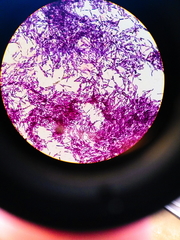 Bacillus thuringiensise0biocontrol_agent
- Outcome
- followed by B. bassiana and B. thuringiensise0
Not reportedComparatorDirection
Organisms pictured · Representative pictures of the matched species, not figures from the paper.
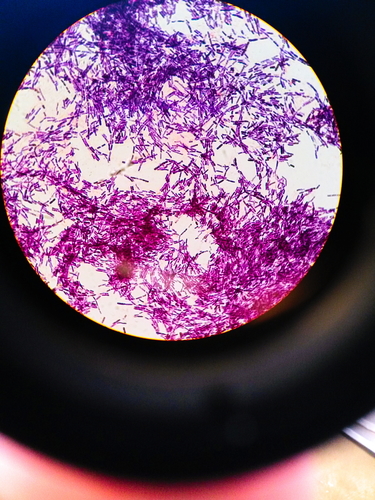
Verbatim
e0“followed by B. bassiana and B. thuringiensis”
t0“Spodoptera frugiperda”
e1“Fresh maize leaves were treated using the leaf dip method and then fed to 3rd instar larvae of FAW.”
Claim · model-written summary
The authors recommend field testing effective pesticides for FAW management in Nepal.
Organisms pictured · Representative pictures of the matched species, not figures from the paper.
Verbatim
e0“They could be recommended for testing as a component of integrated pest management for effective management of FAW in Nepal.”
t0“Spodoptera frugiperda”
e1“Fresh maize leaves were treated using the leaf dip method and then fed to 3rd instar larvae of FAW.”
The same questions in other papers
Beauveria bassiana · Spodoptera frugiperda · Zea mays (maize)Positive and negative results
10 papers in the same direction as this paper · 3 in the opposite direction
- negative
- negative
- negative
10 papers more in this group
See all 14 papers →Syzygium aromaticum · Spodoptera frugiperda · Zea mays (maize)Results agree
1 paper in the same direction as this paper
- positive
Bacillus thuringiensis · Spodoptera frugiperda · Zea mays (maize)Results agree
7 papers in the same direction as this paper
- positive
- positive
- positive
4 papers more in this group
See all 8 papers →spinosad · Spodoptera frugiperda · Zea mays (maize)Results agree
25 papers in the same direction as this paper
- positive
- positive
- positive
22 papers more in this group
See all 26 papers →Spinetoram · Spodoptera frugiperda · Zea mays (maize)Results agree
27 papers in the same direction as this paper
- positive
- positive
- positive
24 papers more in this group
See all 28 papers →Claims are grouped by organism, treatment and what was measured or targeted. A paper counts as positive when any of its claims in the group is positive.