Abstract
Copper can be a soil contaminant at concentrations that are toxic to plants, particularly because of copper-induced oxidative stress. The legume-rhizobia partnership that allows for biological nitrogen fixation is sensitive to oxidative stress, and this study investigates if copper acts directly on the machinery of nitrogen fixation, or indirectly via toxicity to the entire plant. When Lotus japonicus inoculated with its rhizobial partner Mesorhizobium loti was exposed to 300 or 450 µM of copper, biomass was reduced by 30-40% in the shoots, 40-55% in the roots, and 40-60% in the nodules relative to control. While concentrations of copper in shoots and roots increased in proportion to the amount of copper in the growth medium, concentrations of copper in nodules did not vary in response to copper treatment. Malondialdehyde, a marker of oxidative damage, in the nodule similarly did not vary with copper treatment. However, nitrogen fixation and ascorbate peroxidase activity decreased by 40-45% and 40-60%, respectively, which can be indicators of early nodule senescence. This would suggest that copper-induced reduction in nodule activity is not directly due to oxidative stress in the nodules; it is due to stress on the host plant that limits its ability to support its symbionts.
Abstract from the paper’s OpenAlex record; open copy licensed cc-by. Read at the source ↗
The text the model read, with the source record’s inline markup (italics, sub- and superscripts) rendered and its character entities decoded; quote offsets refer to the raw text.
Claims 10
Claim · model-written summary
Copper reduced Lotus japonicus shoot biomass by 30-40% relative to control in copper-exposed nodulated plants
- Taxon
- Lotus japonicus
 Lotus japonicuse1
- Organ / stage
- shootse2
- Treatment
- 300 or 450 µM of coppere1
- Interactor
- Mesorhizobium loti
 Mesorhizobium lotie1symbiont
- Outcome
- biomasse2
- Direction
- reducede2
- Value
- 30-40%e2
- Comparator
- controle2
Organisms pictured · Representative pictures of the matched species, not figures from the paper.
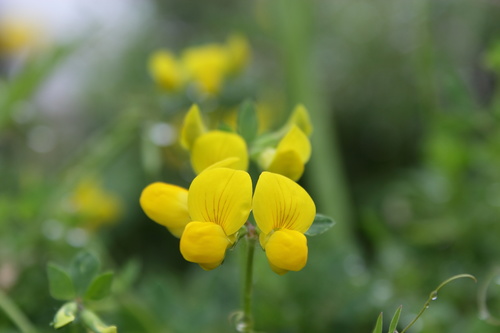

Verbatim
e1“When Lotus japonicus inoculated with its rhizobial partner Mesorhizobium loti was exposed to 300 or 450 µM of copper”
e2“biomass was reduced by 30-40% in the shoots, 40-55% in the roots, and 40-60% in the nodules relative to control”
Claim · model-written summary
Copper reduced Lotus japonicus root biomass by 40-55% relative to control in copper-exposed nodulated plants
- Taxon
- Lotus japonicusLotus japonicuse1
- Organ / stage
- rootse2
- Treatment
- 300 or 450 µM of coppere1
- Interactor
- Mesorhizobium lotiMesorhizobium lotie1symbiont
- Outcome
- biomasse2
- Direction
- reducede2
- Value
- 40-55%e2
- Comparator
- controle2
Organisms pictured · Representative pictures of the matched species, not figures from the paper.
Verbatim
e1“When Lotus japonicus inoculated with its rhizobial partner Mesorhizobium loti was exposed to 300 or 450 µM of copper”
e2“biomass was reduced by 30-40% in the shoots, 40-55% in the roots, and 40-60% in the nodules relative to control”
Claim · model-written summary
Copper reduced Lotus japonicus nodule biomass by 40-60% relative to control
- Taxon
- Lotus japonicusLotus japonicuse1
- Organ / stage
- nodulese2
- Treatment
- 300 or 450 µM of coppere1
- Interactor
- Mesorhizobium lotiMesorhizobium lotie1symbiont
- Outcome
- biomasse2
- Direction
- reducede2
- Value
- 40-60%e2
- Comparator
- controle2
Organisms pictured · Representative pictures of the matched species, not figures from the paper.
Verbatim
e1“When Lotus japonicus inoculated with its rhizobial partner Mesorhizobium loti was exposed to 300 or 450 µM of copper”
e2“biomass was reduced by 30-40% in the shoots, 40-55% in the roots, and 40-60% in the nodules relative to control”
Claim · model-written summary
Copper concentrations in Lotus japonicus shoots and roots increased in proportion to the copper supply
- Taxon
- Lotus japonicusLotus japonicuse1
- Treatment
- the amount of copper in the growth mediume3
- Outcome
- concentrations of copper in shoots and rootse3
- Direction
- increased in proportion toe3
Organisms pictured · Representative pictures of the matched species, not figures from the paper.
Verbatim
e1“When Lotus japonicus inoculated with its rhizobial partner Mesorhizobium loti was exposed to 300 or 450 µM of copper”
e3“While concentrations of copper in shoots and roots increased in proportion to the amount of copper in the growth medium”
Claim · model-written summary
Copper concentrations in Lotus japonicus nodules did not vary with copper treatment
- Taxon
- Lotus japonicusLotus japonicuse1
- Organ / stage
- nodulese4
- Treatment
- copper treatmente4
- Outcome
- concentrations of copper in nodulese4
- Direction
- did not varye4
Organisms pictured · Representative pictures of the matched species, not figures from the paper.
Verbatim
e1“When Lotus japonicus inoculated with its rhizobial partner Mesorhizobium loti was exposed to 300 or 450 µM of copper”
e4“concentrations of copper in nodules did not vary in response to copper treatment”
Claim · model-written summary
Malondialdehyde in Lotus japonicus nodules did not vary with copper treatment
- Taxon
- Lotus japonicusLotus japonicuse1
- Organ / stage
- nodulee5
- Treatment
- copper treatmente5
- Outcome
- Malondialdehydee5
- Direction
- did not varye5
Organisms pictured · Representative pictures of the matched species, not figures from the paper.
Verbatim
e1“When Lotus japonicus inoculated with its rhizobial partner Mesorhizobium loti was exposed to 300 or 450 µM of copper”
e5“Malondialdehyde, a marker of oxidative damage, in the nodule similarly did not vary with copper treatment”
Claim · model-written summary
Copper exposure decreased nitrogen fixation in Lotus japonicus by 40-45%
- Taxon
- Lotus japonicusLotus japonicuse1
- Treatment
- 300 or 450 µM of coppere1
- Interactor
- Mesorhizobium lotiMesorhizobium lotie1symbiont
- Outcome
- nitrogen fixatione6
- Direction
- decreasede6
- Value
- 40-45%e6
- Qualifier
- which can be indicators of early nodule senescencee6
Not reportedComparator
Organisms pictured · Representative pictures of the matched species, not figures from the paper.
Verbatim
e1“When Lotus japonicus inoculated with its rhizobial partner Mesorhizobium loti was exposed to 300 or 450 µM of copper”
e6“nitrogen fixation and ascorbate peroxidase activity decreased by 40-45% and 40-60%, respectively, which can be indicators of early nodule senescence”
Claim · model-written summary
Copper exposure decreased ascorbate peroxidase activity in Lotus japonicus nodules by 40-60%
- Taxon
- Lotus japonicusLotus japonicuse1
- Treatment
- 300 or 450 µM of coppere1
- Interactor
- Mesorhizobium lotiMesorhizobium lotie1symbiont
- Outcome
- ascorbate peroxidase activitye6
- Direction
- decreasede6
- Value
- 40-60%e6
Not reportedComparator
Organisms pictured · Representative pictures of the matched species, not figures from the paper.
Verbatim
e1“When Lotus japonicus inoculated with its rhizobial partner Mesorhizobium loti was exposed to 300 or 450 µM of copper”
e6“nitrogen fixation and ascorbate peroxidase activity decreased by 40-45% and 40-60%, respectively, which can be indicators of early nodule senescence”
Claim · model-written summary
Copper-induced reduction in nodule activity is not directly due to oxidative stress in the nodules
- Taxon
- Lotus japonicusLotus japonicuse1
- Outcome
- copper-induced reduction in nodule activitye7
- Qualifier
- not directly due to oxidative stress in the nodulese7
Organisms pictured · Representative pictures of the matched species, not figures from the paper.
Verbatim
e1“When Lotus japonicus inoculated with its rhizobial partner Mesorhizobium loti was exposed to 300 or 450 µM of copper”
e7“This would suggest that copper-induced reduction in nodule activity is not directly due to oxidative stress in the nodules; it is due to stress on the host plant that limits its ability to support its symbionts”
Claim · model-written summary
Copper-induced reduction in nodule activity is due to stress on the host plant that limits its support of symbionts
- Taxon
- Lotus japonicusLotus japonicuse1
- Outcome
- copper-induced reduction in nodule activitye7
- Qualifier
- stress on the host plant that limits its ability to support its symbiontse7
Organisms pictured · Representative pictures of the matched species, not figures from the paper.
Verbatim
e1“When Lotus japonicus inoculated with its rhizobial partner Mesorhizobium loti was exposed to 300 or 450 µM of copper”
e7“This would suggest that copper-induced reduction in nodule activity is not directly due to oxidative stress in the nodules; it is due to stress on the host plant that limits its ability to support its symbionts”