View: List Claim type Research area Organism Taxon as written Decade Paper A claim can belong to several research areas, so group counts add up to more than the total.
Observation observed original result negative measured Claim · model-written summary
The magnitude of the decrease in these physiological variables followed the order T3 > T1 > T2 among the barnyardgrass treatments.
magnitude of decrease e0 Verbatim
e0 “the magnitude of decrease was in the order of T3 > T1 > T2 ”
✓ located verbatim in the source · abstract, characters 1215–1273 t0 “rice ”
✓ located verbatim in the source · title, characters 58–62 Other claims from this paper (18) Observation observed original result negative measured Claim · model-written summary
Individual BakSib microorganism groups showed a maximum decline of two orders of magnitude .
individual groups of Baksiba microorganisms e0 two orders of magnitude e0 Verbatim
e0 “maximum decrease noted for individual groups of Baksiba microorganisms is two orders of magnitude ”
✓ located verbatim in the source · abstract, characters 1453–1550 t0 “winter barley ”
✓ located verbatim in the source · title, characters 53–66 Other claims from this paper (12) Association observed original result mixed measured Claim · model-written summary
The magnitude of constituent changes varied with tomato developmental stage at infection.
plant developmental stages e0 extent of increase or decrease of such constituents e0 increase or decrease e0 Verbatim
e0 “The extent of increase or decrease of such constituents was varied based on the plant developmental stages at the time of infection. ”
✓ located verbatim in the source · abstract, characters 730–862 t0 “TYLCV Influences Biomolecules in Plant Tissues ”
✓ located verbatim in the source · title, characters 0–46 e1 “infected tomato leave tissues ”
✓ located verbatim in the source · abstract, characters 271–300 Other claims from this paper (6) Observation observed original result negative measured Claim · model-written summary
Individual BakSib microorganism groups showed a maximum decline of two orders of magnitude .
individual groups of Baksiba microorganisms e0 two orders of magnitude e0 Verbatim
e0 “maximum decrease noted for individual groups of Baksiba microorganisms is two orders of magnitude ”
✓ located verbatim in the source · abstract, characters 1453–1550 t0 “winter barley ”
✓ located verbatim in the source · title, characters 53–66 Other claims from this paper (12) Association observed original result negative measured Claim · model-written summary
Delaying weed removal increased weed biomass by the same magnitude .
removal of weeds e0 Verbatim
e0 “The delay in establishment and removal of weeds resulted in weed biomass decrease and increase of the same magnitude , respectively, regardless of transplant type. ”
✓ located verbatim in the source · abstract, characters 1179–1341 t0 “Tomato ”
✓ located verbatim in the source · title, characters 72–78 Other claims from this paper (8) Intervention effect observed original result positive measured Claim · model-written summary
Phage pretreatment lowered the pear fire blight pathogen titre by 1–3 orders of magnitude .
treatment with a bacteriophage 1 h before infection with the pathogen e1 titer of the pathogen e1 1–3 orders of magnitude e1 inoculum of 106 –108 CFU/mL e1 Not reported Comparator
Verbatim
e0 “pear flowers and leaves ”
✓ located verbatim in the source · abstract, characters 150–173 e1 “a decrease in the titer of the pathogen by 1–3 orders of magnitude was shown with E. amylovora in the inoculum of 106 –108 CFU/mL and treatment with a bacteriophage 1 h before infection with the pathogen. ”
✓ located verbatim in the source · abstract, characters 356–560 Other claims from this paper (1) Observation observed original result negative measured Claim · model-written summary
The magnitude of the decrease in these physiological variables followed the order T3 > T1 > T2 among the barnyardgrass treatments.
magnitude of decrease e0 Verbatim
e0 “the magnitude of decrease was in the order of T3 > T1 > T2 ”
✓ located verbatim in the source · abstract, characters 1215–1273 t0 “rice ”
✓ located verbatim in the source · title, characters 58–62 Other claims from this paper (18) Association observed original result mixed measured Claim · model-written summary
The magnitude of constituent changes varied with tomato developmental stage at infection.
plant developmental stages e0 extent of increase or decrease of such constituents e0 increase or decrease e0 Verbatim
e0 “The extent of increase or decrease of such constituents was varied based on the plant developmental stages at the time of infection. ”
✓ located verbatim in the source · abstract, characters 730–862 t0 “TYLCV Influences Biomolecules in Plant Tissues ”
✓ located verbatim in the source · title, characters 0–46 e1 “infected tomato leave tissues ”
✓ located verbatim in the source · abstract, characters 271–300 Other claims from this paper (6) Association observed original result negative measured Claim · model-written summary
Greater defoliation intensity was associated with greater carbohydrate depletion.
intensity of defoliation e2 magnitude of decrease e2 Verbatim
e0 “Acacia karroo plants
✓ located verbatim in the source · abstract, characters 42–62 e1 “following defoliation by goats at different intensities ”
✓ located verbatim in the source · abstract, characters 202–257 e2 “The magnitude of decrease was directly related to the intensity of defoliation. ”
✓ located verbatim in the source · abstract, characters 538–617 Other claims from this paper (7) Mechanism hypothesis original result measured Claim · model-written summary
The form, magnitude , and rate of the Ulmus decline are consistent with a pathogenic attack.
pathogenic attack e2 Verbatim
e2 “The form, magnitude , and rate of decrease of the Ulmus decline at Diss Mere are all consistent with the hypothesis of a pathogenic attack ”
✓ located verbatim in the source · abstract, characters 1061–1198 Other claims from this paper (3) Observation observed original result significant (as stated) measured Claim · model-written summary
Floral resources decrease d significantly after R. ponticum flowered, with variation among sites.
Floral resources e0 magnitude of the decrease varied among sites e0 Verbatim
t0 “Rhododendron ponticum
✓ located verbatim in the source · title, characters 112–133 e0 “Floral resources decrease d significantly after R. ponticum flowering, but the magnitude of the decrease varied among sites ”
✓ located verbatim in the source · abstract, characters 953–1075 Other claims from this paper (7) Intervention effect observed original result measured Claim · model-written summary
Inbreeding depression tended to be smaller under robbing than under netting.
robbing conditions e1 the magnitude of ID e1 Verbatim
e0 “Comastoma pulmonarium produced seeds via selfing at the study site
✓ located verbatim in the source · abstract, characters 490–556 e1 “in comparison with netting, the magnitude of ID under robbing conditions tended to decrease ”
✓ located verbatim in the source · abstract, characters 816–907 Other claims from this paper (6) Intervention effect observed original result positive measured Claim · model-written summary
Phage pretreatment lowered the pear fire blight pathogen titre by 1–3 orders of magnitude .
treatment with a bacteriophage 1 h before infection with the pathogen e1 titer of the pathogen e1 1–3 orders of magnitude e1 inoculum of 106 –108 CFU/mL e1 Not reported Comparator
Verbatim
e0 “pear flowers and leaves ”
✓ located verbatim in the source · abstract, characters 150–173 e1 “a decrease in the titer of the pathogen by 1–3 orders of magnitude was shown with E. amylovora in the inoculum of 106 –108 CFU/mL and treatment with a bacteriophage 1 h before infection with the pathogen. ”
✓ located verbatim in the source · abstract, characters 356–560 Other claims from this paper (1) Association observed original result negative measured Claim · model-written summary
Greater defoliation intensity was associated with greater carbohydrate depletion.
intensity of defoliation e2 magnitude of decrease e2 Verbatim
e0 “Acacia karroo plants
✓ located verbatim in the source · abstract, characters 42–62 e1 “following defoliation by goats at different intensities ”
✓ located verbatim in the source · abstract, characters 202–257 e2 “The magnitude of decrease was directly related to the intensity of defoliation. ”
✓ located verbatim in the source · abstract, characters 538–617 Other claims from this paper (7) Observation observed original result significant (as stated) measured Claim · model-written summary
Floral resources decrease d significantly after R. ponticum flowered, with variation among sites.
Floral resources e0 magnitude of the decrease varied among sites e0 Verbatim
t0 “Rhododendron ponticum
✓ located verbatim in the source · title, characters 112–133 e0 “Floral resources decrease d significantly after R. ponticum flowering, but the magnitude of the decrease varied among sites ”
✓ located verbatim in the source · abstract, characters 953–1075 Other claims from this paper (7) Lexical search (BM25). All words must match; if nothing does, any word. Organism names also match every spelling of the same organism. No semantic search yet.
 Oryza sativat0
 Hordeum vulgare
 Solanum lycopersicum
 Pyrus communis
 Erwinia amylovora
 Vachellia karroo
 Capra hircus
 Ulmus
 Rhododendron ponticum
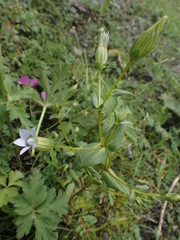 Comastoma pulmonarium