Maintenance of shoot dryweight in the tl mutant at the wild-type level despite larger leaf area was accounted for by a decrease in thickness of leaflet and stipule blades.
decrease in the thickness of the leaflet and stipule bladese1
Verbatim
t0
“pea mutants af and tl”
e1
“The maintenance of shoot dryweight in the tl mutant at the level of wild-type plant while its area considerably increased was accounted for by a decrease in the thickness of the leaflet and stipule blades”
Decrease in rice yield under no-tillage is suggested to be affected by missing and floating hills, paddy soil phase ratio, dissolved oxygen, and shoot and root dryweight.
missing and floating hill, solid and gaseous phase ratio of paddy soil, dissolved oxygen, shoot dry weight, and root dry weighte1
Verbatim
t0
“Rice Transplanted with 10-Day-Old Seedlings”
e1
“There are factors in reducing rice yield in no-tillage cultivation such as missing and floating hill, solid and gaseous phase ratio of paddy soil, dissolved oxygen, shoot dryweight, and root dryweight”
drop of dry matter weight per stem and spikelet surviving abilitye0
Verbatim
e0
“The decrease of spikelet numbers per panicle at higher soil Cu concentrations was chiefly caused by the drop of dry matter weight per stem and spikelet surviving ability”
Large stem surface area and high net assimilation ratio mitigated the effect of shading-related stem dryweight reduction on whole plant dry matter increase.
The authors attributed the shift toward panicle weight types to more differentiated and surviving spikelets with lower production efficiency per dry matter and nitrogen.
“the changes in the plant type from panicle number to panicle weight type may be brought about by the increase of NDS and NSS with a concomitant decrease in the spikelets production efficiency per amount of dry matter produced and N absorbed per stem irrespective of ecospecies.”
“Moreover, the elevated CO2 resulted in a remarkable decrease of root activity, expressed as per unit root dryweight, which might be responsible for decreased N concentration in roots.”
Lexical search (BM25). All words must match; if nothing does, any word. Organism names also match every spelling of the same organism. No semantic search yet.
 Triticum aestivum
 Gossypium hirsutum
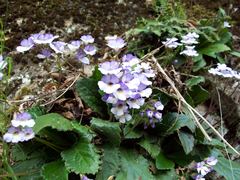 Haberlea rhodopensis
 Lathyrus oleraceus
 Oryza sativa
 Eleocharis kuroguwai
 Allium cepa