View: List Claim type Research area Organism Taxon as written Decade Paper Observation observed original result measured Claim · model-written summary
The isolates showed a high degree of variation in aggressiveness .
high degree of variation e3 Verbatim
t0 “branch dieback in fig trees ”
✓ located verbatim in the source · title, characters 57–84 e3 “principal component analysis showed a high degree of variation in aggressiveness ”
✓ located verbatim in the source · abstract, characters 638–718 Other claims from this paper (6) Observation observed original result measured Claim · model-written summary
Bipolaris isolates varied in seedling aggressiveness .
degree of aggressiveness towards seedlings e0 Not reported Taxon
Verbatim
e0 “Isolates of B. sorokiniana varied in degree of aggressiveness towards seedlings ”
✓ located verbatim in the source · abstract, characters 855–934 Other claims from this paper (9) Method / resource observed original result positive measured Claim · model-written summary
Aggressiveness on the resistant parent estimated aggressiveness on a hybrid population.
a strain e0 pathogen degree of aggressiveness e0 resistant parent e0 Verbatim
e0 “a strain with a relatively strong aggressiveness was best for the selection, and the degree of aggressiveness of a strain to a hybrid population could be estimated by that to the resistant parent. ”
✓ located verbatim in the source · abstract, characters 1300–1496 t0 “rice ”
✓ located verbatim in the source · title, characters 87–91 Other claims from this paper (10) Observation observed original result negative measured Claim · model-written summary
The isolates showed moderate aggressiveness and were assigned to pathogenicity group two.
moderate degree of aggressiveness e0 second pathogenicity group e0 Verbatim
t0 “Triticum aestivum L.
✓ located verbatim in the source · title, characters 82–102 t1 “Fusarium isolates
✓ located verbatim in the source · title, characters 49–66 e0 “The studied cultures were characterized by a moderate degree of aggressiveness and were assigned to the second pathogenicity group. ”
✓ located verbatim in the source · abstract, characters 1296–1427 Other claims from this paper (6) Observation observed original result negative measured Claim · model-written summary
Infestation on hybrids resistant to older races showed high aggressiveness of the new population.
hybrids resistant to the old races e0 broomrape t0 parasite parasite infestation degree e0 Verbatim
e0 “The parasite infestation degree on the hybrids resistant to the old races has showed that this population is very aggressive ”
✓ located verbatim in the source · abstract, characters 751–875 t0 “sunflower broomrape ”
✓ located verbatim in the source · title, characters 32–51 Other claims from this paper (6) Method / resource observed original result basis n/a Claim · model-written summary
A callus culture test is presented to determine aggressiveness of parasitic wood-destroying fungi.
parasitic wood‐destroying fungi e0 pathogen degree of aggressiveness of parasitic wood‐destroying fungi e0 Not reported Comparator Value
Verbatim
e0 “A simple callus test is presented to determine the degree of aggressiveness of parasitic wood‐destroying fungi. The test is based on the growth response of the fungi to in vitro callus culture of the tree species under study ”
✓ located verbatim in the source · abstract, characters 9–233 Observation observed original result negative measured Claim · model-written summary
All isolates were pathogenic in detached potato leaves, with varying aggressiveness .
all the isolates were found pathogenic with varying degree of aggressiveness e0 Verbatim
e0 “Pathogenicity was proved by detached leaf inoculation method and all the isolates were found pathogenic with varying degree of aggressiveness ”
✓ located verbatim in the source · abstract, characters 957–1098 t0 “Potato ”
✓ located verbatim in the source · title, characters 72–78 t1 “Alternaria alternata
✓ located verbatim in the source · title, characters 39–59 Other claims from this paper (8) Observation observed original result measured Claim · model-written summary
Diaporthe species varied greatly in aggressiveness .
variation in aggressiveness e0 Verbatim
e0 “a high degree of variation in aggressiveness was observed ”
✓ located verbatim in the source · abstract, characters 1069–1126 e1 “19 Diaporthe species were isolated ”
✓ located verbatim in the source · abstract, characters 613–647 e2 “branches of Pyrus plants ”
✓ located verbatim in the source · abstract, characters 298–322 Other claims from this paper (5) Association observed original result measured Claim · model-written summary
Pathogen aggressiveness toward the seedlings varied with pH, temperature, light intensity, and accompanying bacteria and actinomycetes.
degree of aggressiveness e0 pH, temperature, light intensity and also by accompanying bacteria and actinomycetes e0 Not reported Direction
Verbatim
e0 “The degree of aggressiveness was affected by pH, temperature, light intensity and also by accompanying bacteria and actinomycetes. ”
✓ located verbatim in the source · abstract, characters 182–312 t0 “pine seedlings ”
✓ located verbatim in the source · title, characters 90–104 Other claims from this paper (2) Observation observed original result no effect measured Claim · model-written summary
Pythium species of different pathogenicity showed no differences in aggressiveness
Verbatim
e0 “There were no differences in aggressiveness among the different species of Pythium with different degree of pathogenicity ”
✓ located verbatim in the source · abstract, characters 3–124 e3 “"Macerating enzyme" activity in extracts of potato tissue decayed by Pythium was correlated to the virulence of the fungus ”
✓ located verbatim in the source · abstract, characters 396–518 Other claims from this paper (6) Lexical search (BM25). All words must match; if nothing does, any word. Organism names also match every spelling of the same organism. No semantic search yet.
 Ficus
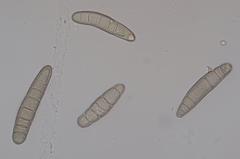 Bipolaris sorokiniana
 Oryza sativa
 Triticum aestivum
 Fusarium
 Helianthus annuus
 Solanum tuberosum
 Alternaria alternata
 Pyrus
 Diaporthe
 Pinus
 Pythium