View: List Claim type Research area Organism Taxon as written Decade Paper Intervention effect observed original result measured Claim · model-written summary
H2O2 treatment increases SOS1 mRNA stability.
H2O2 treatment e0 stability of SOS1 mRNA e0 Not reported Comparator
Verbatim
e0 “H2O2 treatment increases the stability of SOS1 mRNA. ”
✓ located verbatim in the source · abstract, characters 361–413 t0 “Arabidopsis
✓ located verbatim in the source · title, characters 65–76 Other claims from this paper (12) Mechanism author interpretation original result positive basis n/a Claim · model-written summary
The authors suggest Syn increases anthocyanin via H2O2 without changing phytohormone biosynthesis.
anthocyanin accumulation e0 Verbatim
t0 “Grape ”
✓ located verbatim in the source · title, characters 29–34 e0 “Syn increases anthocyanin accumulation through H2O2 production without changing phytohormone biosynthesis ”
✓ located verbatim in the source · abstract, characters 1368–1473 Other claims from this paper (12) Mechanism author interpretation original result measured Claim · model-written summary
The authors inferred that BR-induced Ca M increases H2O2 accumulation.
H2O2 accumulation e0 Verbatim
e0 “the BR-induced Ca M increased H2O2 accumulation ”
✓ located verbatim in the source · abstract, characters 1082–1129 t0 “maize ”
✓ located verbatim in the source · title, characters 93–98 Other claims from this paper (9) Intervention effect observed original result positive measured Claim · model-written summary
Brassinosteroid (BR) induced increases in RBOH1 gene expression, NADPH oxidase activity and apoplastic H2O2 accumulation in wild-type tomato plants.
RBOH1 gene expression, NADPH oxidase activity, apoplastic H2O2 accumulation e0 Not reported Comparator
Verbatim
t0 “tomato ”
✓ located verbatim in the source · title, characters 68–74 e0 “Both BR and ABA induced increases in RBOH1 gene expression, NADPH oxidase activity, apoplastic H2O2 accumulation ”
✓ located verbatim in the source · abstract, characters 305–417 Other claims from this paper (11) Intervention effect Abscisic acid (ABA) induced increases in RBOH1 gene expression, NADPH oxidase activity and apoplastic H2O2 accumulation in wild-type tomato plants. Intervention effect BR increased heat and paraquat (PQ) stress tolerance in wild-type tomato plants. Intervention effect ABA increased heat and paraquat (PQ) stress tolerance in wild-type tomato plants. Intervention effect In the ABA biosynthetic mutant notabilis, BR induced only transient increases in RBOH1 expression, NADPH oxidase activity, H2O2 accumulation and stress tolerance responses. Intervention effect In the BR biosynthetic mutant, ABA induced strong and prolonged increases in RBOH1 expression, NADPH oxidase activity, H2O2 accumulation and stress tolerance responses compared with wild-type plants. Observation ABA levels were reduced in the BR biosynthetic mutant of tomato. Intervention effect Exogenous BR elevated the reduced ABA levels in the BR biosynthetic mutant of tomato. Intervention effect Silencing of RBOH1 compromised BR-induced apoplastic H2O2 production, ABA accumulation and PQ stress responses in tomato. Intervention effect ABA-induced PQ stress responses were largely unchanged in RBOH1-silenced tomato plants. Mechanism The authors propose that BR induces stress tolerance through a positive feedback mechanism in which BR induces rapid transient H2O2 production by NADPH oxidase, which triggers increased ABA biosynthesis, further H2O2 production and prolonged stress tolerance. Intervention effect ABA induces H2O2 production in both the apoplastic and chloroplastic compartments in tomato. Intervention effect observed original result positive measured Claim · model-written summary
Abscisic acid (ABA) induced increases in RBOH1 gene expression, NADPH oxidase activity and apoplastic H2O2 accumulation in wild-type tomato plants.
RBOH1 gene expression, NADPH oxidase activity, apoplastic H2O2 accumulation e0 Not reported Comparator
Verbatim
t0 “tomato ”
✓ located verbatim in the source · title, characters 68–74 e0 “Both BR and ABA induced increases in RBOH1 gene expression, NADPH oxidase activity, apoplastic H2O2 accumulation ”
✓ located verbatim in the source · abstract, characters 305–417 Other claims from this paper (11) Intervention effect Brassinosteroid (BR) induced increases in RBOH1 gene expression, NADPH oxidase activity and apoplastic H2O2 accumulation in wild-type tomato plants. Intervention effect BR increased heat and paraquat (PQ) stress tolerance in wild-type tomato plants. Intervention effect ABA increased heat and paraquat (PQ) stress tolerance in wild-type tomato plants. Intervention effect In the ABA biosynthetic mutant notabilis, BR induced only transient increases in RBOH1 expression, NADPH oxidase activity, H2O2 accumulation and stress tolerance responses. Intervention effect In the BR biosynthetic mutant, ABA induced strong and prolonged increases in RBOH1 expression, NADPH oxidase activity, H2O2 accumulation and stress tolerance responses compared with wild-type plants. Observation ABA levels were reduced in the BR biosynthetic mutant of tomato. Intervention effect Exogenous BR elevated the reduced ABA levels in the BR biosynthetic mutant of tomato. Intervention effect Silencing of RBOH1 compromised BR-induced apoplastic H2O2 production, ABA accumulation and PQ stress responses in tomato. Intervention effect ABA-induced PQ stress responses were largely unchanged in RBOH1-silenced tomato plants. Mechanism The authors propose that BR induces stress tolerance through a positive feedback mechanism in which BR induces rapid transient H2O2 production by NADPH oxidase, which triggers increased ABA biosynthesis, further H2O2 production and prolonged stress tolerance. Intervention effect ABA induces H2O2 production in both the apoplastic and chloroplastic compartments in tomato. Intervention effect observed original result positive measured Claim · model-written summary
Putrescine inhibited increases in superoxide anion production rate and H2O2 concentration.
putrescine treatment e0 superoxide anion production rate and H2O2 concentration e0 inhibited increases e0 Not reported Comparator
Verbatim
e0 “putrescine treatment inhibited increases in superoxide anion production rate and H2O2 concentration ”
✓ located verbatim in the source · abstract, characters 461–560 e1 “cold-stored kiwifruit (Actinidia chinensis Planch. var. chinensis 'Hongyang') ”
✓ located verbatim in the source · abstract, characters 203–280 Other claims from this paper (8) Observation observed original result positive measured Claim · model-written summary
Pathogen attack increases H2O2 production in rice.
pathogen e0 pathogen production of H2O2 e0 Verbatim
e0 “Upon pathogen attack, rice plants increase the production of H2O2 ”
✓ located verbatim in the source · abstract, characters 403–468 Other claims from this paper (9) Intervention effect observed original result negative measured Claim · model-written summary
DMTU severely inhibited the H2O2 -associated increases .
addition of dimethylthiourea e0 Not reported Comparator
Verbatim
e0 “these increases were severely inhibited by addition of dimethylthiourea (DMTU, a chemical trap for H2O2 ) ”
✓ located verbatim in the source · abstract, characters 788–892 t0 “radish sprouts ”
✓ located verbatim in the source · title, characters 118–132 Other claims from this paper (11) Observation observed original result negative measured Claim · model-written summary
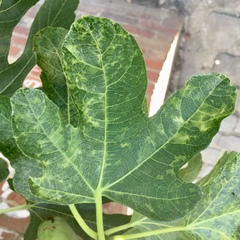
FMV infection increased H2O2 content in figs.
Verbatim
e0 “FMV infection also caused increases in H2O2 and malondialdehyde (MDA) contents. ”
✓ located verbatim in the source · abstract, characters 412–491 t0 “fig ”
✓ located verbatim in the source · title, characters 14–17 Other claims from this paper (5) Association observed original result negative measured Claim · model-written summary
H2O2 content increases during seed desiccation.
Verbatim
e0 “Relative electrolytic leakage (REC) and H2O2 content gradually increase during this process ”
✓ located verbatim in the source · abstract, characters 652–743 t0 “Sassafras tzumu (Hemsl.) Hemsl.
✓ located verbatim in the source · title, characters 58–89 Other claims from this paper (12) Lexical search (BM25). All words must match; if nothing does, any word. Organism names also match every spelling of the same organism. No semantic search yet.
 Arabidopsist0
 Zea mays
 Solanum lycopersicum
 Actinidia deliciosa
 Oryza sativa
 Emaravirus fici
 Sassafras tzumu