Sphagnum lescurii 20 claims

species · family Sphagnaceae · green plant · NCBI Taxonomy ↗

2 spellings

Sphagnum lescurii
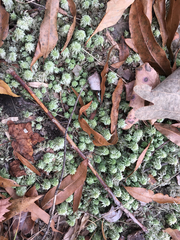
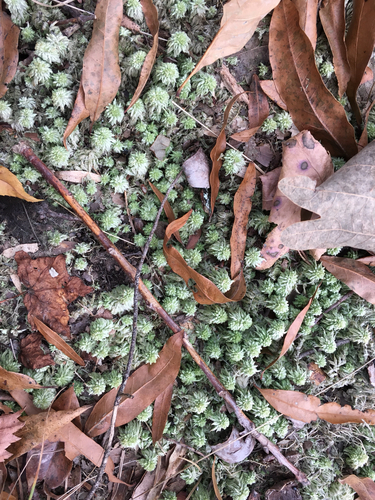
Sphagnum lescuriiAlan Weakley · CC0 · iNaturalist ↗
Observationobservedoriginal resultmeasured

Claim · model-written summary

There was limited evidence of introgression between allodiploid and haploid S. lescurii.

Taxon
S. lescuriiSphagnum lescuriie0
Outcome
introgression between allodiploid and haploid S. lescuriie0
Qualifier
limited (but some)e0

Verbatim

e0

“There was limited (but some) evidence of introgression between allodiploid and haploid S. lescurii”

✓ located verbatim in the source · abstract, characters 1666–1764

Title

Interploidal hybridization and mating patterns in the Sphagnum subsecundum complex

M. RICCA; P. SZÖVÉNYI; E. M. TEMSCH; et al. Molecular Ecology 2011. doi:10.1111/j.1365-294x.2011.05170.x

Other claims from this paper (9)
Observationobservedoriginal resultmeasured

Claim · model-written summary

S. lescurii and S. inundatum each include haploid and diploid populations.

Taxon
Sphagnum lescuriiSphagnum lescuriie0
Outcome
both haploid and diploid populationse0

Verbatim

e0

“Two taxonomic species, Sphagnum lescurii and Sphagnum inundatum, include both haploid and diploid populations”

✓ located verbatim in the source · abstract, characters 480–589

Title

Allopolyploidy and homoploid hybridization in the Sphagnum subsecundum complex (Sphagnaceae: Bryophyta)

MARIANA RICCA; A. JONATHAN SHAW Biological Journal of the Linnean Society 2009. doi:10.1111/j.1095-8312.2009.01340.x

Other claims from this paper (6)
Observationobservedoriginal resultmeasured

Claim · model-written summary

The species were not genetically differentiated within ploidy levels.

Taxon
S. lescuriiSphagnum lescuriie0
Outcome
not genetically differentiatede0
Comparator
S. inundatume0

Verbatim

e0

“Within each ploidal level, S. lescurii and S. inundatum are not genetically differentiated”

✓ located verbatim in the source · abstract, characters 591–681

Title

Allopolyploidy and homoploid hybridization in the Sphagnum subsecundum complex (Sphagnaceae: Bryophyta)

MARIANA RICCA; A. JONATHAN SHAW Biological Journal of the Linnean Society 2009. doi:10.1111/j.1095-8312.2009.01340.x

Other claims from this paper (6)
Observationobservedoriginal resultmeasured

Claim · model-written summary

Diploid S. lescurii arose from haploid S. lescurii and S. subsecundum.

Taxon
S. lescuriiSphagnum lescuriie0
Outcome
allopolyploid between haploid S. lescurii and (haploid) S. subsecundume0

Verbatim

e0

“Diploid S. lescurii is an allopolyploid between haploid S. lescurii and (haploid) S. subsecundum”

✓ located verbatim in the source · abstract, characters 811–907

Title

Allopolyploidy and homoploid hybridization in the Sphagnum subsecundum complex (Sphagnaceae: Bryophyta)

MARIANA RICCA; A. JONATHAN SHAW Biological Journal of the Linnean Society 2009. doi:10.1111/j.1095-8312.2009.01340.x

Other claims from this paper (6)
Observationobservedoriginal resultmeasured

Claim · model-written summary

Some plants of S. lescurii are heterozygous at most microsatellite loci, but others have only one allele at each locus.

Taxon
S. lescuriiSphagnum lescuriie0
Outcome
heterozygous at most loci, but others have only one allele at each locuse0

Verbatim

e0

“Microsatellite analyses indicated that some plants of S. inundatum and S. lescurii are heterozygous at most loci, but others have only one allele at each locus”

✓ located verbatim in the source · abstract, characters 248–407

Title

Cytotype variation and allopolyploidy in North American species of the Sphagnum subsecundum complex (Sphagnaceae)

Mariana Ricca; Francis W. Beecher; Sandra B. Boles; et al. American Journal of Botany 2008. doi:10.3732/ajb.0800148

Other claims from this paper (10)
Observationobservedoriginal resultmeasured

Claim · model-written summary

S. lescurii includes both haploid and diploid populations.

Taxon
S. lescuriiSphagnum lescuriie0
Outcome
include both haploid and diploid populationse0

Verbatim

e0

“S. lescurii and S. inundatum include both haploid and diploid populations”

✓ located verbatim in the source · abstract, characters 749–822

Title

Cytotype variation and allopolyploidy in North American species of the Sphagnum subsecundum complex (Sphagnaceae)

Mariana Ricca; Francis W. Beecher; Sandra B. Boles; et al. American Journal of Botany 2008. doi:10.3732/ajb.0800148

Other claims from this paper (10)
Associationobservedoriginal resultmeasured

Claim · model-written summary

The frequency of diploid plants in S. lescurii increases with latitude.

Taxon
S. lescuriiSphagnum lescuriie0
Outcome
frequency of diploid plantse0
Direction
increasese0
Setting
latitudee0

Verbatim

e0

“The frequency of diploid plants in S. lescurii increases with latitude”

✓ located verbatim in the source · abstract, characters 824–894

Title

Cytotype variation and allopolyploidy in North American species of the Sphagnum subsecundum complex (Sphagnaceae)

Mariana Ricca; Francis W. Beecher; Sandra B. Boles; et al. American Journal of Botany 2008. doi:10.3732/ajb.0800148

Other claims from this paper (10)
Observationobservedoriginal resultmeasured

Claim · model-written summary

In one population of S. lescurii, haploid and diploid cytotypes co-occurred but were genetically differentiated, with no evidence of interbreeding.

Taxon
S. lescuriiSphagnum lescuriie0
Outcome
both cytotypes co-occurred but were genetically differentiated with no evidence of interbreedinge0

Verbatim

e0

“In an analysis of one population of S. lescurii, both cytotypes co-occurred but were genetically differentiated with no evidence of interbreeding”

✓ located verbatim in the source · abstract, characters 896–1041

Title

Cytotype variation and allopolyploidy in North American species of the Sphagnum subsecundum complex (Sphagnaceae)

Mariana Ricca; Francis W. Beecher; Sandra B. Boles; et al. American Journal of Botany 2008. doi:10.3732/ajb.0800148

Other claims from this paper (10)
Observationobservedoriginal resultmeasured

Claim · model-written summary

The Sphagnum spore exine consists of two layers, an inner lamellate A layer and a thick homogenous outer B layer.

Taxon
Sphagnum lescuriiSphagnum lescuriit0
Organ / stage
spore exinee1
Outcome
two layerse1
Qualifier
inner, lamellate layer (A layer) and a thick, homogenous, outer layer (B layer)e1

Verbatim

t0

“Spore wall development in Sphagnum lescurii”

✓ located verbatim in the source · title, characters 0–43
e1

“The Sphagnum spore exine consists of two layers: an inner, lamellate layer (A layer) and a thick, homogenous, outer layer (B layer)”

✓ located verbatim in the source · abstract, characters 55–186

Title

Spore wall development in Sphagnum lescurii

Roy Curtiss Brown; Betty E. Lemmon; Zane B. Carothers Canadian Journal of Botany 1982. doi:10.1139/b82-293

Other claims from this paper (11)
Observationobservedoriginal resultmeasured

Claim · model-written summary

The spore wall of Sphagnum is unique in the Bryophyta, unlike the exine of other mosses.

Taxon
Sphagnum lescuriiSphagnum lescuriit0
Outcome
spore walle0
Qualifier
unique in the Bryophytae0
Comparator
other mossese2

Verbatim

t0

“Spore wall development in Sphagnum lescurii”

✓ located verbatim in the source · title, characters 0–43
e0

“The spore wall of Sphagnum is unique in the Bryophyta”

✓ located verbatim in the source · abstract, characters 0–53
e2

“The exine of other mosses consists of only the outermost homogenous layer and, at most, a thin ill-defined opaque layer”

✓ located verbatim in the source · abstract, characters 188–307

Title

Spore wall development in Sphagnum lescurii

Roy Curtiss Brown; Betty E. Lemmon; Zane B. Carothers Canadian Journal of Botany 1982. doi:10.1139/b82-293

Other claims from this paper (11)