
Claim · model-written summary
Few Fabaceae were highly selected, including Baptisia, Trifolium pratense and Vicia.
- Taxon
- Baptisia spp., Trifolium pratense , and Vicia spp.
 Vicia
 Baptisia
 Trifolium pratensee0
- Outcome
- highly selectede0
 Bombus
Verbatim
e0“Only a few Fabaceae were highly selected ( Baptisia spp., Trifolium pratense , and Vicia spp.)”
e1“bumble bees selected for native planted species”
Title
Bumble bee banquet: Genus‐ and species‐level floral selection by Midwestern Bombus
Jessie Lanterman Novotny; Andrew Lybbert; Paige Reeher; et al. Ecosphere 2023. doi:10.1002/ecs2.4425
Other claims from this paper (14)
- Observation Bombus selected flowers nonrandomly.
- Observation The most strongly preferred plants included Asclepias, Cirsium and Convolvulaceae.
- Observation Other strongly preferred plants included Dipsacus, Echinacea and Monarda.
- Observation Penstemon and Silphium were among the strongly preferred plants.
- Observation Securigera varia was preferred only during peak bloom.
- Observation T. hybridum and Melilotus were not preferred by bumble bees.
- Association Bumble bee diets differed among habitats.
- Observation In restored meadows bumble bees selected native planted species including Monarda, Asclepias and Echinacea.
- Association Seasonal diets and preferences shifted with plant phenology.
- Method / resource Rarefaction detected almost all summer diet plants of three common Bombus species.
- Method / resource Sampling did not fully characterize diets of five less common species.
- Observation Common Bombus species differed in feeding niches.
- Observation Three rarer Bombus species had high diet overlap.
- Observation Five of eight Bombus species most strongly preferred a non-native plant.
 Clematis
 Mirabilis
 Coreopsis
 Galium
 Rhynchospora
 Silphium
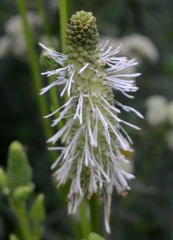 Sanguisorba
 Matelea
 Symphyotrichum