Abstract
The effects of summer drought, dew deposition on leaves and autumn rainfall on plant water relations and diurnal variations of photosynthesis were measured in two evergreen shrubs, rosemary ( Rosmarinus officinalis ) and lavender ( Lavandula stoechas ), grown in Mediterranean field conditions. Withholding water for 40 d caused a similar decrease in predawn shoot water potential (ψ pd ) from c. −0.4 to c. −1.3 MPa in both species, but a 50% decrease in the relative leaf water content in L. stoechas compared with 22% in R. officinalis . A similar decrease in CO 2 assimilation rates by c. 75% was observed in water‐stressed plants of both species, although L. stoechas showed smaller photosynthesis: stomatal conductance ratio than R. officinalis (35 vs 45 μmol CO 2 :mol H 2 O). The relative quantum efficiency of photosystem II photochemistry also decreased by c. 45% at midday in water‐ stressed plants of both species. Nevertheless, neither L. stoechas nor R. officinalis suffered drought‐induced damage to photosystem II, as indicated by the maintenance of the ratio F v : F m throughout the experiment, associated with an increase in the carotenoid content per unit of chlorophyll by c. 62% and c. 30%, respectively, in water‐stressed plants. Only L. stoechas absorbed dew by leaves. In this species the occurrence of 6 d of dew over a 15‐d period improved relative leaf water content by c. 72% and shoot water potential by c. 0.5 MPa throughout the day in water‐stressed plants, although the photosynthetic capacity was not recovered until the occurrence of autumn rainfall. The ability of leaves to absorb dew allowed L. stoechas to restore plant water status, which is especially relevant in plants exposed to prolonged drought.
Abstract from the paper’s OpenAlex record, shown for indexing and research. Copyright remains with the authors or the publisher. Read at the source ↗
The text the model read, with the source record’s inline markup (italics, sub- and superscripts) rendered and its character entities decoded; quote offsets refer to the raw text.
Claims 13
Claim · model-written summary
Withheld water decreased predawn shoot water potential similarly in both shrubs.
- Taxon
- rosemary
 Salvia rosmarinust1
- Treatment
- Withholding water for 40 de0
- Outcome
- predawn shoot water potentiale0
- Direction
- decreasee0
- Value
- from c. −0.4 to c. −1.3 MPae0
Not reportedComparator
Organisms pictured · Representative pictures of the matched species, not figures from the paper.

Verbatim
e0“Withholding water for 40 d caused a similar decrease in predawn shoot water potential (ψ pd ) from c. −0.4 to c. −1.3 MPa in both species”
t0“two evergreen shrubs growing in Mediterranean field conditions”
t1“rosemary ( Rosmarinus officinalis )”
Claim · model-written summary
Lavender relative leaf water content fell 50% under drought.
- Taxon
- lavender
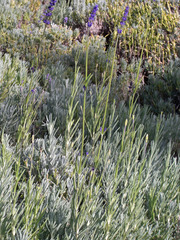 Lavandula angustifoliat1
- Outcome
- relative leaf water contente0
- Direction
- decreasee0
- Value
- 50%e0
Not reportedTreatmentComparator
Organisms pictured · Representative pictures of the matched species, not figures from the paper.
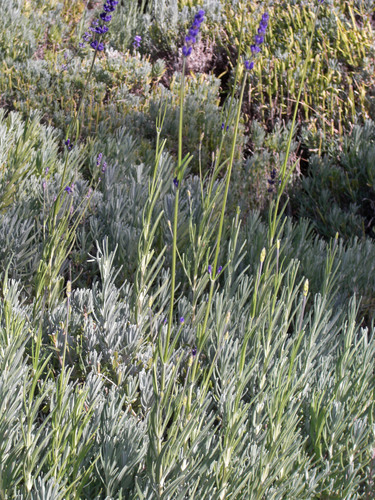
Verbatim
e0“a 50% decrease in the relative leaf water content in L. stoechas”
t0“two evergreen shrubs growing in Mediterranean field conditions”
t1“lavender ( Lavandula stoechas )”
Claim · model-written summary
Rosemary relative leaf water content fell 22% under drought.
- Taxon
- rosemarySalvia rosmarinust1
- Outcome
- relative leaf water contente1
- Value
- 22%e0
Not reportedTreatmentComparatorDirection
Organisms pictured · Representative pictures of the matched species, not figures from the paper.
Verbatim
e0“compared with 22% in R. officinalis”
t0“two evergreen shrubs growing in Mediterranean field conditions”
e1“a 50% decrease in the relative leaf water content in L. stoechas”
t1“rosemary ( Rosmarinus officinalis )”
Claim · model-written summary
CO2 assimilation fell about 75% in both drought-stressed shrubs.
- Taxon
- rosemarySalvia rosmarinust1
- Treatment
- water‐stressede0
- Outcome
- CO 2 assimilation ratese0
- Direction
- decreasee0
- Value
- c. 75%e0
Not reportedComparator
Organisms pictured · Representative pictures of the matched species, not figures from the paper.
Verbatim
e0“A similar decrease in CO 2 assimilation rates by c. 75% was observed in water‐stressed plants of both species”
t0“two evergreen shrubs growing in Mediterranean field conditions”
t1“rosemary ( Rosmarinus officinalis )”
Claim · model-written summary
Lavender photosynthesis to stomatal conductance ratio was lower than rosemary, 35 versus 45.
- Taxon
- lavenderLavandula angustifoliat1
- Outcome
- photosynthesis: stomatal conductance ratioe0
- Direction
- smallere0
- Value
- 35 vs 45 μmol CO 2 :mol H 2 Oe0
- Comparator
- R. officinalise0
Organisms pictured · Representative pictures of the matched species, not figures from the paper.
Verbatim
e0“L. stoechas showed smaller photosynthesis: stomatal conductance ratio than R. officinalis (35 vs 45 μmol CO 2 :mol H 2 O)”
t0“two evergreen shrubs growing in Mediterranean field conditions”
t1“lavender ( Lavandula stoechas )”
Claim · model-written summary
Photosystem II quantum efficiency fell about 45% at midday in drought-stressed shrubs.
- Taxon
- rosemarySalvia rosmarinust1
- Treatment
- water‐ stressede0
- Outcome
- relative quantum efficiency of photosystem II photochemistrye0
- Direction
- decreasede0
- Value
- c. 45%e0
Not reportedComparator
Organisms pictured · Representative pictures of the matched species, not figures from the paper.
Verbatim
e0“The relative quantum efficiency of photosystem II photochemistry also decreased by c. 45% at midday in water‐ stressed plants of both species”
t0“two evergreen shrubs growing in Mediterranean field conditions”
t1“rosemary ( Rosmarinus officinalis )”
Claim · model-written summary
Neither shrub suffered detectable drought damage to photosystem II.
- Taxon
- lavenderLavandula angustifoliat1
- Outcome
- drought‐induced damage to photosystem IIe0
Not reportedDirection
Organisms pictured · Representative pictures of the matched species, not figures from the paper.
Verbatim
e0“neither L. stoechas nor R. officinalis suffered drought‐induced damage to photosystem II”
t0“two evergreen shrubs growing in Mediterranean field conditions”
t1“lavender ( Lavandula stoechas )”
Claim · model-written summary
Lavender carotenoid content per chlorophyll rose about 62% during water stress.
- Taxon
- lavenderLavandula angustifoliat1
- Treatment
- water‐stressede0
- Outcome
- carotenoid content per unit of chlorophylle0
- Direction
- increasee0
- Value
- c. 62%e0
Not reportedComparator
Organisms pictured · Representative pictures of the matched species, not figures from the paper.
Verbatim
e0“an increase in the carotenoid content per unit of chlorophyll by c. 62% and c. 30%, respectively, in water‐stressed plants”
t0“two evergreen shrubs growing in Mediterranean field conditions”
t1“lavender ( Lavandula stoechas )”
Claim · model-written summary
Rosemary carotenoid content per chlorophyll rose about 30% during water stress.
- Taxon
- rosemarySalvia rosmarinust1
- Treatment
- water‐stressede0
- Outcome
- carotenoid content per unit of chlorophylle0
- Direction
- increasee0
- Value
- c. 30%e0
Not reportedComparator
Organisms pictured · Representative pictures of the matched species, not figures from the paper.
Verbatim
e0“an increase in the carotenoid content per unit of chlorophyll by c. 62% and c. 30%, respectively, in water‐stressed plants”
t0“two evergreen shrubs growing in Mediterranean field conditions”
t1“rosemary ( Rosmarinus officinalis )”
Claim · model-written summary
Only lavender absorbed dew through leaves.
- Taxon
- lavenderLavandula angustifoliat1
- Outcome
- absorbed dew by leavese0
Organisms pictured · Representative pictures of the matched species, not figures from the paper.
Verbatim
e0“Only L. stoechas absorbed dew by leaves”
t0“two evergreen shrubs growing in Mediterranean field conditions”
t1“lavender ( Lavandula stoechas )”
Claim · model-written summary
Six days of dew improved lavender relative leaf water content about 72%.
- Taxon
- lavenderLavandula angustifoliat1
- Treatment
- 6 d of dew over a 15‐d periode0
- Outcome
- relative leaf water contente0
- Direction
- improvede0
- Value
- c. 72%e0
Not reportedComparator
Organisms pictured · Representative pictures of the matched species, not figures from the paper.
Verbatim
e0“the occurrence of 6 d of dew over a 15‐d period improved relative leaf water content by c. 72%”
t0“two evergreen shrubs growing in Mediterranean field conditions”
t1“lavender ( Lavandula stoechas )”
Claim · model-written summary
Six days of dew improved lavender shoot water potential by about 0.5 MPa.
- Taxon
- lavenderLavandula angustifoliat1
- Treatment
- water‐stressede0
- Outcome
- shoot water potentiale0
- Value
- c. 0.5 MPae0
Not reportedComparatorDirection
Organisms pictured · Representative pictures of the matched species, not figures from the paper.
Verbatim
e0“shoot water potential by c. 0.5 MPa throughout the day in water‐stressed plants”
t0“two evergreen shrubs growing in Mediterranean field conditions”
t1“lavender ( Lavandula stoechas )”
Claim · model-written summary
Lavender photosynthetic capacity did not recover until autumn rainfall.
- Taxon
- lavenderLavandula angustifoliat1
- Outcome
- photosynthetic capacitye0
- Direction
- not recoverede0
Organisms pictured · Representative pictures of the matched species, not figures from the paper.
Verbatim
e0“the photosynthetic capacity was not recovered until the occurrence of autumn rainfall”
t0“two evergreen shrubs growing in Mediterranean field conditions”
t1“lavender ( Lavandula stoechas )”
The same questions in other papers
drought · physiology: pigments · Lavandula angustifolia (lavender)Positive and negative results
1 in the opposite direction
- negative
drought · physiology: water · Lavandula angustifolia (lavender)Positive and negative results
1 in the opposite direction
- negative
drought · physiology: pigments · Salvia rosmarinus (rosemary)Positive and negative results
2 papers in the same direction as this paper · 1 in the opposite direction
- negative
- positive
- positive
drought · physiology: photosynthesis · Salvia rosmarinus (rosemary)Results agree
2 papers in the same direction as this paper
- negative
- negative
drought · physiology: water · Salvia rosmarinus (rosemary)Results agree
2 papers in the same direction as this paper
- negative
- negative
Claims are grouped by organism, treatment and what was measured or targeted. A paper counts as positive when any of its claims in the group is positive.