Abstract
The effect of indigenous Trichoderma isolates against the soil-borne phytopathogen Rhizoctonia solani was investigated in dual culture and bioassay on bean plants. Ap- - plication of the bioagent isolates as a conidial suspension (3*10 7 ) greatly reduced the disease index of bean plants caused by R. solani in different rates and the most effective Trichoderma harzianum isolate (Jn14) reduced the disease by 65%. In dual culture, the T. harzianum (Jn14) overgrew the pathogen R. solani in an average of 16.75 mm/day at 30 °C. In addition, the results showed that T. harzianum (Jn14) and T. hamatum (T36) were the most effective isolates at 25°C and inhibited R. solani mycelial growth by 42% and 78% respectively, due to fungitoxic metabolites production. The Effect of Trichoderma on bean seedlings growth was obvious; height was nearly doubled (160% - 200%), while fresh and dry weights increased by 133% and 217%, respectively. Ger- mination of bean seeds in treated soil with Trichoderma isolates occurred about four days earlier than those in untreated soils. The results revealed however some variation between isolates which was due to genetic variation, mycelium-coiling rate, sporulation rate, fungitoxic metabolites, induced growth response and temperature effect.
Abstract from the paper’s OpenAlex record, shown for indexing and research. Copyright remains with the authors or the publisher. Read at the source ↗
The text the model read, with the source record’s inline markup (italics, sub- and superscripts) rendered and its character entities decoded; quote offsets refer to the raw text.
Claims 8
Claim · model-written summary
Applied Trichoderma isolates reduced Rhizoctonia disease index in bean.
- Taxon
- beane0
- Treatment
- bioagent isolates as a conidial suspension (3*10 7 )e0
- Interactor
- R. solani
 Rhizoctonia solanie0pathogen
- Outcome
- disease index of bean plants caused by R. solanie0
- Direction
- reducede0
Not reportedComparator
Organisms pictured · Representative pictures of the matched species, not figures from the paper.

Verbatim
e0“plication of the bioagent isolates as a conidial suspension (3*10 7 ) greatly reduced the disease index of bean plants caused by R. solani”
Claim · model-written summary
Trichoderma harzianum Jn14 reduced bean disease by 65%.
- Taxon
- beant0
- Treatment
- Trichoderma harzianum isolate (Jn14)e0
- Interactor
- Trichoderma harzianum
 Trichoderma harzianume0biocontrol_agent
- Outcome
- diseasee0
- Direction
- reducede0
- Value
- 65%e0
Not reportedComparator
Organisms pictured · Representative pictures of the matched species, not figures from the paper.

Verbatim
e0“the most effective Trichoderma harzianum isolate (Jn14) reduced the disease by 65%”
t0“bioassay on bean plants”
Claim · model-written summary
Trichoderma harzianum Jn14 overgrew R. solani at 16.75 mm/day.
- Taxon
- beant0
- Interactor
- R. solaniRhizoctonia solanie0pathogen
- Second interactor
- T. harzianum (Jn14)Trichoderma harzianume0biocontrol_agent
- Outcome
- overgrew the pathogen R. solanie0
- Value
- 16.75 mm/daye0
- Setting
- 30 °Ce0
Organisms pictured · Representative pictures of the matched species, not figures from the paper.
Verbatim
t0“bioassay on bean plants”
e0“the T. harzianum (Jn14) overgrew the pathogen R. solani in an average of 16.75 mm/day at 30 °C”
Claim · model-written summary
T. harzianum Jn14 inhibited R. solani mycelial growth by 42% at 25°C.
- Taxon
- beant0
- Treatment
- T. harzianum (Jn14)e0
- Interactor
- R. solaniRhizoctonia solanie0pathogen
- Second interactor
- T. harzianum (Jn14)Trichoderma harzianume0biocontrol_agent
- Outcome
- R. solani mycelial growthe0
- Direction
- inhibitede0
- Value
- 42%e0
- Setting
- 25°Ce0
Not reportedComparator
Organisms pictured · Representative pictures of the matched species, not figures from the paper.
Verbatim
t0“bioassay on bean plants”
e0“T. harzianum (Jn14) and T. hamatum (T36) were the most effective isolates at 25°C and inhibited R. solani mycelial growth by 42% and 78% respectively”
Claim · model-written summary
T. hamatum T36 inhibited R. solani mycelial growth by 78% at 25°C.
- Taxon
- beant0
- Treatment
- T. hamatum (T36)e0
- Interactor
- R. solaniRhizoctonia solanie0pathogen
- Second interactor
- T. hamatum (T36)
 Trichoderma hamatume0biocontrol_agent
- Outcome
- R. solani mycelial growthe0
- Direction
- inhibitede0
- Value
- 78%e0
- Setting
- 25°Ce0
Not reportedComparator
Organisms pictured · Representative pictures of the matched species, not figures from the paper.
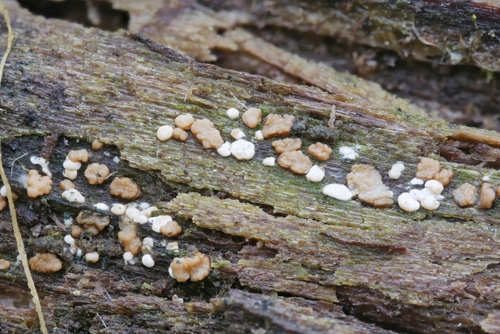
Verbatim
t0“bioassay on bean plants”
e0“T. harzianum (Jn14) and T. hamatum (T36) were the most effective isolates at 25°C and inhibited R. solani mycelial growth by 42% and 78% respectively”
Claim · model-written summary
Trichoderma treatment raised bean seedling height by 160% to 200%.
- Taxon
- beane0
- Treatment
- Trichodermae0
- Interactor
- TrichodermaTrichodermae0biocontrol_agent
- Outcome
- heighte0
- Direction
- nearly doublede0
- Value
- 160% - 200%e0
Not reportedComparator
Organisms pictured · Representative pictures of the matched species, not figures from the paper.
Verbatim
e0“The Effect of Trichoderma on bean seedlings growth was obvious; height was nearly doubled (160% - 200%)”
Claim · model-written summary
Trichoderma treatment increased bean seedling fresh weight by 133%.
- Taxon
- beane0
- Treatment
- Trichodermae0
- Interactor
- TrichodermaTrichodermae0biocontrol_agent
- Outcome
- freshe0
- Direction
- increasede0
- Value
- 133%e0
Not reportedComparator
Organisms pictured · Representative pictures of the matched species, not figures from the paper.
Verbatim
e0“The Effect of Trichoderma on bean seedlings growth was obvious; height was nearly doubled (160% - 200%), while fresh and dry weights increased by 133% and 217%, respectively.”
Claim · model-written summary
Trichoderma treatment increased bean seedling dry weight by 217%.
- Taxon
- beane0
- Treatment
- Trichodermae0
- Interactor
- TrichodermaTrichodermae0biocontrol_agent
- Outcome
- dry weightse0
- Direction
- increasede0
- Value
- 217%e0
Not reportedComparator
Organisms pictured · Representative pictures of the matched species, not figures from the paper.
Verbatim
e0“The Effect of Trichoderma on bean seedlings growth was obvious; height was nearly doubled (160% - 200%), while fresh and dry weights increased by 133% and 217%, respectively.”
The same questions in other papers
Trichoderma harzianum · disease · Phaseolus vulgaris (common bean)Results agree
10 papers in the same direction as this paper
- positive
- positive
- positive
7 papers more in this group
See all 11 papers →Trichoderma harzianum · Rhizoctonia solani · Phaseolus vulgaris (common bean)Results agree
10 papers in the same direction as this paper
- positive
- positive
- positive
7 papers more in this group
See all 11 papers →Trichoderma · growth · Phaseolus vulgaris (common bean)Results agree
11 papers in the same direction as this paper
- positive
- positive
- positive
8 papers more in this group
See all 12 papers →biocontrol · Rhizoctonia solani · Phaseolus vulgaris (common bean)Results agree
2 papers in the same direction as this paper
- positive
- positive
Claims are grouped by organism, treatment and what was measured or targeted. A paper counts as positive when any of its claims in the group is positive.