Abstract
Maize Lethal Necrosis Disease (MLND) has emerged as a great threat to maize production in East Africa. It is caused by a synergistic infection of maize by sugarcane mosaic virus (SCMV) and maize chlorotic mottle virus (MCMV). This study was carried out in Bomet County, Kenya, to determine the potential of various cropping systems to manage vectors of MLND–causing viruses. Plots measuring 7.5 m × 5.25 m were planted with maize (Zea mays L.) intercropped or bordered by elephant grass (Pennisetum purpureum Schumach.), coriander (Coriandrum sativum L.), pearl millet (Pennisetum glaucum (L.) R. Br.) and Gadam sorghum (Sorghum bicolour (L.) Moench). Maize monoculture was used as a control treatment; the nine treatments were arranged in a randomized complete block design and replicated four times for two seasons (December 2014 to April 2015 and April 2015 to September 2015). Data on corn thrips and corn leaf aphid infestation, MLND severity and incidence, MCMV and SCMV viral load, and yield were recorded. The sorghum border was the only companion crop that tested positive for MCMV and none tested positive for SCMV. Maize intercropped with elephant grass had significantly (P < 0.01) the least incidence of disease. However, this treatment produced significantly lower yields (P < 0.01). Coriander was the only companion plant most preferred by both corn thrips and corn leaf aphids (P < 0.001). Maize from all cropping systems tested positive for MCMV (P < 0.001) while maize grown with coriander tested negative for SCMV (P < 0.001). Yields from plots surrounded by sorghum and coriander were significantly similar to those from maize monoculture plots. These findings suggest that maize should be intercropped with coriander due to its potential to trap corn leaf aphids and protect maize from SCMV. In addition maize should be grown surrounded by a sorghum border to maximize yield in areas where MLND is prevalent.
Abstract from the paper’s OpenAlex record, shown for indexing and research. Copyright remains with the authors or the publisher. Read at the source ↗
The text the model read, with the source record’s inline markup (italics, sub- and superscripts) rendered and its character entities decoded; quote offsets refer to the raw text.
Claims 12
Claim · model-written summary
Sorghum border was the only companion crop positive for MCMV.
- Interactor
- MCMVMaize chlorotic mottle viruse0pathogen
- Outcome
- tested positive for MCMVe0
 Sorghum
Organisms pictured · Representative pictures of the matched species, not figures from the paper.

Verbatim
e0“The sorghum border was the only companion crop that tested positive for MCMV”
Claim · model-written summary
No companion crop tested positive for SCMV.
- Interactor
- SCMV
 Sugarcane mosaic viruse0pathogen
- Outcome
- none tested positive for SCMVe0
 Zea mays
Organisms pictured · Representative pictures of the matched species, not figures from the paper.


Verbatim
e0“none tested positive for SCMV”
t0“Maize”
Claim · model-written summary
Maize intercropped with elephant grass had the least disease incidence.
Not reportedInteractorComparator
Organisms pictured · Representative pictures of the matched species, not figures from the paper.
Verbatim
e0“Maize intercropped with elephant grass had significantly (P < 0.01) the least incidence of disease.”
Claim · model-written summary
Maize intercropped with elephant grass yielded less.
Not reportedComparator
Organisms pictured · Representative pictures of the matched species, not figures from the paper.
Verbatim
e0“However, this treatment produced significantly lower yields (P < 0.01).”
e1“Maize intercropped with elephant grass”
t0“Maize”
Claim · model-written summary
Corn thrips preferred coriander among companion plants.
Organisms pictured · Representative pictures of the matched species, not figures from the paper.
Verbatim
e0“Coriander was the only companion plant most preferred by both corn thrips and corn leaf aphids (P < 0.001).”
t0“Maize”
Claim · model-written summary
Corn leaf aphids preferred coriander among companion plants.
- Treatment
- Coriandere0
- Interactor
- corn leaf aphids
 Rhopalosiphum maidise0pest
- Outcome
- most preferrede0
Organisms pictured · Representative pictures of the matched species, not figures from the paper.
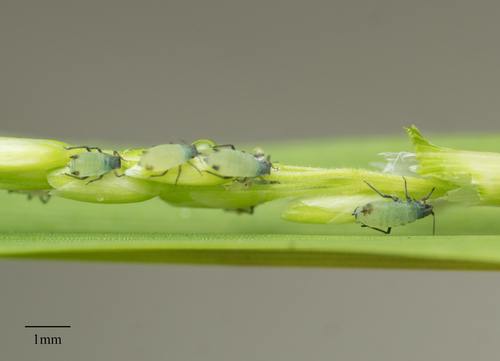
Verbatim
e0“Coriander was the only companion plant most preferred by both corn thrips and corn leaf aphids (P < 0.001).”
t0“Maize”
Claim · model-written summary
Maize in every cropping system tested positive for MCMV.
- Interactor
- MCMVMaize chlorotic mottle viruse0pathogen
- Outcome
- tested positive for MCMVe0
Organisms pictured · Representative pictures of the matched species, not figures from the paper.
Verbatim
e0“Maize from all cropping systems tested positive for MCMV (P < 0.001)”
Claim · model-written summary
Maize grown with coriander tested negative for SCMV.
- Treatment
- grown with coriandere0
- Interactor
- SCMVSugarcane mosaic viruse0pathogen
- Outcome
- tested negative for SCMVe0
Organisms pictured · Representative pictures of the matched species, not figures from the paper.
Verbatim
e0“maize grown with coriander tested negative for SCMV (P < 0.001)”
Claim · model-written summary
Sorghum bordered plots yielded similarly to maize monoculture.
Organisms pictured · Representative pictures of the matched species, not figures from the paper.
Verbatim
e0“Yields from plots surrounded by sorghum and coriander were significantly similar to those from maize monoculture plots.”
e1“maize (Zea mays L.)”
Claim · model-written summary
Coriander bordered plots yielded similarly to maize monoculture.
Organisms pictured · Representative pictures of the matched species, not figures from the paper.
Verbatim
e0“Yields from plots surrounded by sorghum and coriander were significantly similar to those from maize monoculture plots.”
e1“maize (Zea mays L.)”
Claim · model-written summary
Authors recommend intercropping maize with coriander to trap aphids and protect against SCMV.
- Interactor
- SCMVSugarcane mosaic viruse0pathogen
- Second interactor
- corn leaf aphidsRhopalosiphum maidise0pest
- Outcome
- intercropped with coriandere0
Organisms pictured · Representative pictures of the matched species, not figures from the paper.
Verbatim
e0“maize should be intercropped with coriander due to its potential to trap corn leaf aphids and protect maize from SCMV”
Claim · model-written summary
Authors recommend sorghum borders to maximize maize yield where MLND is prevalent.
Organisms pictured · Representative pictures of the matched species, not figures from the paper.
Verbatim
e0“maize should be grown surrounded by a sorghum border to maximize yield in areas where MLND is prevalent”
The same questions in other papers
Coriandrum sativum · yield · Zea mays (maize)Positive and negative results
1 paper in the same direction as this paper · 3 reporting no difference from an alternative
- positive
- positive
- positive
1 paper more in this group
See all 5 papers →Cenchrus purpureus · yield · Zea mays (maize)Positive and negative results
1 paper in the same direction as this paper · 4 in the opposite direction
- positive
- positive
- positive
2 papers more in this group
See all 6 papers →Sorghum · yield · Zea mays (maize)Positive and negative results
4 papers in the same direction as this paper · 14 reporting no difference from an alternative
- positive
- positive
- positive
15 papers more in this group
See all 19 papers →Cenchrus purpureus · disease · Zea mays (maize)Results agree
1 paper in the same direction as this paper
- positive
intercropping · disease · Zea mays (maize)Positive and negative results
19 papers in the same direction as this paper · 2 in the opposite direction
- negative
- no effect
- positive
18 papers more in this group
See all 22 papers →intercropping · yield · Zea mays (maize)Positive and negative results
220 papers in the same direction as this paper · 613 in the opposite direction
- positive
- positive
- positive
830 papers more in this group
See all 834 papers →Claims are grouped by organism, treatment and what was measured or targeted. A paper counts as positive when any of its claims in the group is positive.